
The Things a Screen Cannot Teach
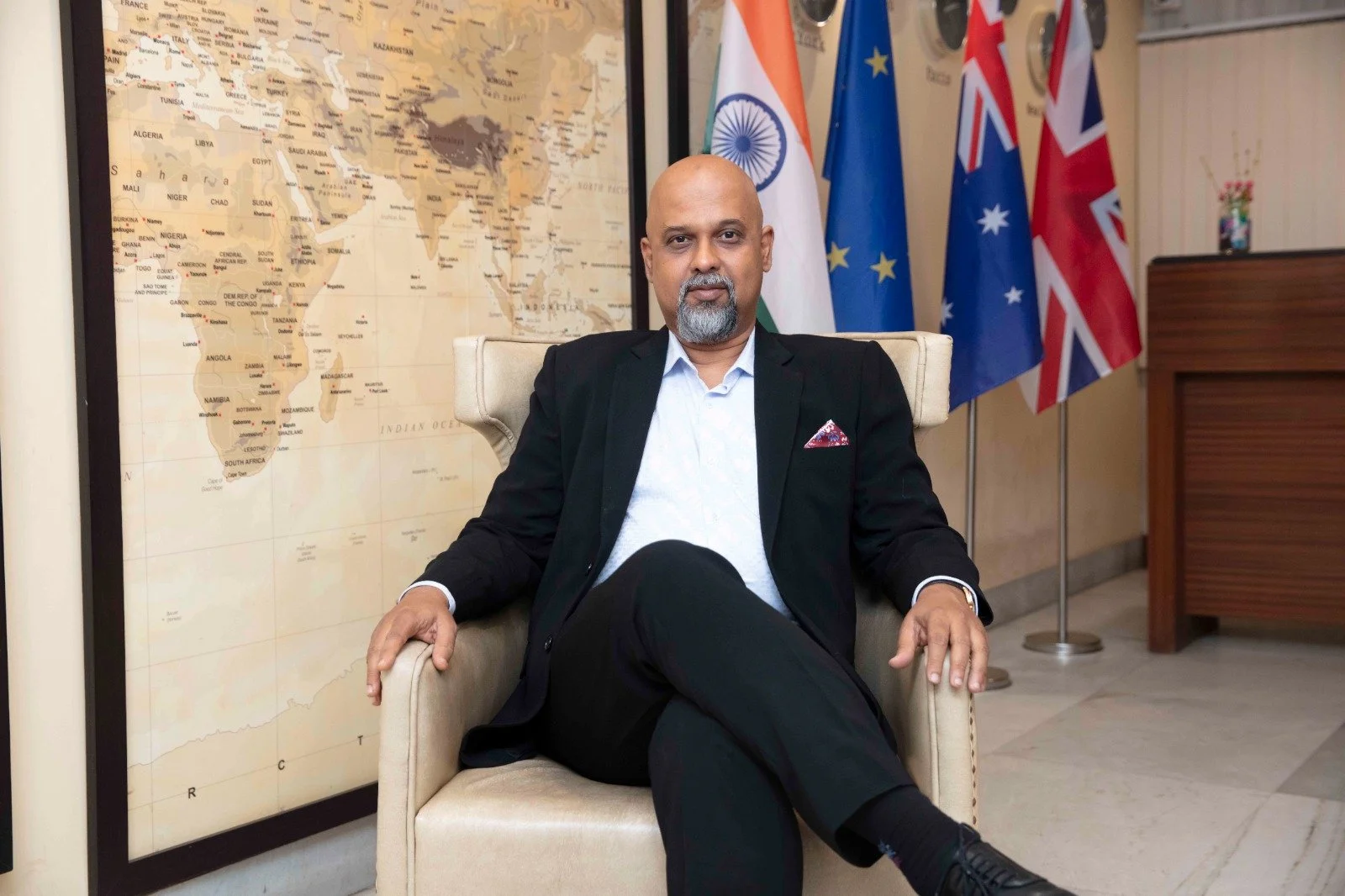
Dr Vivek Pathak has spent more than three decades preparing young people for hospitality. His story is also a reminder to an industry worried about talent: people do not learn service by being used as labour. They learn it by being shown respect.
You can ask artificial intelligence for a recipe for palak paneer.
It will give you quantities. It may calculate nutrition, suggest substitutions and produce a dozen variations before the spinach has even been washed. What it cannot do is lean over the pan and tell you that the cumin needs another few seconds. It cannot smell the precise moment when roasting turns aromatic. It cannot taste the leaf, adjust the flame or notice the hesitation in a student’s hand.
For Dr Vivek Pathak, Founder-Director of NIPS Institute of Hotel Management in Kolkata, this is the line that matters.
Hospitality education can absorb new technology. It should. But the craft itself still moves through people. From hand to hand. From teacher to student. From an experienced hotelier who notices what a young person has not yet learnt to see.
The same is true of service. A screen can describe warmth. It cannot welcome someone into a room.
Pathak has spent 34 years in the business of teaching that difference.
A career without a five-year plan
When Pathak began in 1993, he did not carry a grand vision for hospitality education. There was no carefully mapped career, no institutional mission statement and certainly no five-year plan.
He wanted to earn.
He came from a middle-class service family in Kolkata, where adulthood arrived with a practical instruction: grow up, find work, support yourself and your family. A friend from a business background suggested that they start something together. Pathak was young enough to try before fear could become strategy.
The first ventures failed.
The reason, he says now with disarming honesty, was discipline. The young founders imagined that business meant hiring people and directing them. They would assign work late in the morning, close the office, sleep through the afternoon, then wake before the team returned to report. Six months later, the money was gone.
It is a story many successful founders polish out of their biographies. Pathak keeps it in because it contains the first principle of everything that followed. Ambition without discipline is theatre. Someone else ends up doing the work, learning the lessons and taking the value with them.
Another attempt followed. This time, there were no employees to hide behind. The founders went into the market themselves. They discovered the difficulty of earning trust, finding customers and staying present when the glamour of starting had worn off.
Then hospitality education appeared.
Taj Bengal had recently opened in Kolkata, bringing the hotel industry into sharper view for students and families. Hotel management was still unfamiliar, but it carried the promise of employability. It felt modern, practical and connected to a growing industry. Pathak saw an opening.
One venture finally clicked.
Building a college while the rules were still being written
Private hospitality education in the early 1990s did not come with the scaffolding it has today. Courses were largely diploma-led. Standardised curricula were limited. Institutions built syllabi themselves, often while trying to understand what hotels actually required.
That absence of structure could have encouraged mediocrity. At NIPS, it became a reason to move closer to industry.
Pathak and his team visited hotels, spoke with general managers and training leaders, and asked a direct question: what should a student know before arriving at your door?
Industry professionals came back with answers drawn from real operations. The institute adjusted what it taught. The classroom became less of a closed academic system and more of a translation space between education and employment.
As regulation and formal university structures developed, NIPS moved with them. AICTE guidelines arrived in the late 1990s. West Bengal’s university framework followed, and NIPS secured early affiliation. What had begun in a period of self-written diplomas evolved into a formal institution.
The first batch carried the weight of proving that the model worked. Pathak remembers targeting Oberoi and Taj for placements, names that seemed almost impossible for a young institute to crack.
The students failed their first interviews.
They tried again.
On the second round, they made it.
That story has stayed with Pathak because it belongs to a different rhythm of aspiration. The students knew precisely what they wanted and were prepared to return after rejection. Not because failure had become a motivational slogan, but because there was no comfortable alternative waiting nearby.
The students who ask why
Today’s young people arrive differently.
They know more, or at least have encountered more information. They have watched videos, followed creators, explored careers online and formed opinions before entering a classroom. The information may be incomplete or wrong, but the exposure is real.
They also ask questions.
Why should I do this? Why does this standard matter? Why should I accept an entry-level role after completing a degree? Why should I work here when another industry pays more?
Pathak does not treat this questioning as insolence. He sees it as the central teaching challenge of the generation. Authority can no longer rely on age, designation or the teacher’s position at the front of the room. An answer must be explained and, often, demonstrated.
This changes the role of the educator. The teacher is no longer simply a source of information. Information is abundant. The teacher is a guide who helps students distinguish knowledge from noise, turns energy into direction and connects theory to consequence.
It also changes the role of the hotel.
A young person who asks why will not stay merely because previous generations were expected to. They need to understand the path ahead. They need evidence that today’s hard work is building tomorrow’s capability. Most of all, they need to feel that they are being developed, not consumed.
The instinct to serve
Ask Pathak what makes a good hotelier and he begins before technical skill.
There must be an instinct to serve. The ability to notice what may be needed before it is requested. Discipline. Communication. A smile that does not look as if it was issued with the uniform.
He locates the earliest lessons in the Indian home. Someone arrives and is welcomed. Food is offered. On departure, the goodbye carries a genuine wish that the person will return. No standard operating procedure is required because care is not yet a performance.
Leadership and time management can be developed. Service techniques can be practised. Systems can be taught. But the inner orientation towards another person is harder to manufacture.
This is also why Pathak’s view of grooming goes beyond clothes. Grooming is not simply a pressed uniform or polished shoes. It is alignment between the person on the outside and the attitude within. A technically correct student who resents the guest will eventually reveal it. A warm student with limited polish can be taught, if the institution and the hotel are willing to invest.
Language matters too, particularly as people rise into leadership. English may not be essential for every operational interaction, especially where Hindi or a regional language serves the guest better. But seniority increases the demand for communication.
Pathak is careful to define that as a two-way skill. It is not merely the ability to speak impressive English. It is the ability to express an idea precisely and to understand someone who may not have the same fluency. Hospitality is full of people who know more than they can elegantly say. Good leaders learn to hear the knowledge beneath the words.
Hotels are not only competing with other hotels for talent. They are competing with every industry that has realised hospitality graduates know how to look after people.
The great talent leak
Hospitality education has become one of the most mobile professional pathways available to young Indians.
Students can take internships and early roles across the Middle East, Europe, Mauritius, New Zealand, Vietnam and other international markets. The attraction is not difficult to understand. Even an entry-level wage abroad can translate into meaningful savings at home. Pathak cites students returning from six-month placements with several lakhs saved, a financial outcome difficult to match in many Indian entry-level jobs.
The contradiction is uncomfortable. A graduate may accept a junior position abroad but reject similar work in India.
Money is part of the answer. So is status. So is the belief that a three-year degree should lead directly to supervisory responsibility, particularly when short certificate courses now feed entry-level roles in food production, restaurant service, bartending, barista work and other specialised skills.
The wider leak is even larger. Hospitality graduates are no longer limited to hotels. They understand customers, service recovery, presentation, communication and operations. Retail, hospitals, banking, insurance and corporate workplaces all want those capabilities, often at better starting salaries or with more predictable working conditions.
Hotels are not only competing with other hotels for talent. They are competing with every industry that has realised hospitality graduates know how to look after people.
That should cause less complaining and more introspection.
Stop arriving only for placement season
Pathak’s message to industry is direct: if hotels want better talent, they must enter the education process earlier.
Do not appear at the college gate in the final year, conduct interviews and complain that the candidates are not ready. Identify promising students in the first year. Mentor them. Let operational leaders teach, demonstrate and remain connected. Help shape the talent you hope to hire.
He compares it to sport. A coach does not arrive only on the day of selection. Potential is spotted young, then trained repeatedly until it can perform under pressure.
The responsibility runs both ways. Colleges must invest in infrastructure, faculty development and industry exposure. Pathak is sharply critical of what he calls “two-bedroom colleges”, institutions that enter hospitality education without even the basic facilities required to teach the craft. Cheap courses produce cheap labour, and hotels that hire purely on cost keep the cycle alive.
At NIPS, he points to accreditation, regular faculty orientation in hotels, industry lectures and trainer development as ways to prevent the classroom from fossilising. This matters in a field where software changes, kitchen technology evolves and guest expectations move faster than formal syllabi.
A front office teacher who has never heard of Airbnb is not merely behind on a company name. They are missing a fundamental shift in how accommodation is discovered, distributed and understood.
Curriculum cannot be treated as a monument. It must behave like a living document.
Degree, skill and the space between them
Short courses have an important role. They open employment to people who may not have the time or means for a full degree. They can produce competent entry-level talent for defined functions.
But Pathak warns against confusing the first job with an entire career.
Skill without broader education can create an early ceiling. A certificate may help someone enter a kitchen, bar or restaurant quickly. Moving into supervision and leadership demands more: business understanding, communication, decision-making, people management and the intellectual confidence to handle complexity.
A degree without practical skill is equally fragile.
The future, in his view, is not an argument between academic qualification and vocational training. It is a combination. Strong fundamentals, real practice and continued specialisation.
Research is beginning to find a place in this landscape too. Hospitality education once offered few obvious paths for researchers. That is changing as food-production technology, frozen-food businesses, consumer companies and educational institutions begin to need people who can investigate, test and build knowledge. Pathak points to companies willing to identify promising students early and mentor them towards research careers.
The classroom is no longer only a route to a hotel lobby or kitchen. It can lead to product development, customer experience, food science, entrepreneurship, academia and technology.
But every route still requires depth.
AI as assistant, not sole teacher
Pathak is not threatened by artificial intelligence. He is wary of mistaking access to answers for mastery.
Before AI, there was YouTube. Thousands of videos could teach someone how to make the same dish. Yet watching all of them did not guarantee an authentic result.
Hospitality is full of embodied knowledge. The colour of cumin at the right stage of roasting. The texture of dough under the palm. The aroma of a wine before the first sip. The change in a guest’s face when a conversation has gone on for thirty seconds too long.
It cannot taste the palak.
AI can calculate, compare, explain and personalise learning. It can help a student understand nutrition, trace a cuisine, practise communication or explore a business problem. It can support the teacher and widen access to knowledge.
It cannot taste the palak.
That sentence contains a philosophy for the industry’s next chapter. Use technology for what it does brilliantly. Do not surrender the sensory, relational and human work that gives hospitality its meaning.
What young people learn from the way we treat them
The strongest part of Pathak’s argument is not about curriculum. It is about respect.
Too many hotels still treat interns and trainees as a temporary labour pool. The student arrives to learn but is given repetitive work without context, mentorship or a visible path forward. The hotel saves on manpower. The student leaves with a diminished view of the industry.
Then the industry asks why young people do not stay.
Pathak’s answer is simple. What we teach young people through our behaviour becomes what they later reproduce.
If they are ignored, they learn that hierarchy permits indifference. If they are humiliated, they learn that leadership means having permission to humiliate. If they are treated as replaceable labour, they will leave the moment another employer offers a better bargain.
But if they are mentored, trusted and taught with care, they carry that model forward. Respect is not an employee-engagement initiative. It is part of professional education.
This generation must be handled neither with fear nor indulgence. It must be understood. Their questions deserve honest answers. Their confidence must be built through competence. Their emotional connection to the work cannot be assumed.
A good mentor, Pathak says, treats every student with the care of a teacher deeply invested in their future.
The word he reaches for is guru.
Not a manager of trainees. Not a supervisor filling a roster. Someone who accepts responsibility for what another person is becoming.
The long apprenticeship
For students entering hospitality, Pathak offers the other half of the bargain.
A career will not be built in a day. The first two or three years are not the final verdict on earning potential or status. They are an apprenticeship in which classroom knowledge meets operational reality. This is where discipline becomes habit, communication becomes judgement and confidence begins to rest on something sturdier than ambition.
Do not stop learning.
The advice sounds familiar because the truth often does. Yet from someone who began without a plan, failed before succeeding, built an institute while the rules were evolving and watched generations of students enter a changing industry, it carries weight.
Pathak did not arrive in 1993 with a map for the next 34 years. He moved one year at a time. He learnt from the market, from hotels, from regulation, from teachers, from students and from failure.
Perhaps that is the real lesson of his career.
Education is not the transfer of finished knowledge from one generation to another. It is the discipline of staying close enough to reality that what you teach remains alive.
The future of hospitality education may include AI tutors, individual learning plans, shorter credentials, international mobility and careers far beyond hotels. The tools will change. The routes will multiply.
Someone will still need to stand beside the pan and say, not yet.
Someone will still need to show a young person how to welcome a stranger without making warmth feel scripted.
Someone will still need to look at an intern and see not inexpensive labour, but a future hotelier.