
The Oven That Refuses to Take Credit
Walk into Unox’s experience centre and the first thing that strikes you is not stainless steel. It is theatre.
There is the quiet choreography of a professional kitchen that has been designed not to impress, but to convert. Not with brochures. Not with bullet points. With proof. With the one thing hospitality will always trust more than marketing. A lived experience.
Unox has never been shy about what it is really selling in India. Not “an oven”, in the limiting sense of the word, but a different way of preparing food. A different way of thinking about labour, consistency, speed, energy, and scale. In a country where the word “oven” still triggers a reflex association with baking, that difference matters.
And at the centre of this ambition sits a Regional Director who speaks like a market-builder first, and an equipment seller last.
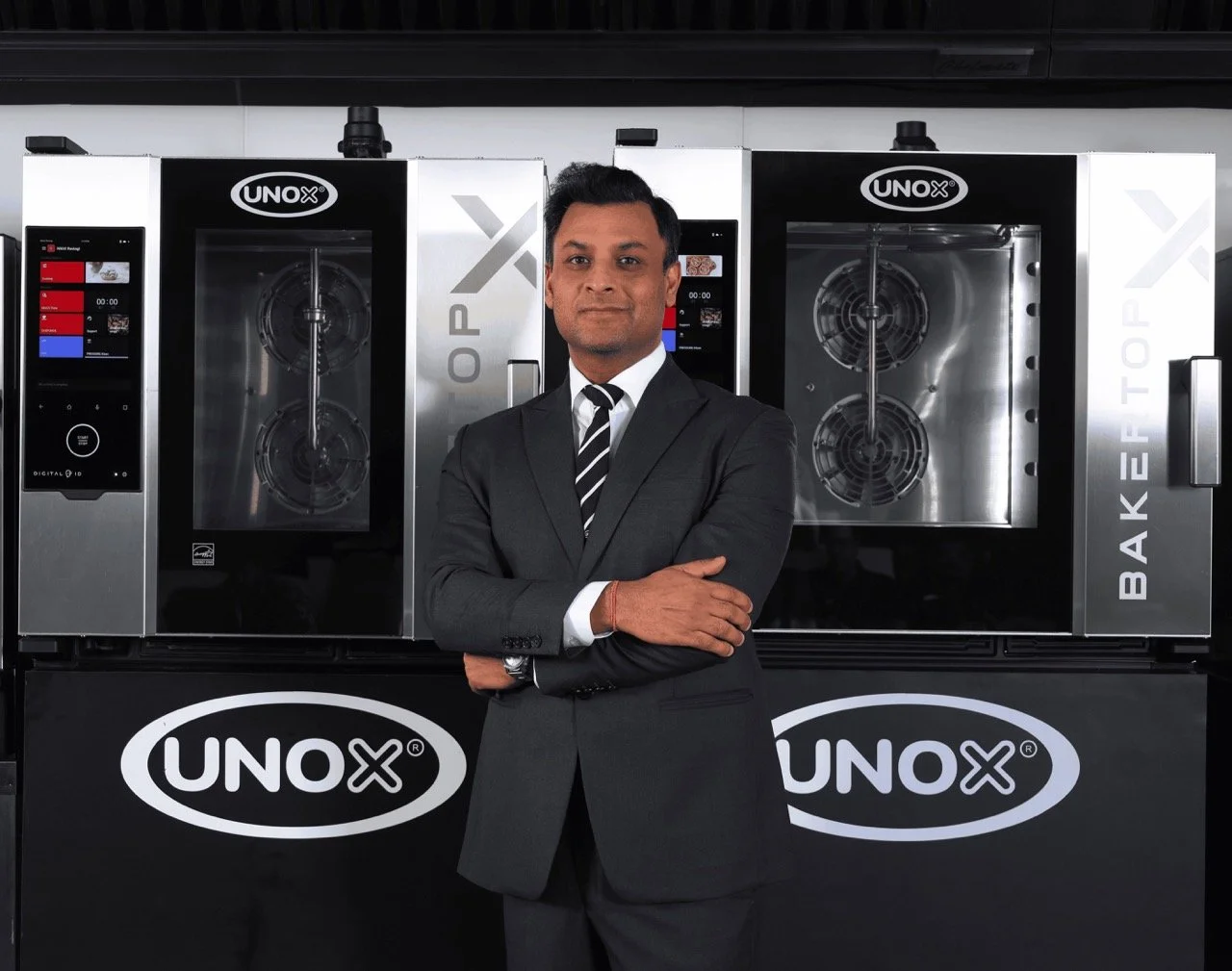
Profile: Vikram Goel
Regional Director. India & South East Asia. UNOX
- 21+ years in the Food and Beverage industry
- Background across Sales and Marketing, with deep understanding of the Indian food service sector
- Known for shaping and driving ambitious projects, and building organisations from the ground up
- Built sales and service structures, plus client retention programmes
- Played a key role in accelerating UNOX’s growth in India and the adoption of steam cooking technology for smarter commercial kitchens in India
A Regional Director Who Thinks in Decades
The Unox India story is, in many ways, a study in timing and conviction.
The current Regional Director joined the brand in 2021, when Unox was still a small name in a very big country. At that point, India was not a fully-fledged operation. It was a possibility. A bet.
That bet has compounded quickly. From a one-to-two-person presence to a team of roughly 35 over about five years, Unox India has quietly built one of the largest footprints in the commercial food equipment segment, in a market where competitors often run lean teams of 6–11 people.
The leadership philosophy behind that growth is revealing. The confidence to scale did not come from a spreadsheet. It came from a track record. The Regional Director had spent 13 years with a key competitor and led that business in India for around five years. They had already lived the hard part. Introducing a technology category to a market that did not yet know it needed it.
Unox’s global leadership did not need convincing about product. They needed conviction about execution. India is not a market you “enter”. It is a market you earn.
The Myth: Ovens Are for Baking
In India, the category problem is cultural as much as commercial.
For years, Unox was primarily known here for bakery equipment. Among home bakers, it carried a specific kind of allure. The “dream machine” that signalled a step up from domestic OTGs to professional-grade performance.
But the broader portfolio was largely unknown.
Unox’s business in India is built around correcting that perception with ruthless consistency. If you want people to understand what a combi oven can do, you do not show them a picture of it. You ask them to taste what comes out of it.
That is why Unox keeps pulling people into the experience centre. Why it insists that the market cannot be built from a website. Why the visit itself is the product.
The Portfolio, Properly Understood
Unox’s positioning becomes clearer when you see the portfolio not as “equipment”, but as a suite of operational outcomes.
- Combi ovens that can serve almost any establishment cooking 30+ meals a day. Hotels, restaurants, catering, hospitals, schools. Anywhere volume meets variability.
- Commercial convection ovens designed for serious baking operations, not hobbyist use.
- Speed ovens engineered for quick-turnaround environments. QSR, airport lounges, stations. Places where time is the primary ingredient.
- Food preserving technology (often described as a “hot fridge”) that extends holding time without collapsing quality, and reduces labour intensity compared to traditional cook-chill approaches.
The important detail is not variety. It is intent. Every product line is a response to a specific pressure point professional kitchens face today. Labour. Space. Consistency. Cost.
In other words, the portfolio is a philosophy in metal.
Why Unox Marketing Looks Like Consulting
Unox does not behave like a company trying to sell machines. The marketing approach, is consultative. Not pushy. Not brochure-led. Not an endless cycle of features.
The team focuses on touchpoints in hotels and restaurants where decision makers can experience the technology as it would behave inside their own kitchen, under their own constraints.
That requires listening before proposing.
The salespeople, in Unox’s world, are not classic salespeople. They are chefs. They are trained to create experiences in the market, to understand operations deeply, and to bring those observations back as R&D feedback into the Italy-based centre.
Chef-to-chef credibility becomes a strategic advantage in a market where tradition is often stronger than curiosity.
India, Adaptation, and the Honest Limits of Tech
There is a refreshing clarity in how Unox talks about adaptation.
Combi ovens were invented in Europe. They were shaped around European foods and European kitchen logic. That does not automatically translate to every cuisine.
In India, the adaptation has been less about hardware and more about process and software. Developing repeatable cooking processes for dishes like dal makhani, biryani, idli, and dhokla is not just product support. It is market translation.
The limitation is equally candid. Indirect heat, driven by fans, is not always compatible with products that need instant contact heat to hold shape, especially battered items.
The combi oven might theoretically cover 90% of a commercial kitchen’s needs, but practical utilisation for certain cuisines can fall closer to 50–60%. It is not a replacement for everything. It is a powerful tool for many things.
Unox’s approach here is important. It is honest about what the machine cannot do. In a market that can be skeptical of “revolutionary” claims, honesty is a growth strategy.
The Kitchen Questions That Reveal Everything
The consultative method Unox uses is disarmingly simple.
Rather than telling a customer what their problems are, the team asks questions that force operational truth to surface. Questions like: “If I had to operate your kitchen tomorrow, what would I need to do?”
This is where the Regional Director’s thinking becomes clear. In many professional kitchens, problems are normalised. High food cost. Staff that is under-trained and low-loyalty. Inconsistency across shifts. Space constraints. Waste. Inefficiency.
When someone has lived inside those realities for years, they stop looking like problems. They start looking like “how things are”.
Unox’s job is to make the invisible visible.
The Moment Unox Wants to Meet You
Unox knows when it wins.
Not after a restaurant opens. Not when CAPEX has already been spent and every additional investment is interrogated for ROI.
Unox wants to enter the conversation during planning and conceptualisation, when budgets for equipment are being allocated and kitchen workflows can still be strategically designed, not retrofitted.
This is why the stakeholder network matters so much. Architects. Professional Kitchen Consultants. Chefs. Kitchen equipment suppliers. These are not “channels” in the traditional sense. They are influence hubs. First touchpoints. Category educators.
Unox invests in keeping these stakeholders informed and engaged, because in India, adoption rarely begins with the end user. It begins with the person they trust.
A Market With Room to Grow (And That Is an Understatement)
The scale of the opportunity becomes almost absurd when put into numbers.
There may be 200,000–300,000 commercial kitchens in the organised sector. Of these, about 150,000 are relevant for this technology category. Yet total penetration across all brands combined sits at roughly 7–8%.
This is not a mature category. It is barely started.
The comparative reference shared is telling. Germany sells around 20,000 combi ovens annually across all brands, in a market roughly comparable in size to state in North India. India, today, sells around 3,000 machines annually across all brands.
If that contrast does not make you pause, you are not paying attention.
India is not saturated. It is still becoming.
Training as Market Investment
Perhaps the most “Unox” detail of all is training.
With every machine sale, the company provides free training. Anywhere. Even remote locations. A chef is flown at Unox’s cost to spend a day training the customer’s team in their own kitchen. And when staff leave, as they inevitably do in this industry, Unox returns to retrain the next team. Again, without charge.
Most companies would treat this as an after-sales cost. Unox treats it as market investment.
Trained chefs move. They carry knowledge across properties. They become advocates. They normalise the technology.
This is not just service. It is distribution, through people.
The Quiet Shift: From Hardware to Data
Hardware innovation, as one speaker put it, has largely plateaued after decades of refinement. The square box, the fan, the heating, the steam. The fundamentals are optimised.
The next frontier is not metal. It is insight.
Unox’s Digital ID and subscription-based services point towards that direction, offering chains the ability to develop recipes centrally and deploy them across outlets with a click. Consistency, at scale, is no longer just about training. It is about system design.
More importantly, data-driven cooking has the potential to change what “kitchen management” means. Second-by-second data on door openings, heat loss, core temperatures, power consumption, water use. This is not trivia. For large chains, it becomes operational truth. The kind that can shape training, efficiency, sustainability, and cost strategies.
In an era where food quality is only one part of the conversation, and resource costs are rising, analytics becomes a competitive advantage.
The India Challenge Is Not the Oven. It Is Eating Out.
There is another truth Unox has to contend with, and it has nothing to do with equipment.
The company can only thrive when more people eat outside the home.
In a country where “mother’s food is the best food” is not just sentiment but identity, eating out frequently has historically carried a quiet stigma. A sense that it is unhealthy. That it makes you sick.
The comparison offered is striking. The average Indian eats out less than two times a month. In Singapore, the number is around 30 meals outside per month.
Millennials are changing that. Travel is changing that. Exposure to global cuisine is changing that. But cultural shifts are not quarterly goals. They are decade-long currents.
Unox’s Regional Director speaks like someone who understands that. The job is not to chase a quick spike. The job is to build a future market patiently, in full view of tradition.
The Chef Still Matters. That Is the Point.
For all the talk of technology, Unox’s most human argument remains its strongest.
The oven is a tool. The chef remains central. The chef marinates, prepares, plates, and brings emotion to food. The machine should not take credit away from that craft.
This is not a sentimental statement. It is strategic positioning.
In hospitality, we are often sold “replacement”. Replace labour. Replace skill. Replace judgement.
Unox is selling support. Support chefs. Support consistency. Support scale. Support sustainability. Support speed. Support outcomes.
That is why this feature is not really about an oven.
It is about a company that refuses to take shortcuts in a market that rewards patience. And a Regional Director who is not selling equipment to India. They are helping India grow into a new way of cooking.
Editor’s Note: Why This Matters to Hospitality Leaders
The Unox story is a reminder of a simple reality. In hospitality, technology adoption fails when it is introduced as a product.
It succeeds when it is introduced as a capability.
Professional Kitchens do not buy machines. They buy fewer headaches. They buy repeatability. They buy a margin that is not eaten by waste. They buy time. They buy a system that holds steady even when teams change.
That is the conversation Unox is trying to have with India. Slowly, insistently, and with a surprising amount of humility.
And that is why, if you want to understand what Unox is building here, you do not start with the oven.
You start with the experience centre. And the person who believes India’s appetite will, eventually, catch up with its potential.
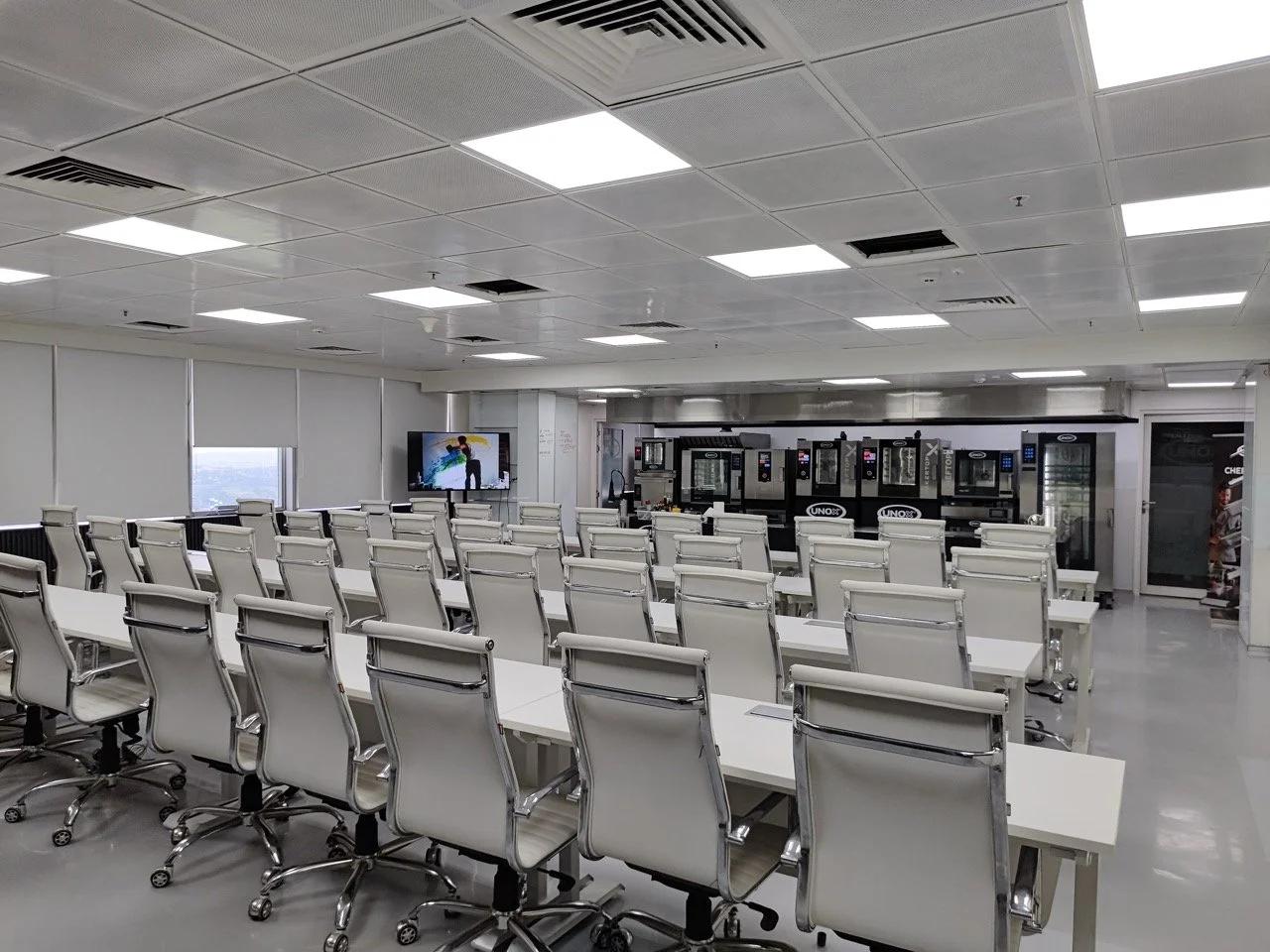
INdia experience center