Knowledge Series – What Scaling Independent Hospitality Actually Takes, by Nikita Khandheria
/
The Business Behind the Beautiful: What Scaling Independent Hospitality Actually Takes
By Nikita Khandheria, Founder and CEO of ERIA
I have always found it interesting that some of the most operationally complex industries are often the ones people take the least seriously, particularly when the end product happens to be beautiful.
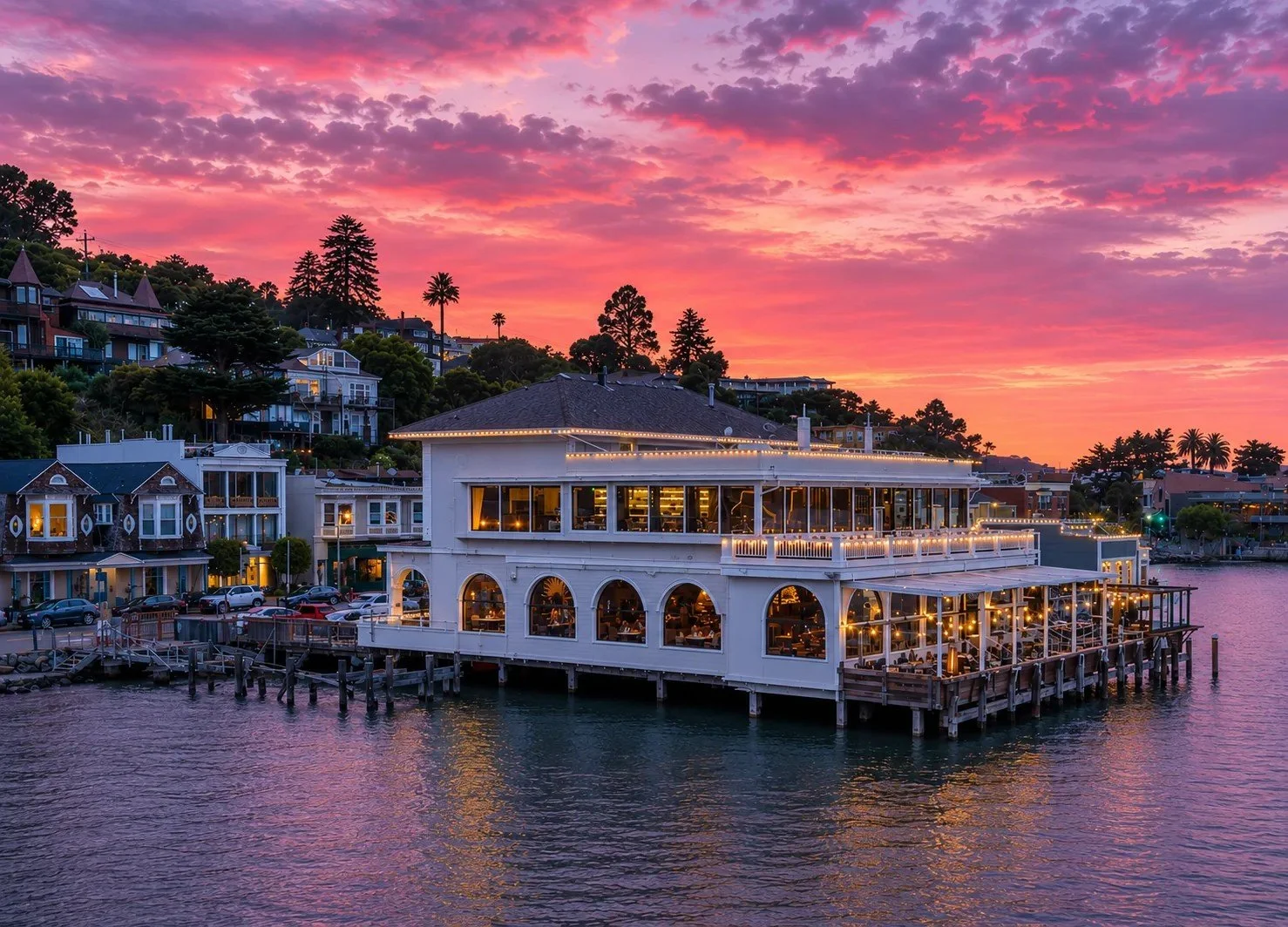
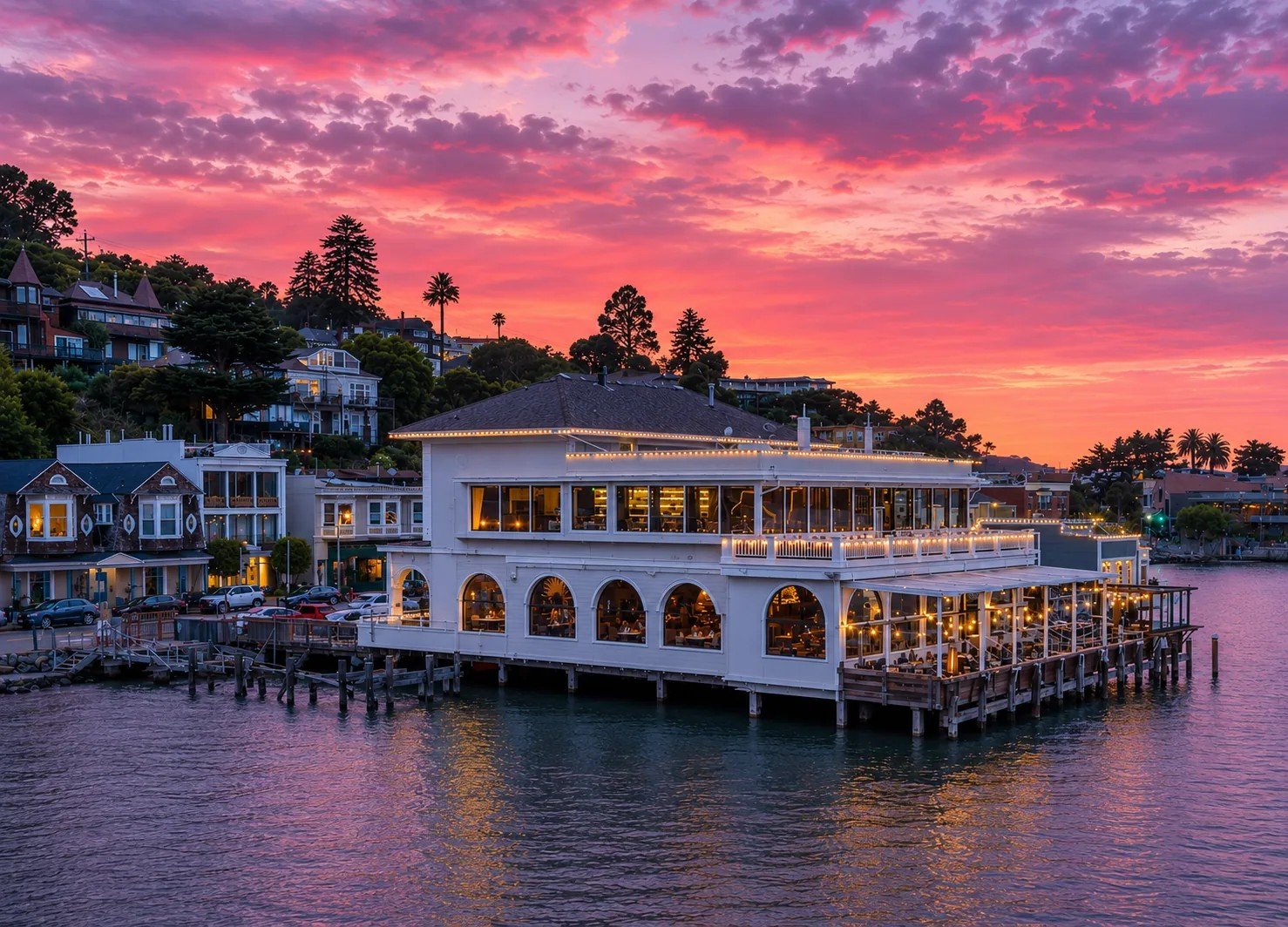
When someone walks into a waterfront venue for a wedding, they see the flowers, the lighting, the champagne, and the extraordinary amount of thought that has gone into creating an evening that feels entirely effortless. What they rarely consider is the business responsible for making that experience possible. Behind that evening are commercial leases, financial projections, municipal regulations, staffing decisions, vendor contracts, insurance policies, and an enormous amount of coordination between people who may never actually meet the guests.
I think this is one of the fundamental misconceptions about hospitality. We tend to evaluate the industry by what it produces rather than by what it takes to produce it.
My background is in mathematics and economics, and I have always been fascinated by the way businesses work beneath the surface. Before ERIA, my entrepreneurial experience took me through nonprofit healthcare clinics, restaurants, and consumer packaged goods. Although those industries appear quite different, they taught me to look at businesses as systems and to question where value is being created, who ultimately captures that value, and whether the existing structure is necessarily the most efficient one.
When I began working in events, I noticed an interesting imbalance. The people responsible for creating extraordinary experiences were often building enormous value around physical spaces they did not control. An event planner could spend months coordinating an elaborate celebration, developing relationships with clients, and managing dozens of vendors, yet the venue remained an entirely separate business.
I began to wonder why we were treating the creative and operational sides of hospitality as separate enterprises when there was an opportunity to bring them together.
That thinking eventually became ERIA, which I grew from one venue to four in approximately eighteen months, without outside investment.
What I learned during that expansion is that acquiring another location and actually scaling a hospitality business are two very different things. Every building comes with its own economics, physical limitations, regulatory requirements, and operational challenges. A successful concept does not automatically become a successful second location simply because the demand exists.
I have become particularly interested in the relationship between fixed costs and asset utilisation. A hospitality business takes on substantial financial obligations before a single guest walks through the door, and those obligations do not disappear because the calendar happens to be quiet. I think operators sometimes become so focused on maximising the profitability of individual events that they overlook the more important question of how efficiently the underlying asset is being used throughout the year.
At ERIA, this has meant approaching our venues as flexible spaces capable of accommodating different types of experiences rather than building the entire financial model around one category of customer. A corporate gathering, a private dinner, and a wedding may require entirely different approaches to hospitality, but they can contribute to the economics of the same physical space.
Of course, greater utilisation only creates value if the business can deliver those experiences consistently. This is where I believe the distinction between growth and scale becomes especially important.
As a founder, it is relatively easy to convince yourself that being involved in every decision is a sign of commitment. In reality, I have come to recognise that a business which depends entirely on its founder's constant attention has a fundamental limitation. You can only be in so many places at once, and the more locations you operate, the more important it becomes to build systems, develop people, and create a structure capable of functioning independently.
There is also a responsibility in hospitality that I think deserves considerably more attention. When you operate physical spaces, your decisions affect far more than your own balance sheet. Employees depend on the business for their livelihoods, vendors build their schedules around your commitments, and clients entrust you with occasions that cannot simply be rescheduled without consequence.
A wedding is not a software launch. You cannot tell someone that their celebration will be delivered in the next update.
Recent operational challenges have reinforced for me how important it is to build resilience into the business before you need it. Having multiple locations, maintaining strong relationships, understanding contractual responsibilities, and communicating transparently are not simply administrative exercises. They are what allow a company to protect its clients and continue operating when circumstances change unexpectedly.
I also think we need to reconsider what success in independent hospitality actually looks like. There is a tendency to celebrate expansion, beautiful interiors, and increasingly ambitious concepts, but I am much more interested in whether a business is financially sustainable, whether its employees have opportunities to grow, and whether its operations can withstand the inevitable difficulties that come with managing physical assets.
Perhaps the most important thing entrepreneurship has taught me is that creating something beautiful and creating something commercially substantial should never be treated as competing ambitions. The creativity is what gives a hospitality business its identity, but the discipline behind it is what gives that identity the opportunity to endure.
Ultimately, I do not think the greatest achievement in hospitality is creating one extraordinary evening. It is building a business capable of creating thousands of them, consistently, responsibly, and long after the founder has stopped being the person making every decision.
Author biography
Nikita Khandheria is the founder and CEO of ERIA, a self-funded hospitality and events company in the San Francisco Bay Area. At 24, she has grown ERIA from one venue to four in approximately eighteen months. Her entrepreneurial background spans nonprofit healthcare, restaurants, and consumer packaged goods. She studied Mathematics and Economics through the joint degree programme at the University of St Andrews and William & Mary, with additional studies in Computer Science.
Website: https://www.eria.co
Instagram: @nikitalyssa
Images: courtesy of ERIA