From Zo House Bangalore to Y Combinator: How an 18-year-old built a $7,239 MRR startup in 72 hours
/The founder is among several Zo House residents accepted into Y Combinator's 2026 startup cohorts.
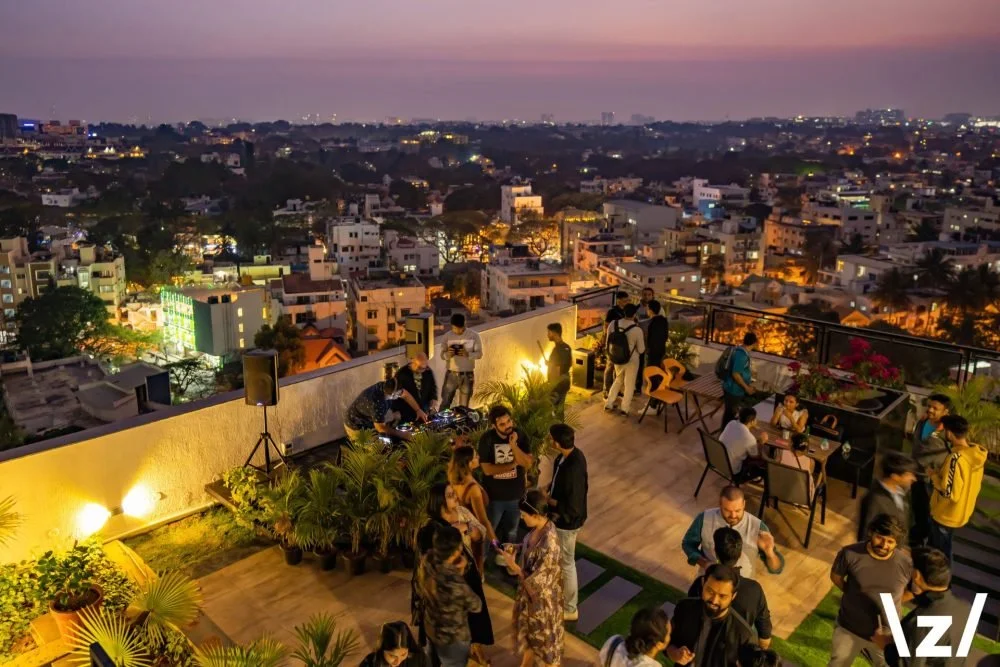
Discussions around startups often focus on funding, accelerators and mentorship, while the role of a founder’s living environment receives less attention. Zo House, which describes itself as India’s first permanent hacker house network, provides residential spaces designed for startup founders.
Y Combinator founders
Savio Martin, one of the youngest Indian founders ever accepted into Y Combinator (Spring 2026 batch, at 18 years and 10 months), first caught the world’s attention when his side project SimpleClaw hit $7,239 MRR within 72 hours of launch, trended on X with 1.3 million impressions, and scaled to $40K MRR. That velocity earned him a spot at YC, where he chose Zo House Bangalore as his base for the batch. It was inside that ecosystem that he built Result (result.dev), a unified platform that takes a founder from idea to incorporated company with product, finances, taxes, and marketing in one place, featured by Y Combinator on June 10, 2026.
The pattern continued into the very next batch, Harish Ashok, 17, a Zo House Bangalore resident, has been accepted into Y Combinator Summer 2026, where he is building Markov, a platform creating reinforcement learning environments that teach AI to use computers. Also from the Zo World ecosystem, Shubham Palriwala and Parth Ajmera, co-founders of Agnost AI, infrastructure for self-improving AI agents already working with Google and Exa AI, have been accepted into the same batch.
Zo House model
Zo House was built on a foundational belief: that the physical space a founder inhabits shapes the quality and speed of what they build. Unlike co-working spaces that offer desks or accelerators that offer programming, Zo House offers something harder to manufacture: a permanent community of builders who live, think, and ship together. The people in the next room are not colleagues. They are co-founders, future investors, and the kind of peers whose daily intensity raises your own baseline.
Leadership comment
“India has world-class founders. What it has lacked is world-class founder infrastructure, the kind of environment where ambition compounds because of who you are surrounded by every single day. Zo House exists to build exactly that,” said Aviral Gupta, CEO of Zostel and Zo World.
Expansion plans
Zo House Bangalore is the first location in Zo World’s planned network of permanent hacker houses across India. The model is designed as a long-term residential community for startup founders rather than short-term accommodation.
The expansion comes as India sees a growing number of early-stage founders building startups for global markets, with Zo House offering a dedicated living and collaborative environment for entrepreneurs.