The Pandharpur Wari: An Unforgettable Pilgrimage of Faith and Devotion
/
Maharashtra is a sacred land, blessed by the presence of saints and an unbroken tradition of devotion. You feel this most acutely during the Ashadhi Wari, the annual pilgrimage to Pandharpur. Every year, during the months of Jyeshtha and Ashadha, the entire state of Maharashtra immerses itself in the devotional fervour of Lord Vitthal. The Wari offers a unique experience in which human emotion, discipline, devotion, and the captivating beauty of nature come together in perfect harmony.
People often call it the largest organised gathering of its kind in the country, and it's hard to argue otherwise. Every year, lakhs of warkaris cover hundreds of kilometres on foot, with Vitthal's name on their lips the whole way. Leaving the differences of age, caste, religion, or language at the door, everyone walking is headed toward the same destination, for the same reason. The warkari trudging toward Pandharpur isn't just making a pilgrimage in his own quiet way, he's carrying forward an old message about equality, service, and what it means to be human.
For someone visiting as an outsider, the Wari is something else entirely, it's more like closer to a celebration than a religious duty. Tourists and travellers land here from across India and overseas, and what greets them is Maharashtra at its most layered with culture and spirituality, side by side, inseparable. Walk through any part of the route, and the chant of "Dnyanoba-Tukaram" seems to follow you, until you're swept into it, whether you meant to be or not.
The real start of the Wari is the departure of two palkhi processions, Sant Dnyaneshwar Maharaj's from Alandi, and Sant Tukaram Maharaj's from Dehu. Thousands set off together with cymbals in hand, saffron flags over their shoulders, tulshi vrindavans balanced on their heads, the air thick with "Dnyanoba Mauli Tukaram." Stand anywhere near that crowd, and you can feel it, the shift in the atmosphere. The colour helps too: bright clothes, sandalwood marks on foreheads, and faces that look genuinely at peace, not performing it. Photographers and curious onlookers show up in droves, all trying to hold onto a moment that's gone the second it passes.
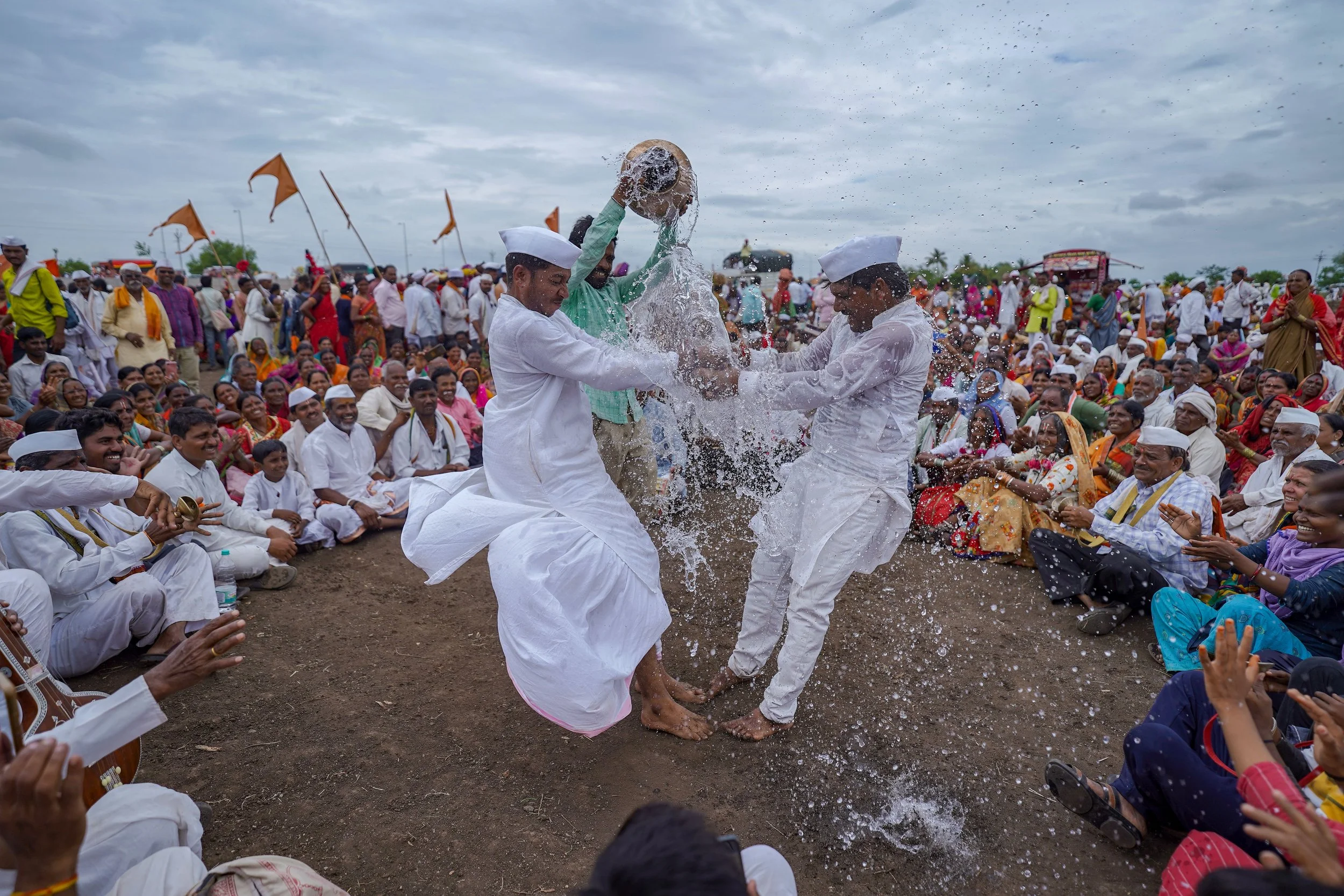
The Ringan held during the Wari is the biggest attraction. It's a circle the warkaris form on the move with cymbal players, flag-bearers, drummers, veena players, all standing shoulder to shoulder as the chanting starts up. Then, as the taal-mridung picks up pace, a horse from the procession breaks into a run, circling the palkhi as though paying its own respects. The drumming, the chanting, a horse at full gallop, and to witness this, people travel a long way just to stand and watch this for a few minutes. Once the horse has passed, devotees crowd in to touch, honour, and collect the sacred dust beneath its hooves and apply it on their foreheads. There's a standing ringan and a horizontal one too, where the warkaris play games, race each other, and put on bits of traditional folk performance, part ritual, part fair.
The Wari route runs along the old Mumbai-Pune highway and through Dive Ghat near Saswad. Watching lakhs of people move through that ghat, chanting as they go, doesn't feel entirely real. It seems more like something you'd imagine than something you'd actually see. There's a light drizzle most of the time, the hills are green on every side, small waterfalls run down between the rocks, and somewhere in the middle of all that, a river of people keeps moving. From a drone, apparently, it looks even stranger and more beautiful to witness nature and devotion occupying the same frame.
What's striking about the warkaris is how easily they set aside comfort for this. No one's forcing them to give up a soft bed for weeks of walking and chanting, they choose it. That's part of why scholars and travellers, from India and elsewhere, keep showing up to watch and sometimes join: there's something here about Indian spirituality and folk tradition that's hard to read about and easier to just witness. Nobody spells it out, but the Wari has a way of making its point anyway, that real contentment doesn't come from comfort, but from unity, service, and faith. What starts out as a walk toward Pandurang often becomes something more personal along the way, and for many people, that's where their interest in spirituality begins.
The Wari isn't only about the final destination, as the route itself runs through a string of places that matter. Dehu and Alandi, tied to Sant Tukaram Maharaj and Sant Dnyaneshwar Maharaj, respectively, give a sense of where the warkari tradition actually comes from. From there, the path continues to Morgaon, home to Mayureshwar and considered the principal seat among the Ashtavinayak temples. Jejuri comes next, where pilgrims bow to the chant of "Yelkot Yelkot Jai Malhar." Solapur district adds several more stops worth visiting: the Tuljabhavani temple in Tuljapur, the Swami Samarth shrine at Akkalkot, and the sacred ground of the Datta tradition at Ganagapur. And then, finally, Pandharpur itself, the Vitthal-Rukmini temple, the step associated with Sant Namdev, the Pundalik temple, the ghats along the Chandrabhaga, and Gopalpur. Call it a pilgrimage if you like, but it's just as much a window into Maharashtra's cultural and spiritual life, one that's worth seeing even if faith isn't really your reason for going.