Experiences
The Luxury of Being Unmanaged
A stay at Sunnymead, Shimla — where nothing feels scheduled, and everything still falls into place.
By Prabhjot Bedi, Editor, Hospemag.
Part of Experiences That Stay With You — an editor-led exploration of places remembered for how they made us feel.
There are places you visit. And then there are places that receive you.
The distinction is not about luxury, or views, or the thread count of the linen. It is something harder to name. A quality of air, perhaps. The way a room holds light at four in the afternoon. The particular silence that settles after dinner when nobody has reached for their phone in hours and nobody has noticed.
SunnyMead is the second kind of place.
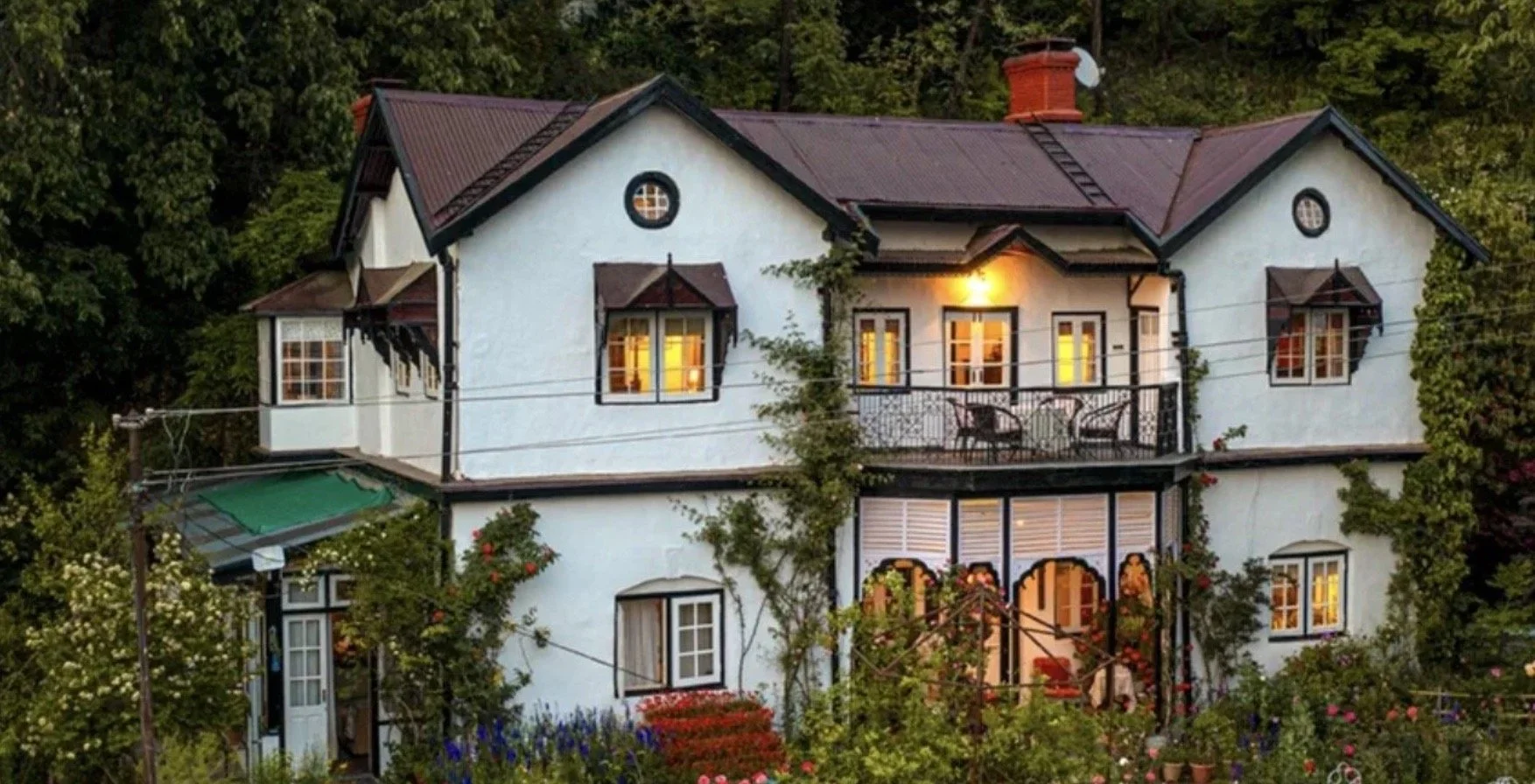
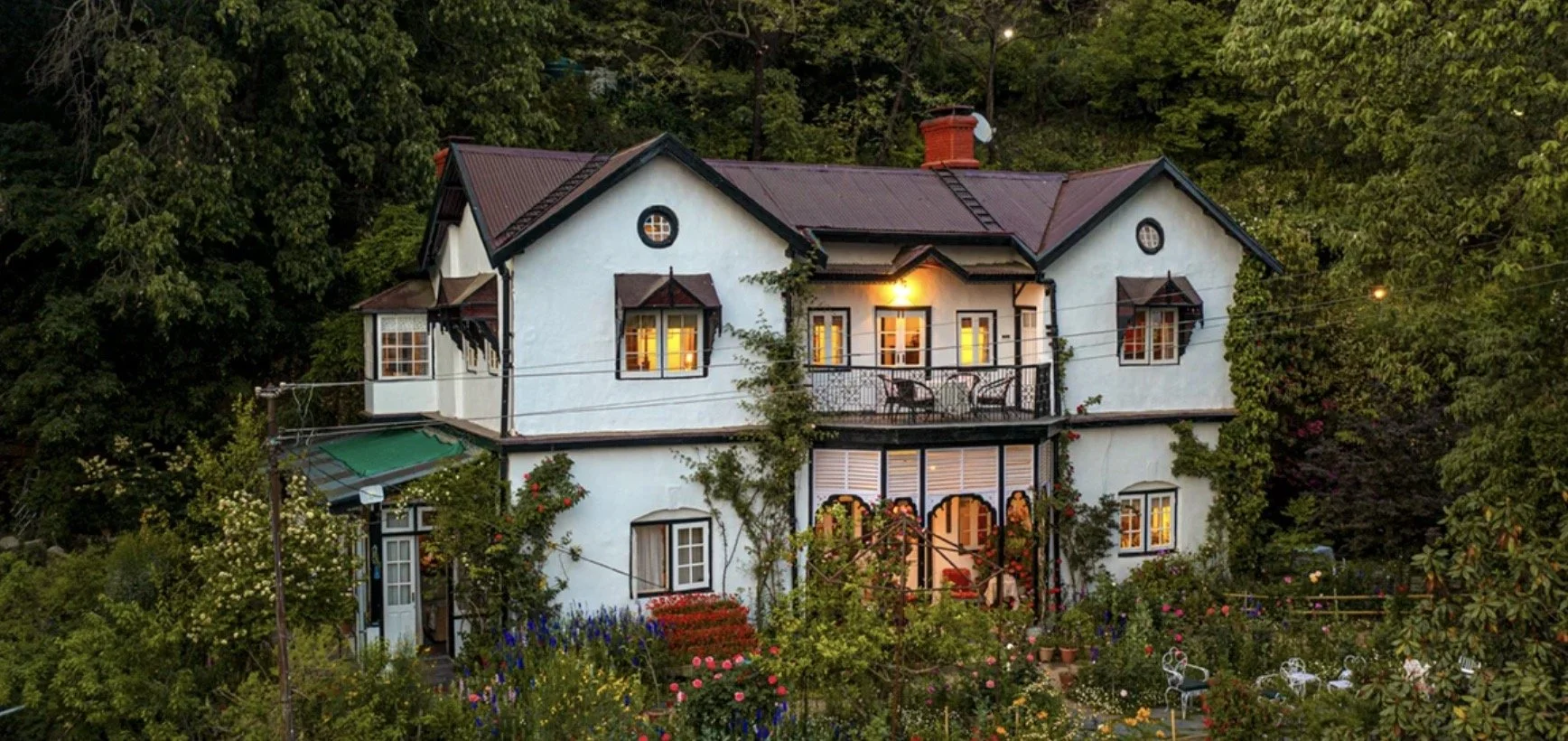
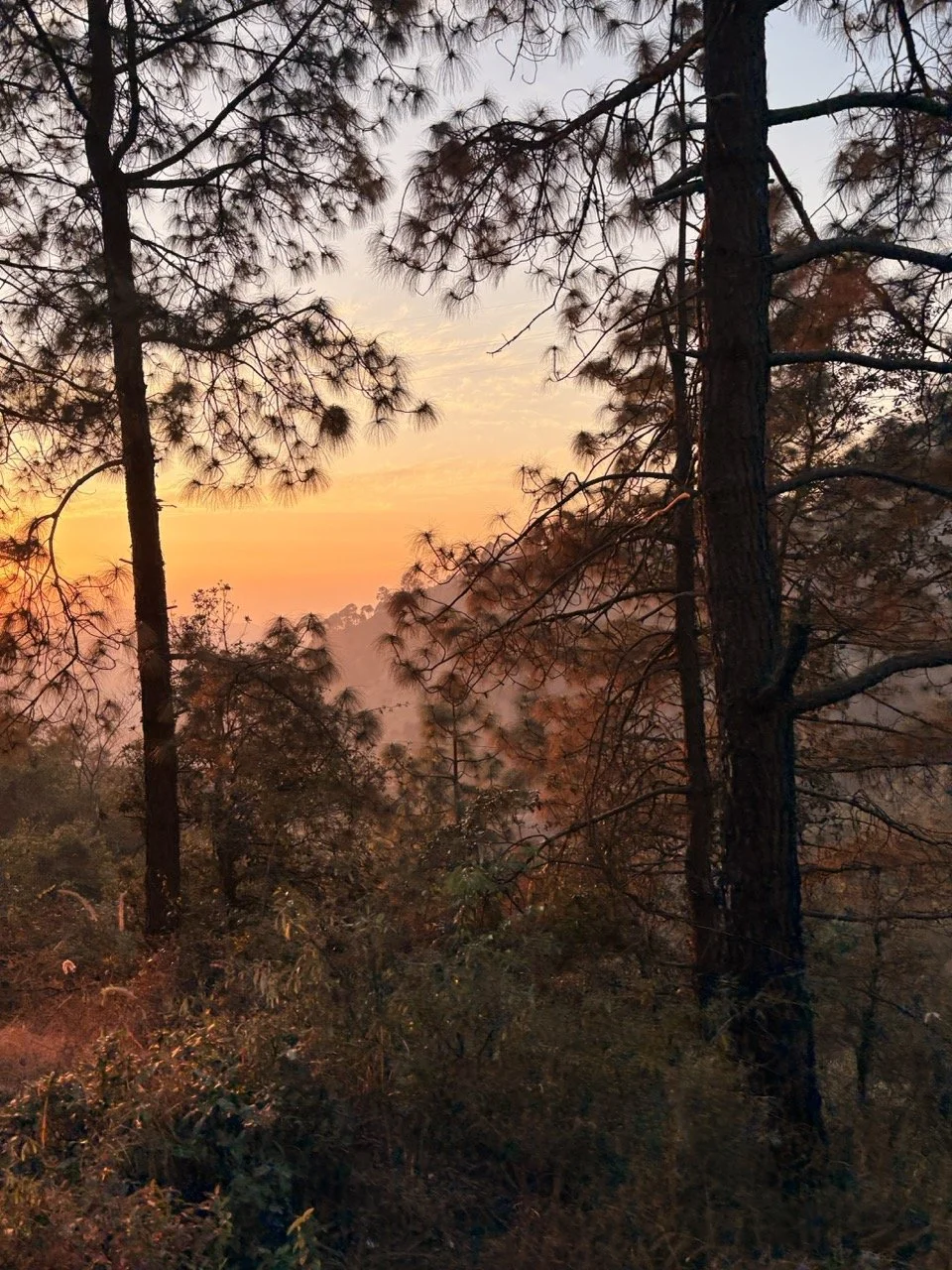
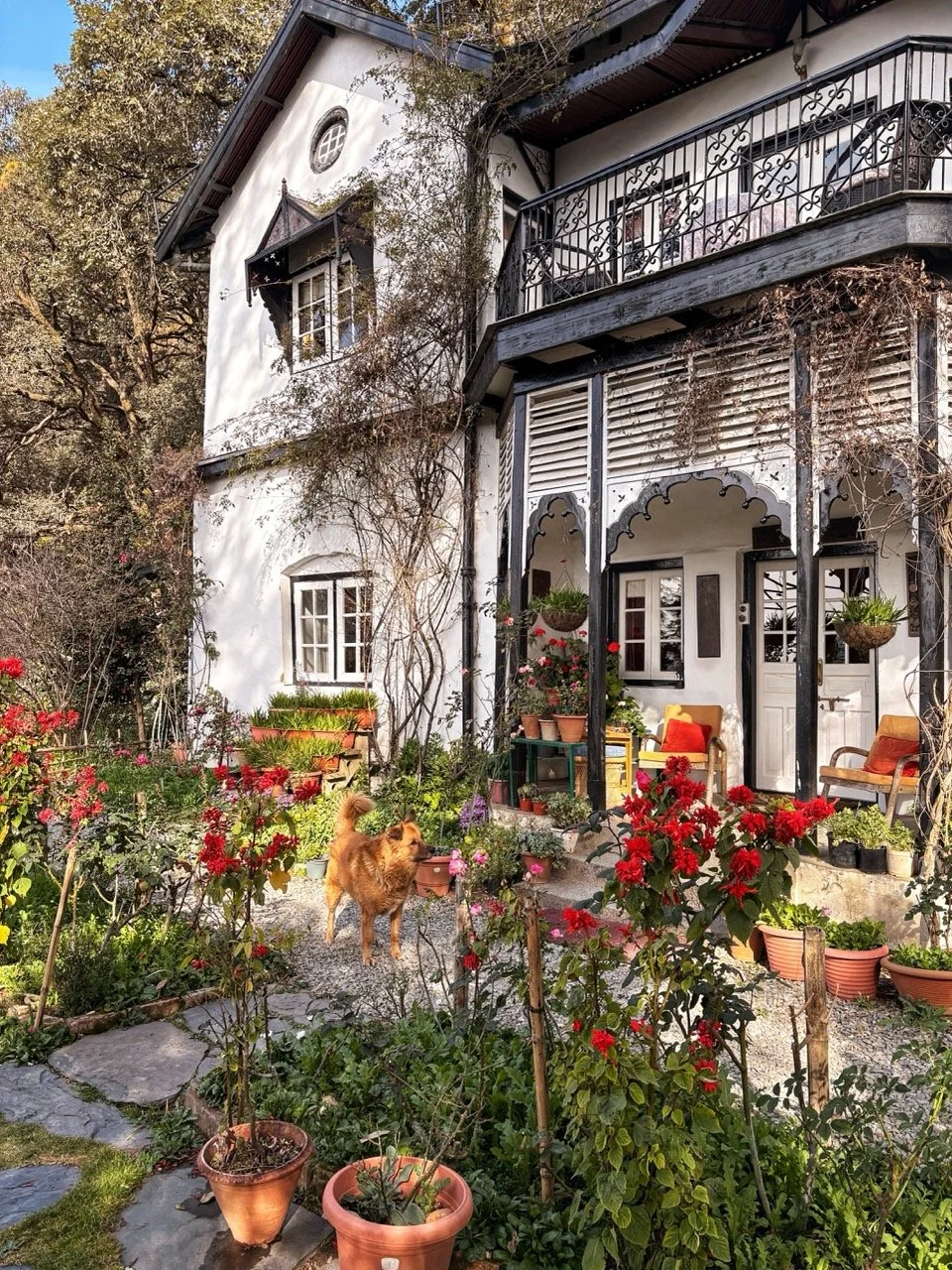
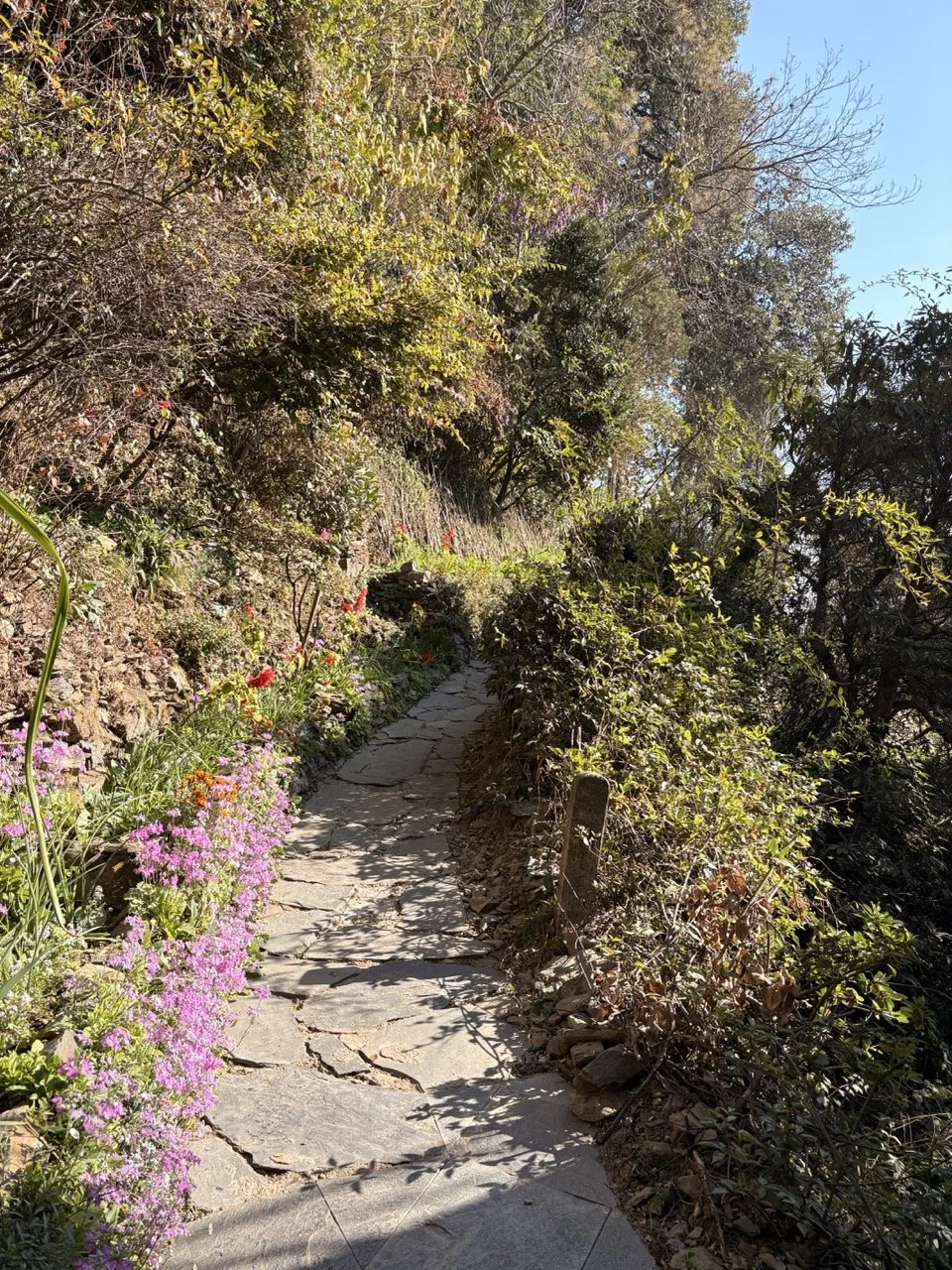
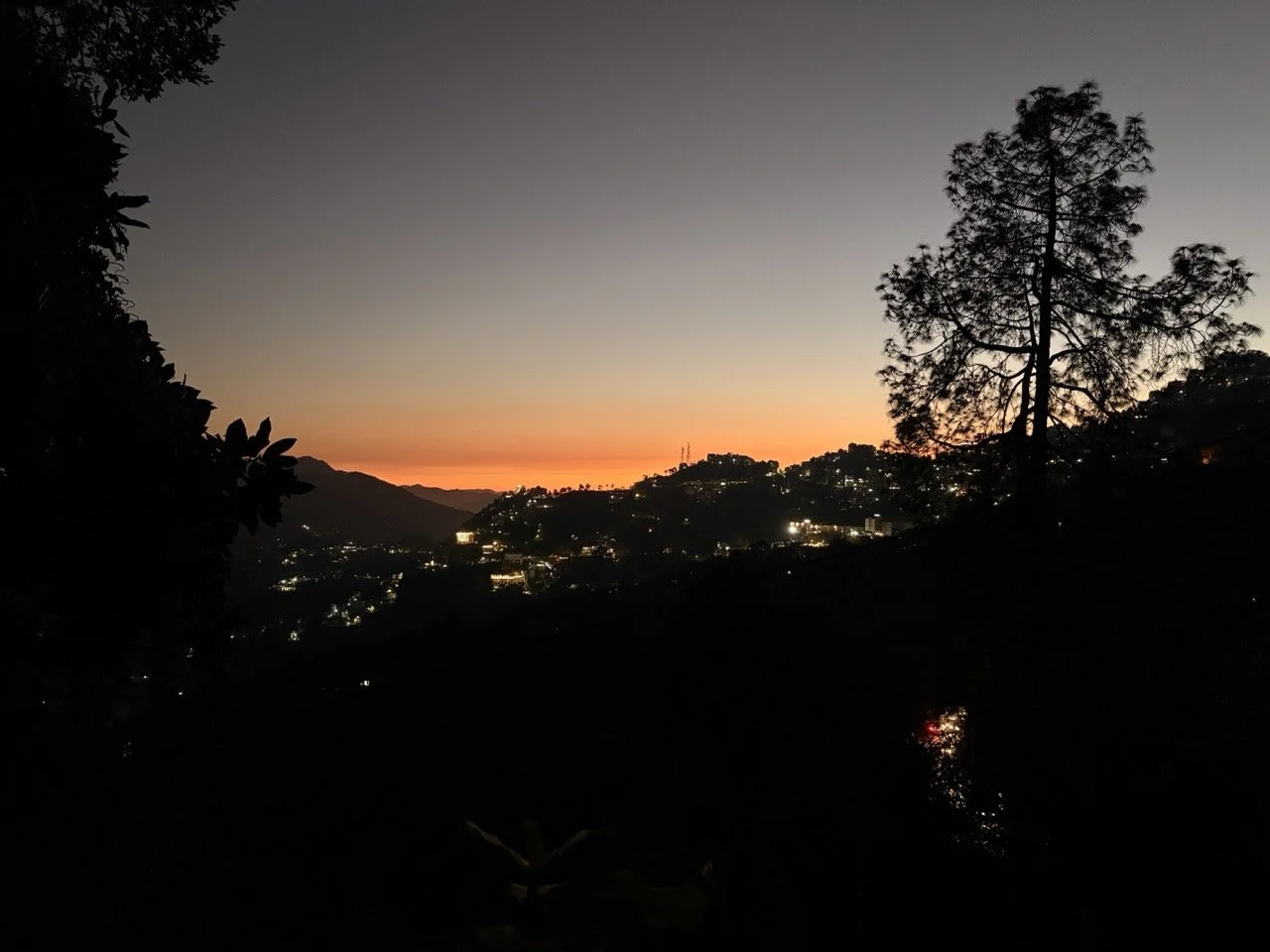
You approach it on foot — there is no other way — descending below the Cart Road into a Shimla that has not yet been convinced to modernise itself into mediocrity. Oak and rhododendron form a canopy above you. The house appears gradually, the way houses with long memories tend to, as though it is deciding whether to let you in.
It has been making that decision since 1890.

Vimla Kitchlu
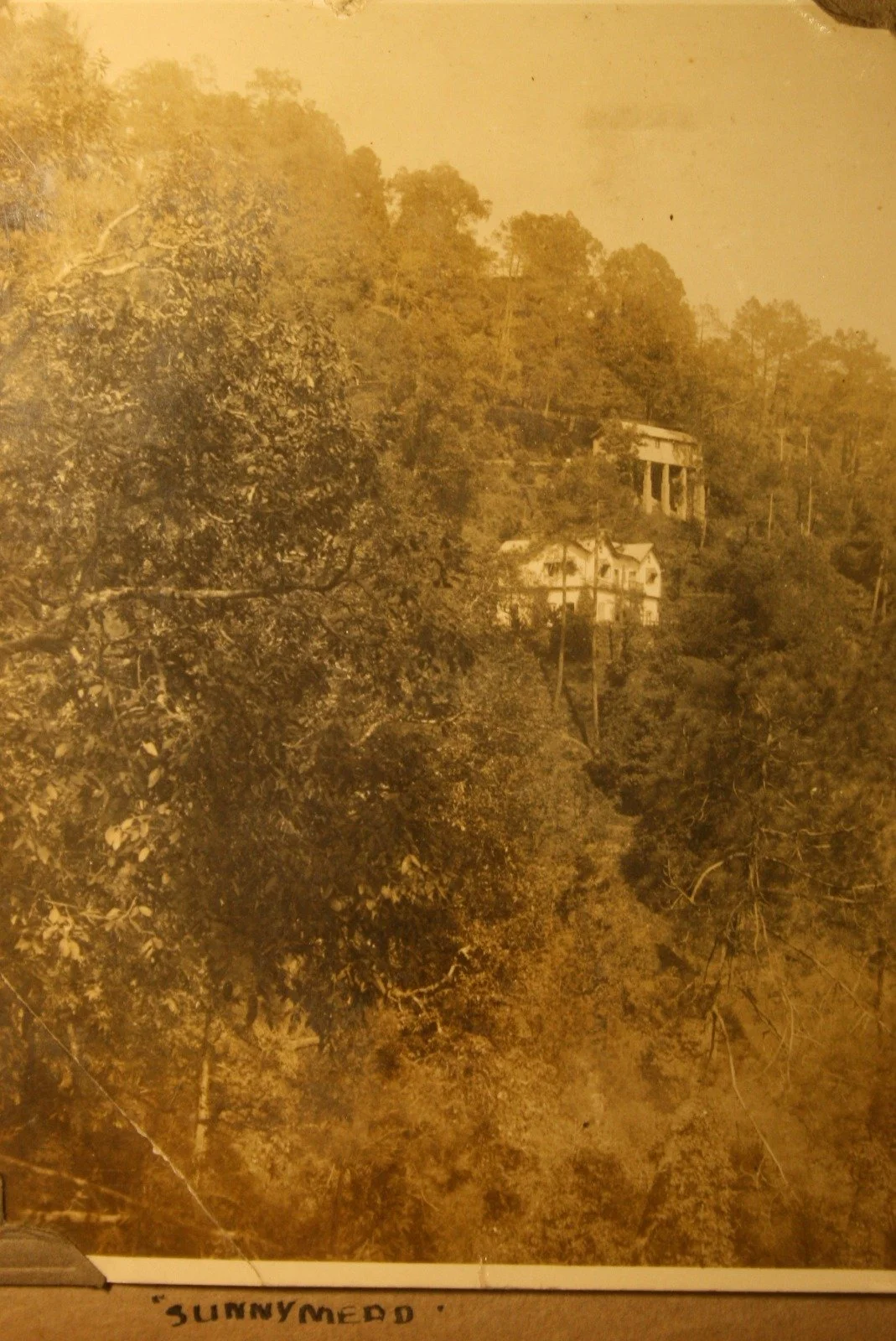
SUnny Mead around 1890
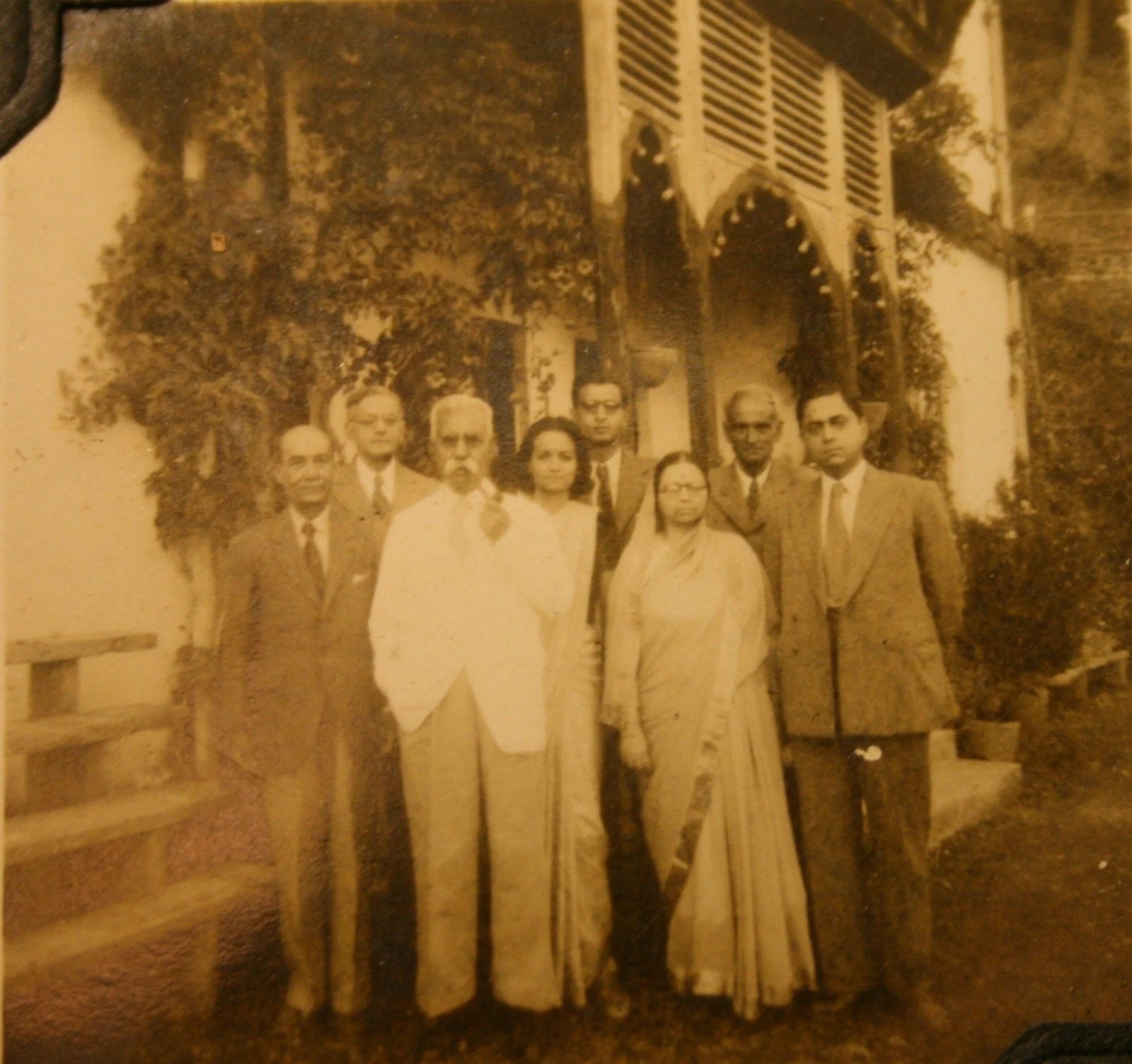
The Family
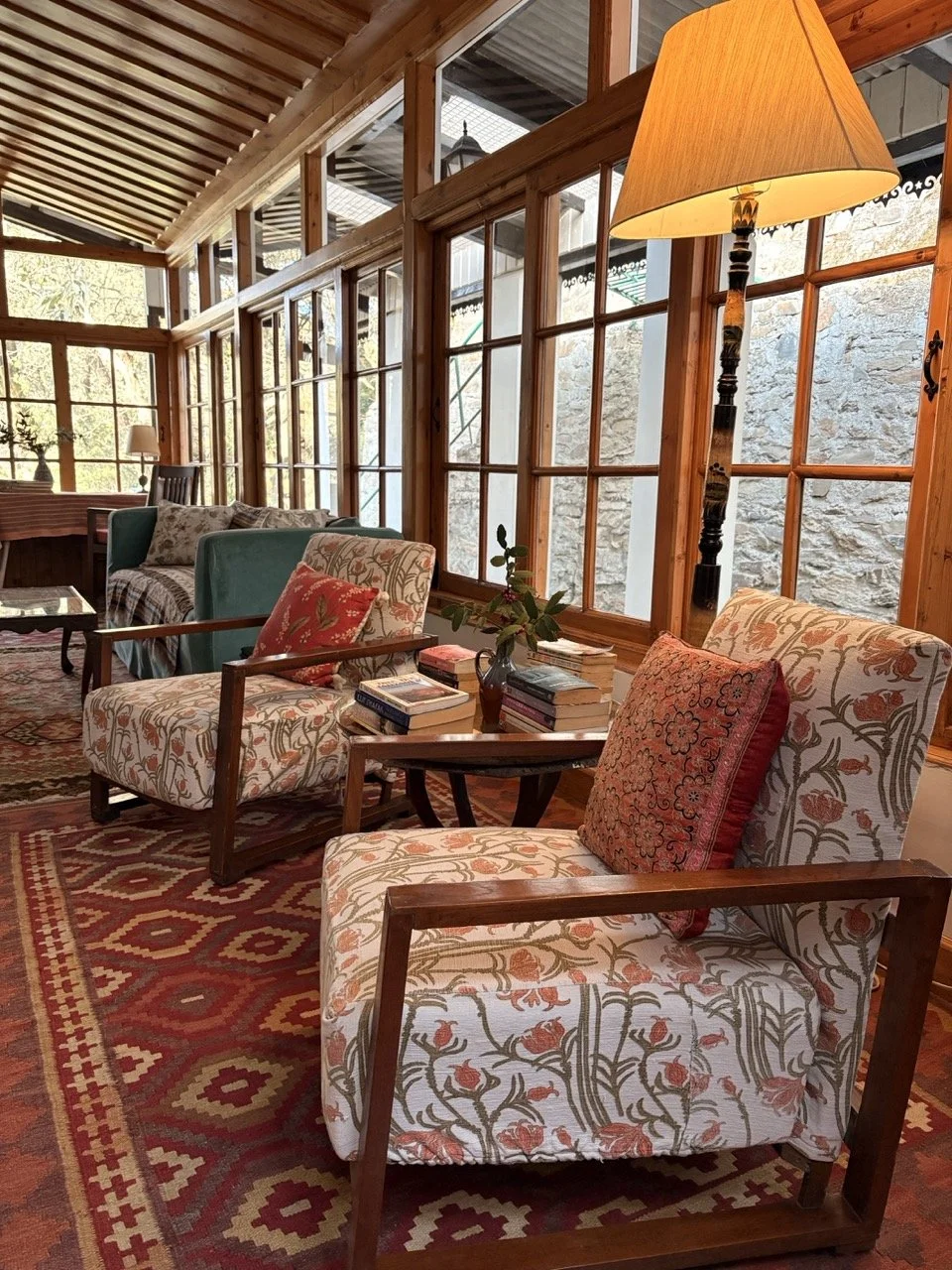
Built in the 1890s, it retains its original construction system, materials, and spatial logic. The house is occupied full-time by the owner’s daughter, Madhavi, who now runs Sunnymead as a small bed and breakfast. The property formed part of an estate built by Jawahar Kishan Kitchlu, a Kashmiri Pandit in the British Indian administration, when Simla served as the summer capital. The main house was sold in the 1920s. The remaining annex stayed with the family and continues in use. The site is arranged along a natural slope, with oak and rhododendron forming the upper canopy and cultivated areas closer to the house. Books, photographs, and personal objects remain in use. A drawing of Arunachala is kept in one of the rooms without accompanying text.
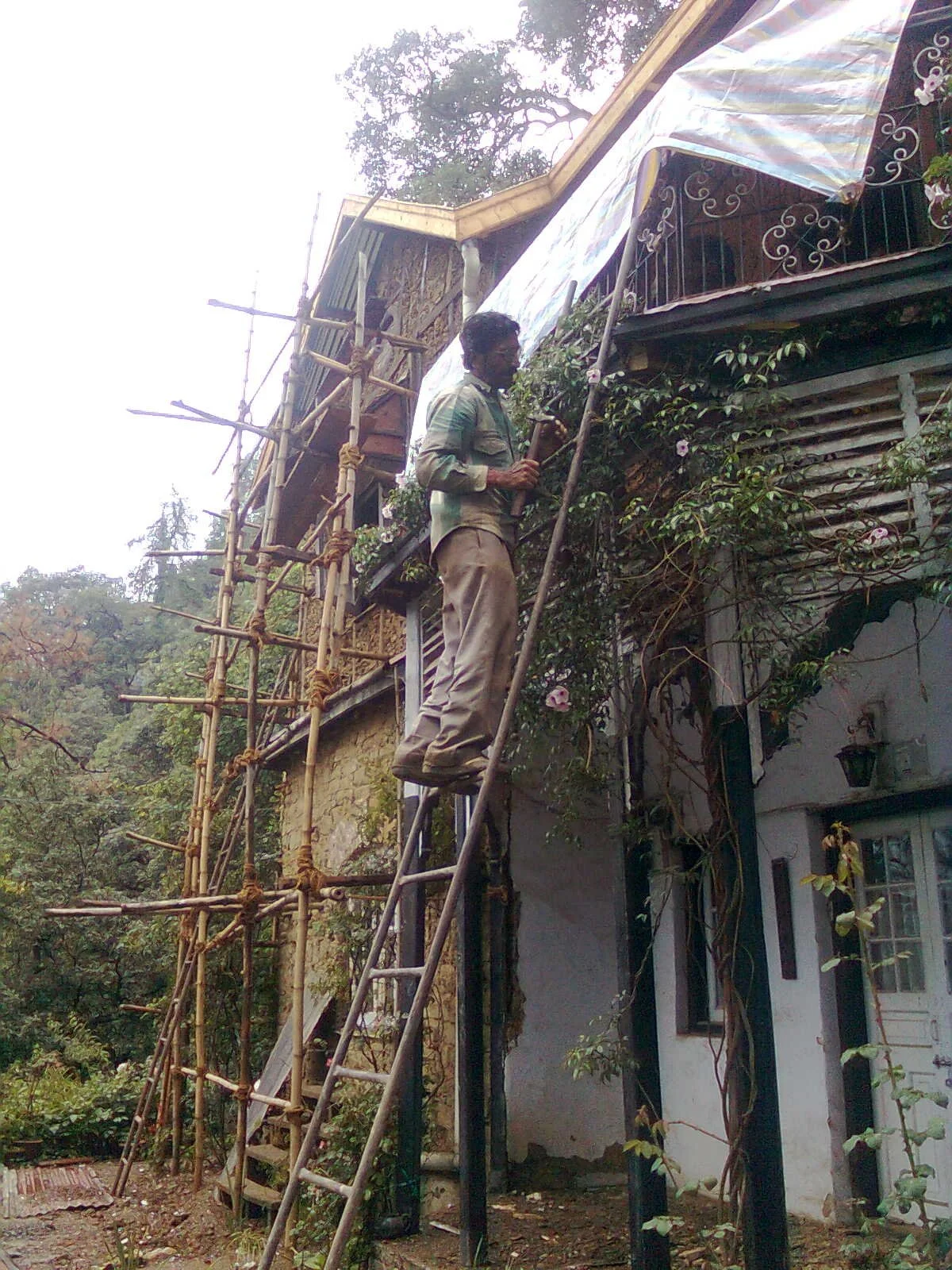
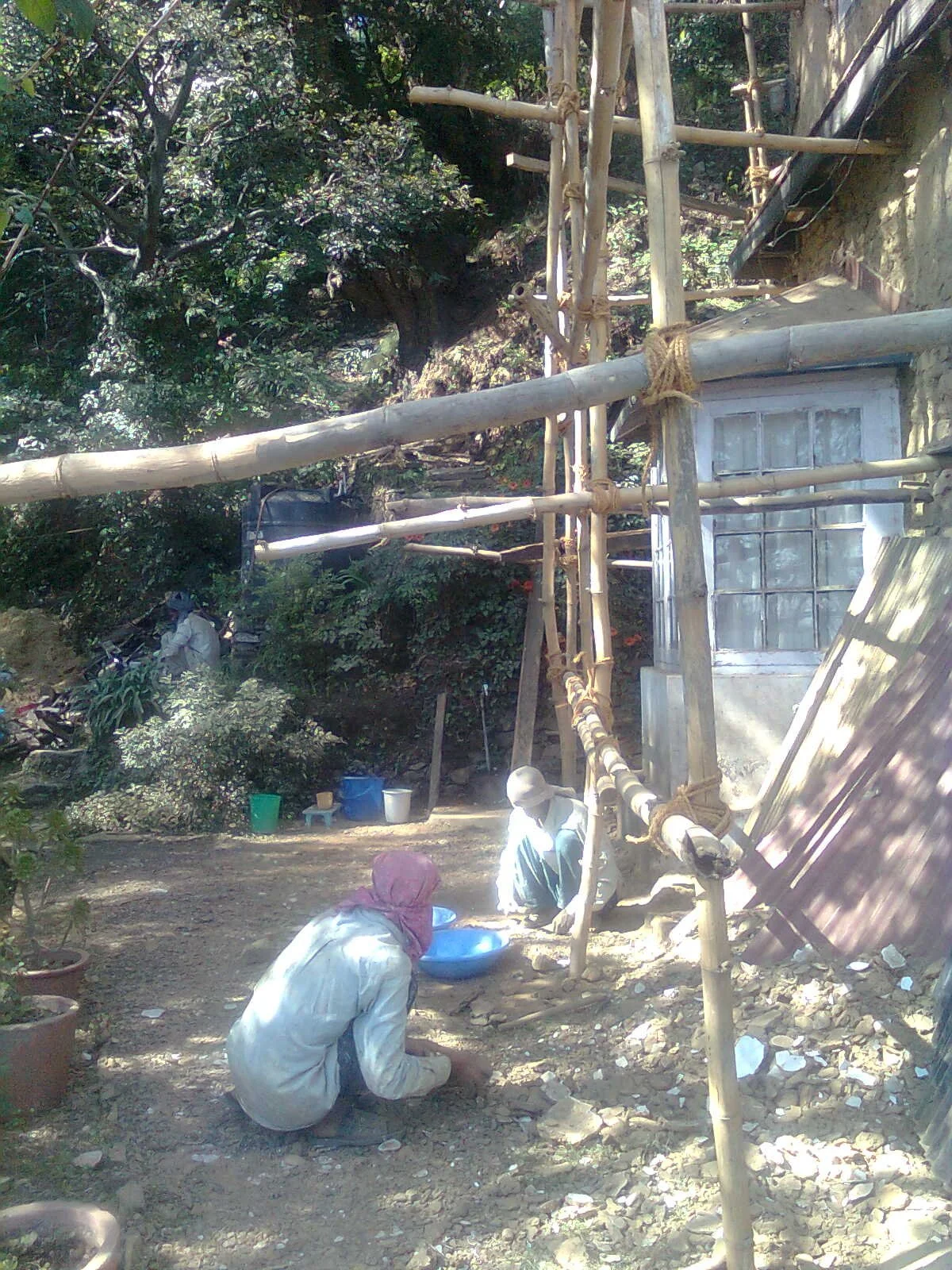
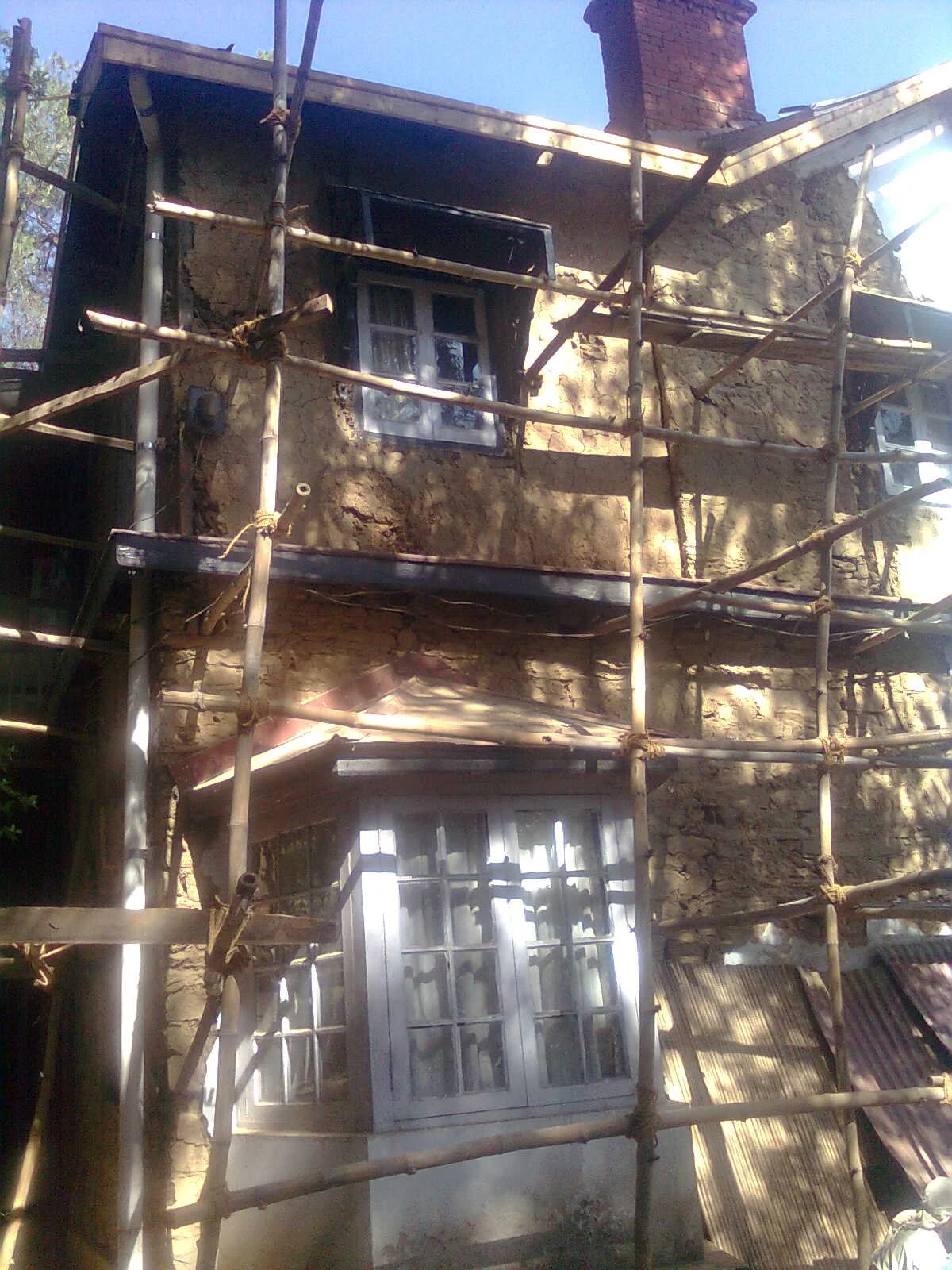
When Madhavi took over the house in 2010, sections of the structure had deteriorated due to prolonged damp. The building is constructed in the traditional Dhajji Dewari system, a timber frame with stone and earth infill, finished with mud plaster and lime. The timber grid accommodates seismic movement by distributing lateral force, allowing infill to fracture locally without destabilising the structure.
The same system regulates temperature and moisture. Walls remain permeable, and internal conditions stabilise without mechanical systems. After rain, the plaster carries a faint, earthy smell that returns with damp. Repair required craftsmen familiar with mud plaster, timber joinery, and lime finishes. Walls were rebuilt in successive layers, a clay base, a smoothing coat, and a final mixture of cow dung and sand, before lime washing. Each stage required drying time.
During the monsoon, moisture re-entered partially restored walls. Some rooms remained unusable. Fungal growth appeared in the plaster. At one stage, mushrooms emerged from the walls, occasionally in colours that were unexpectedly vivid. Cement and steel were not introduced. The house became fully usable in 2012, and guests were accommodated within the existing domestic structure without creating a separate hospitality layout.
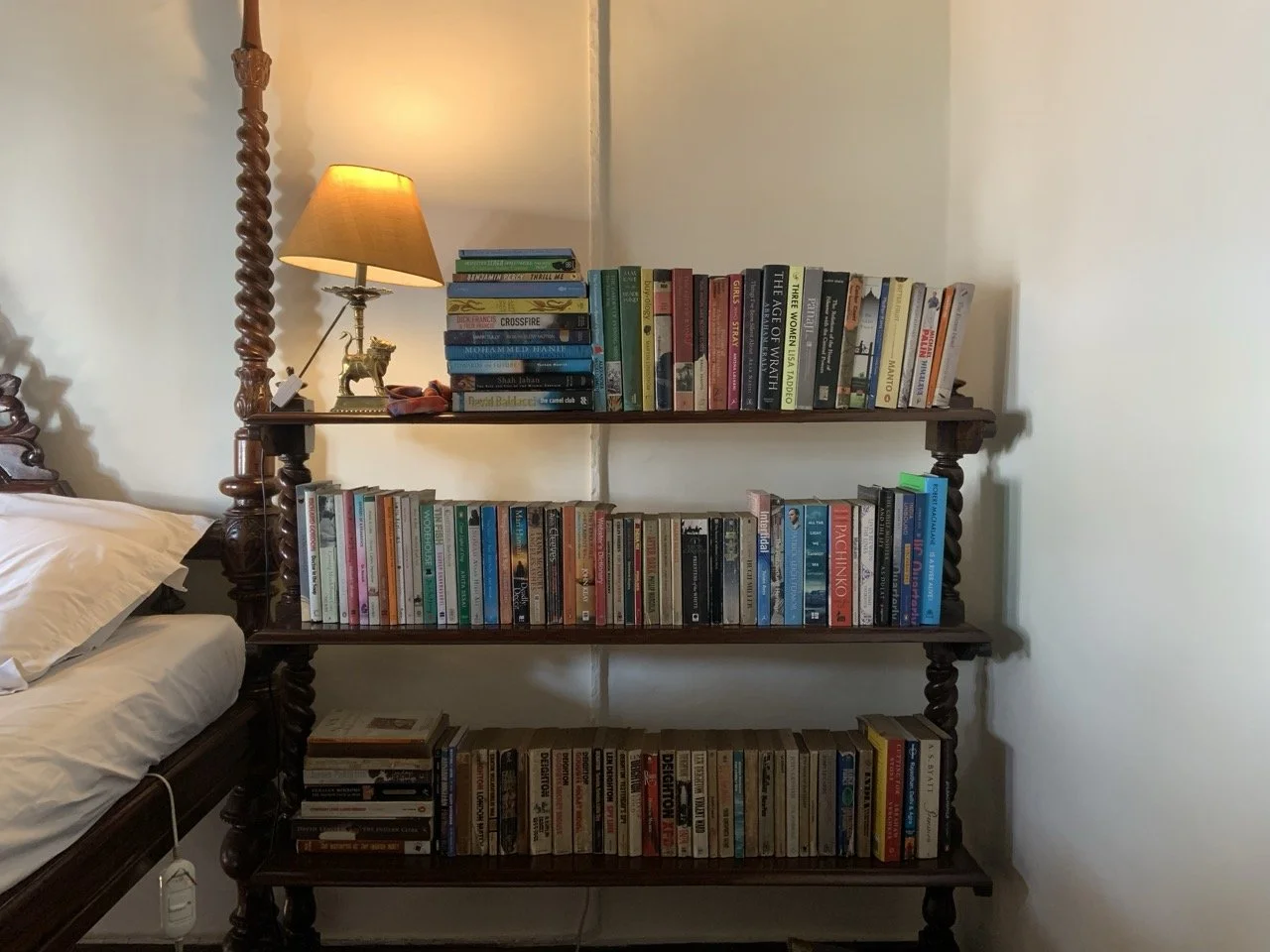
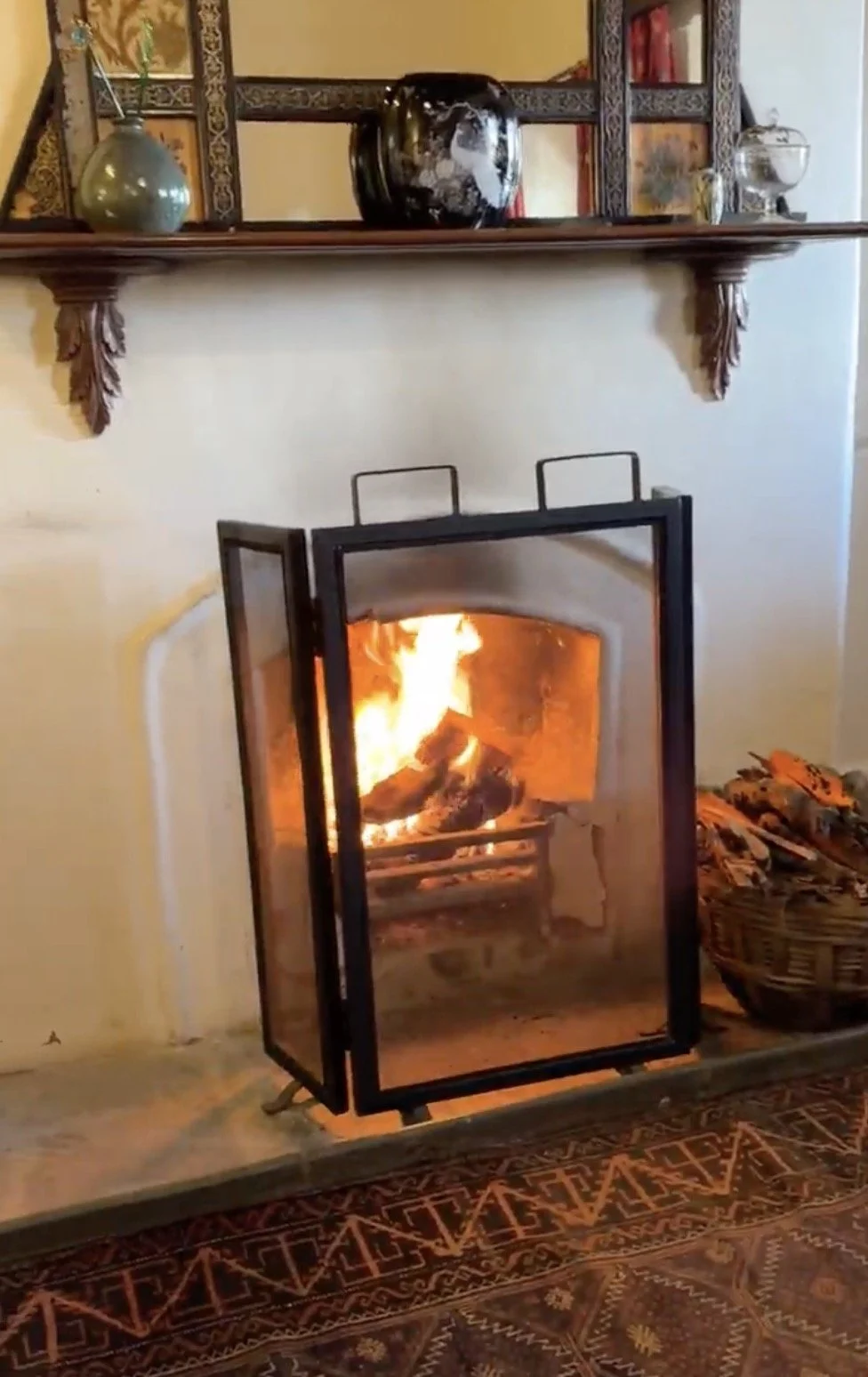
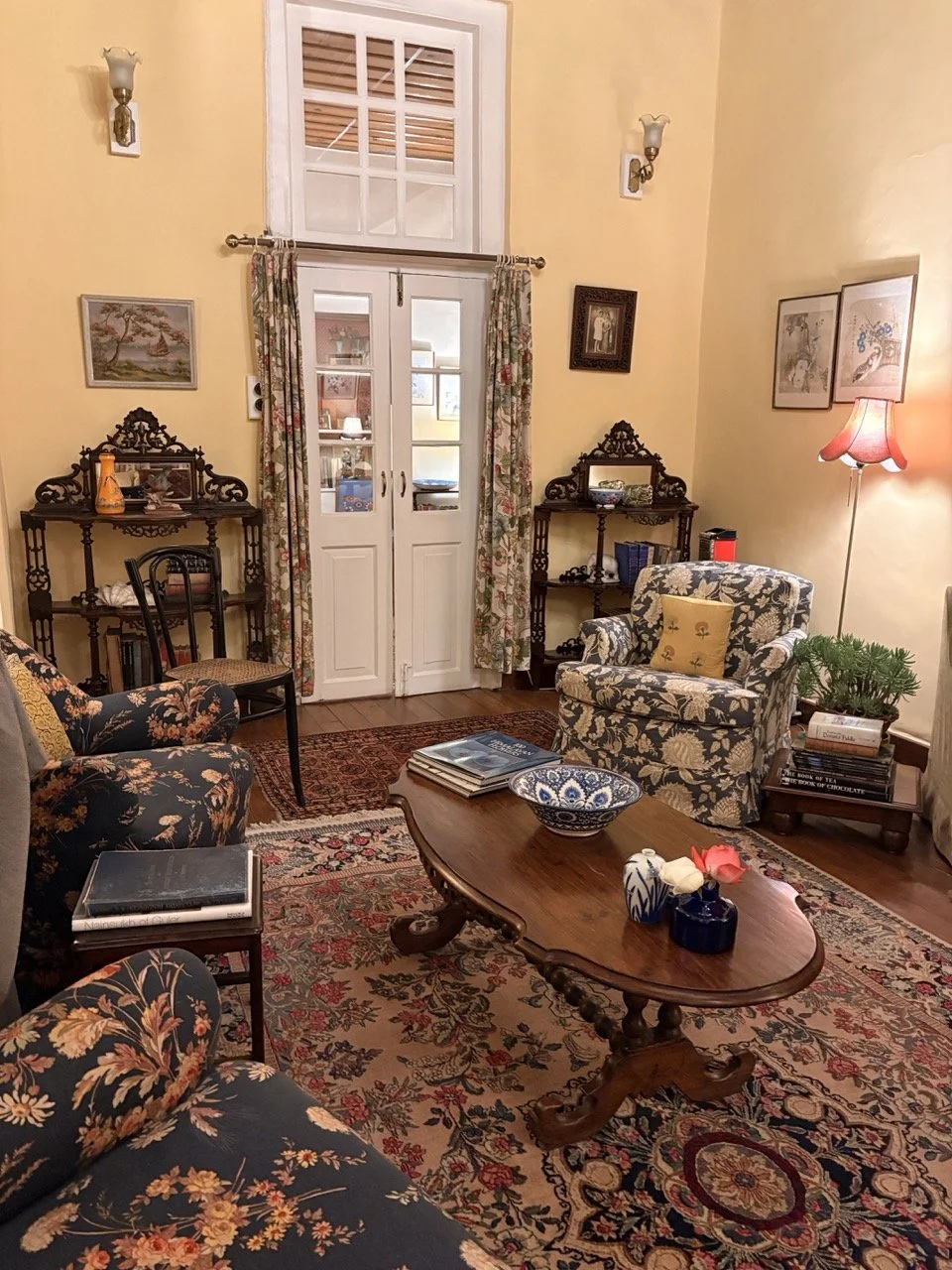
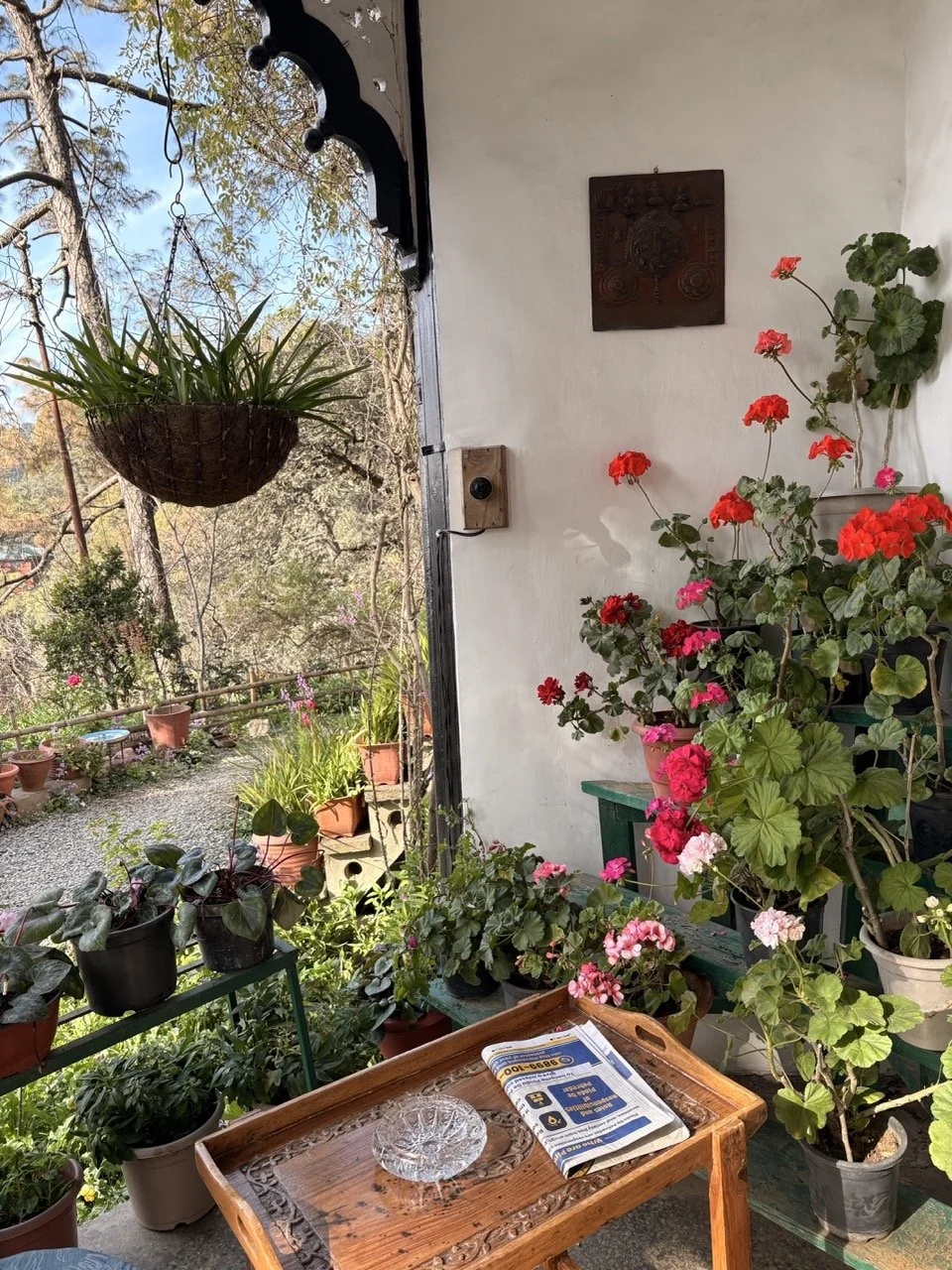
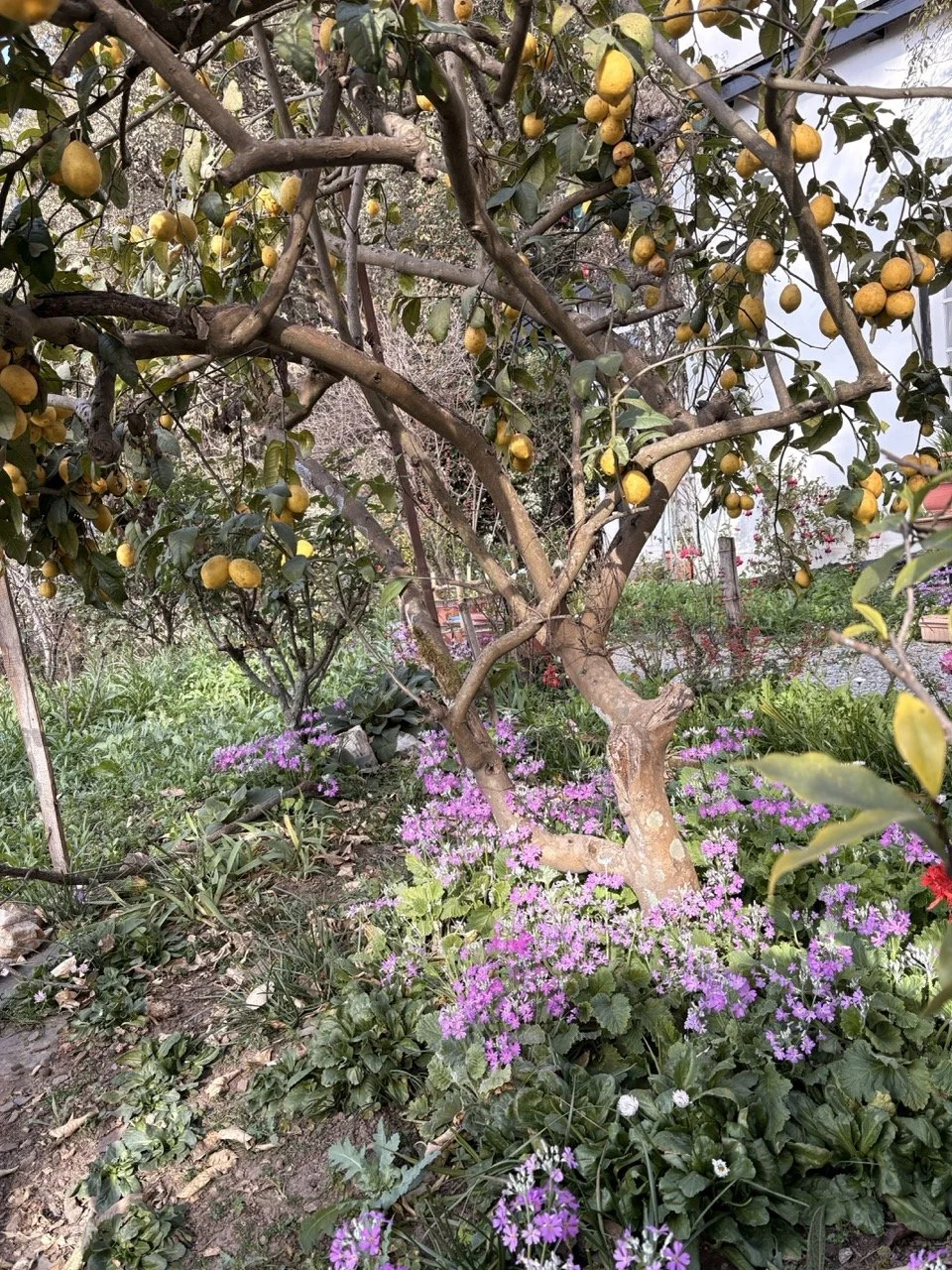
Meals follow the same logic. Cooking responds to what is available and who is present. Preferences are inferred through observation rather than requested in advance. The garden supplies part of the kitchen. Produce includes seasonal vegetables, herbs, and small fruit grown on site, with beds rotated according to season and soil condition. The layout follows the existing slope, without formal separation between ornamental and productive planting.
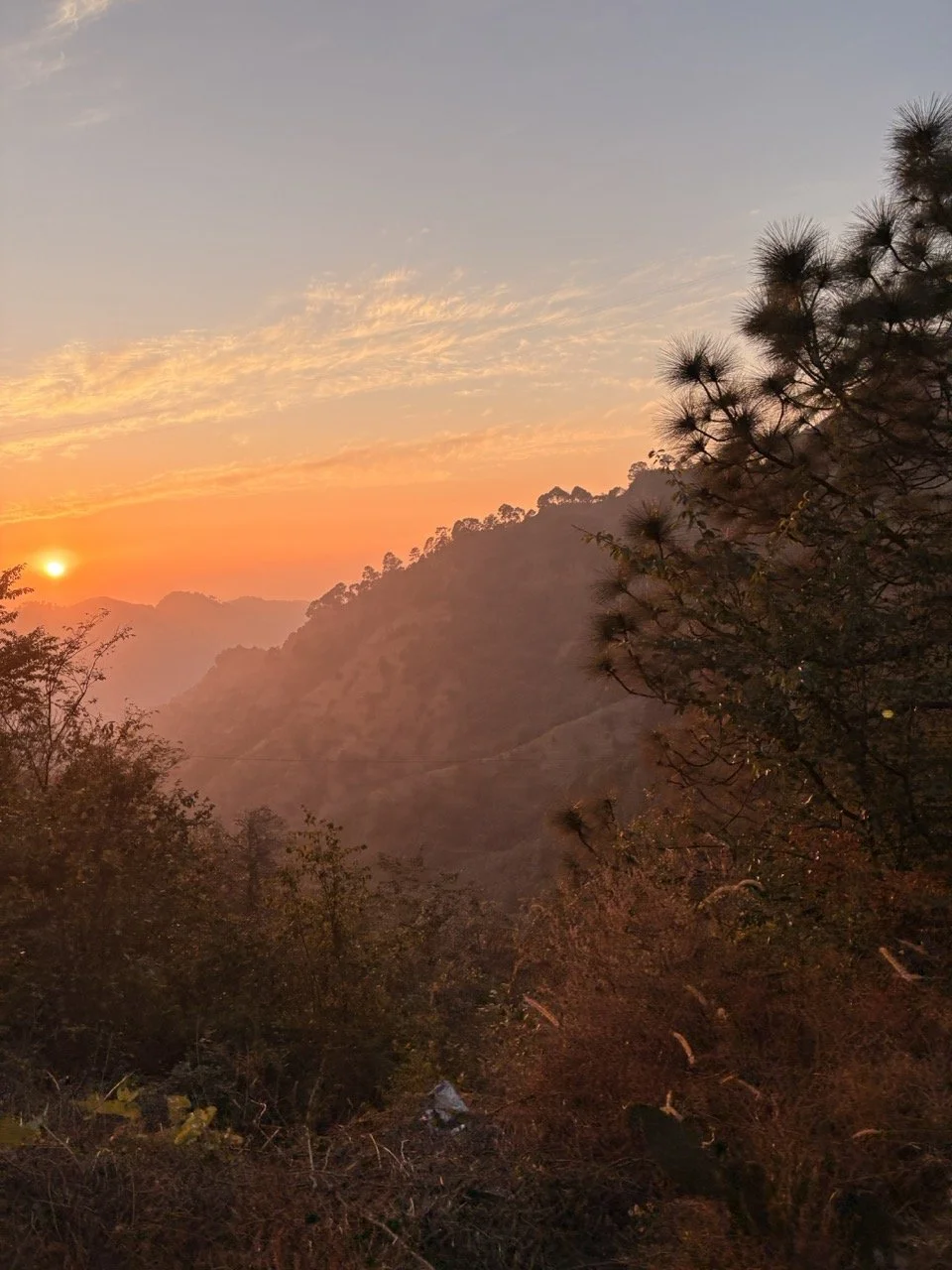
Rooms open directly onto this landscape, and their arrangement reflects repeated use rather than design decisions. Doors align with paths, and windows correspond to light at particular times of day. In the late afternoon, light moves across the slope in bands through the oak canopy, reaching the beds in intervals. Earlier planting remains in place. Roses continue along verandahs and across stone, and climbers repeat structural lines between house and garden. More recent changes are horticultural. Edges are less strictly maintained, and certain self-seeding plants are allowed to establish. Pollinator activity has increased, including bees, hoverflies, and seasonal butterflies, supported by sections planted for both kitchen use and insect life.
Kitchen waste is composted and returned to the soil. Three compost systems are maintained, kitchen compost, oak-leaf compost, and mixed garden compost. Oak compost is applied selectively. Mixed compost, containing grasses, is used with restraint due to rapid regrowth. Water use follows the same pattern of adjustment. Shimla experiences seasonal shortages, particularly in summer. Rainwater harvesting systems supply water for laundry, dishwashing, and toilets, with storage allowing seasonal buffering. Grey water is recycled and reintroduced into the garden. Potable water is not used for these functions.
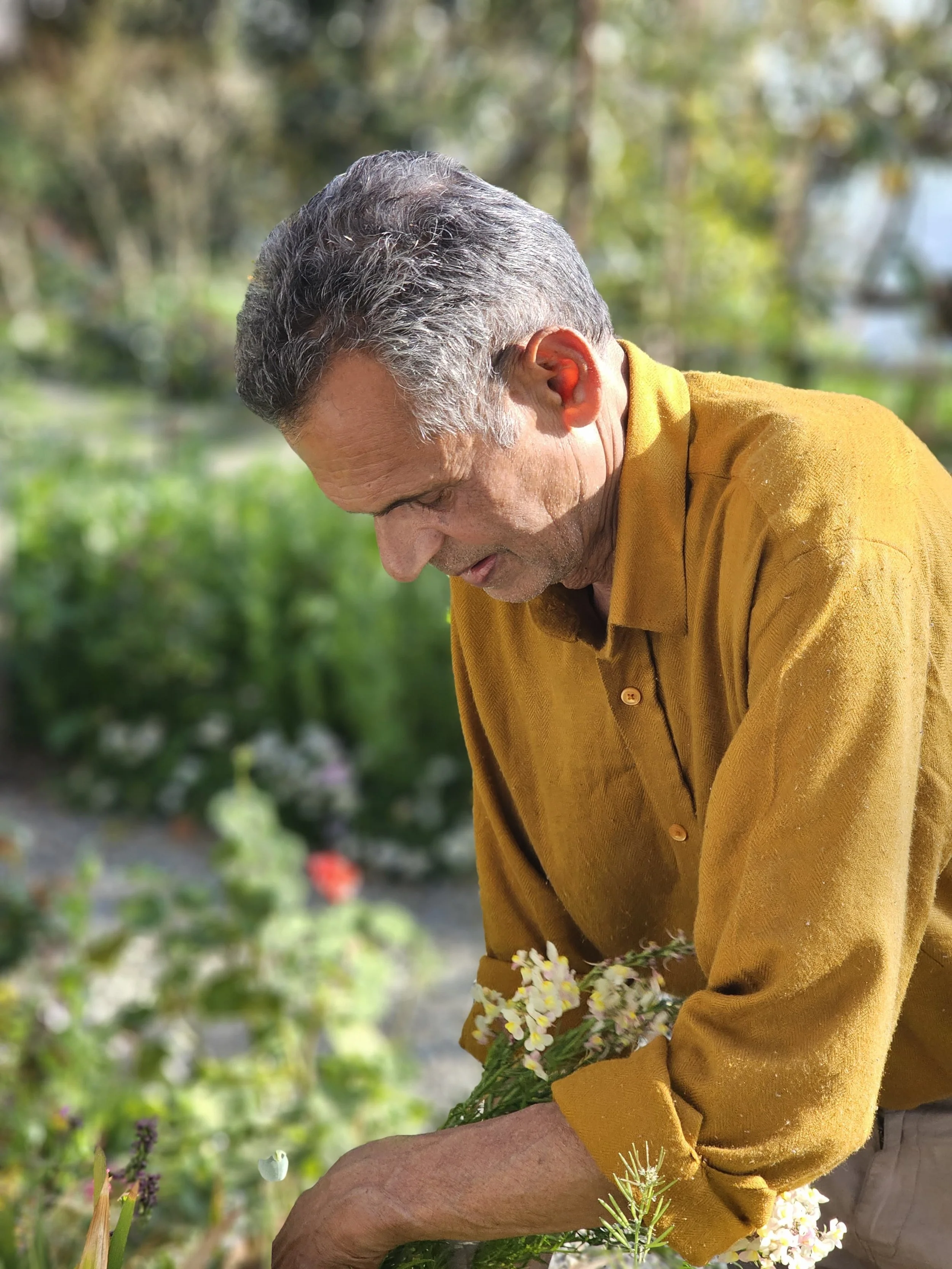
Motilal
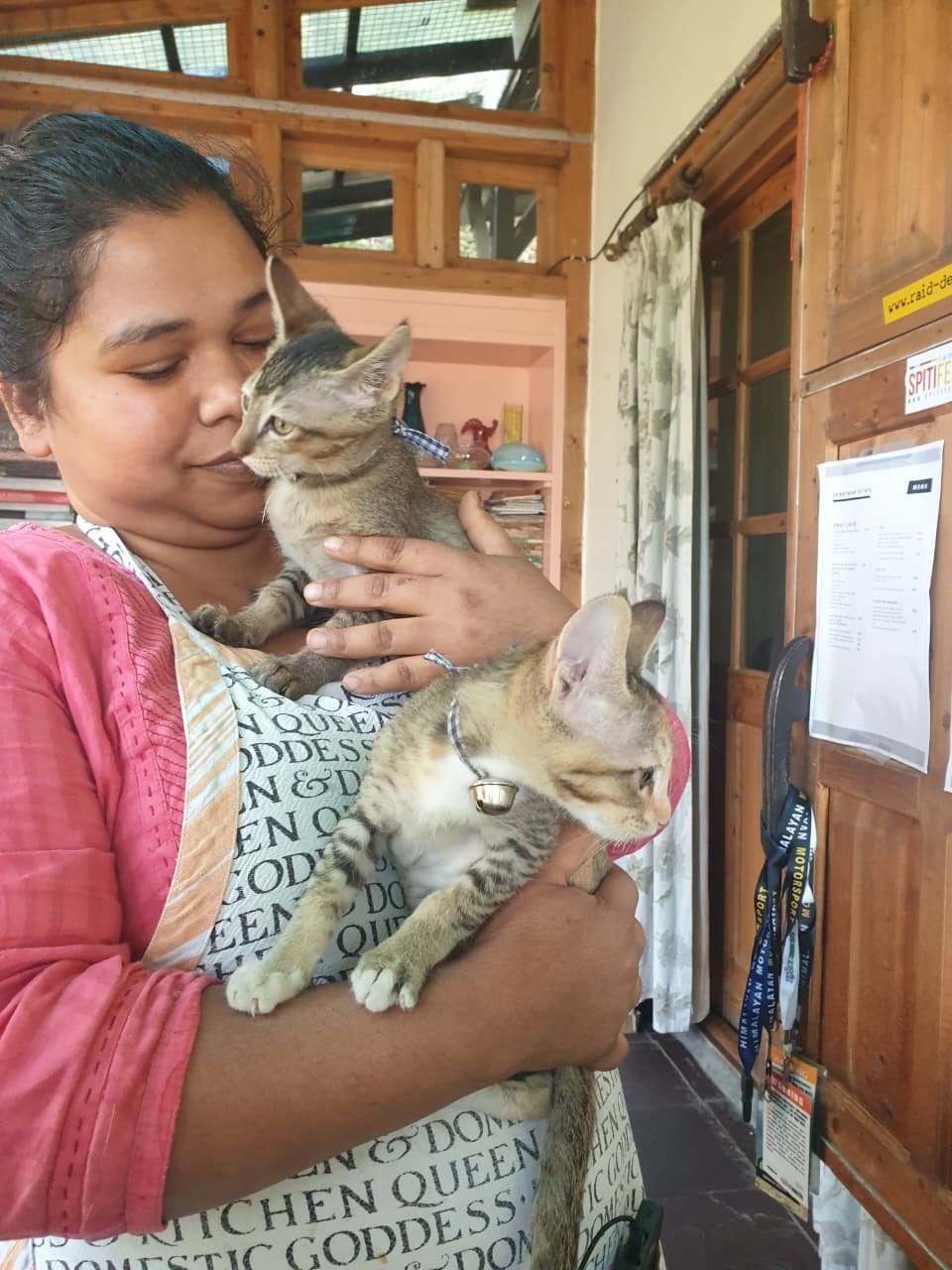
Madhu
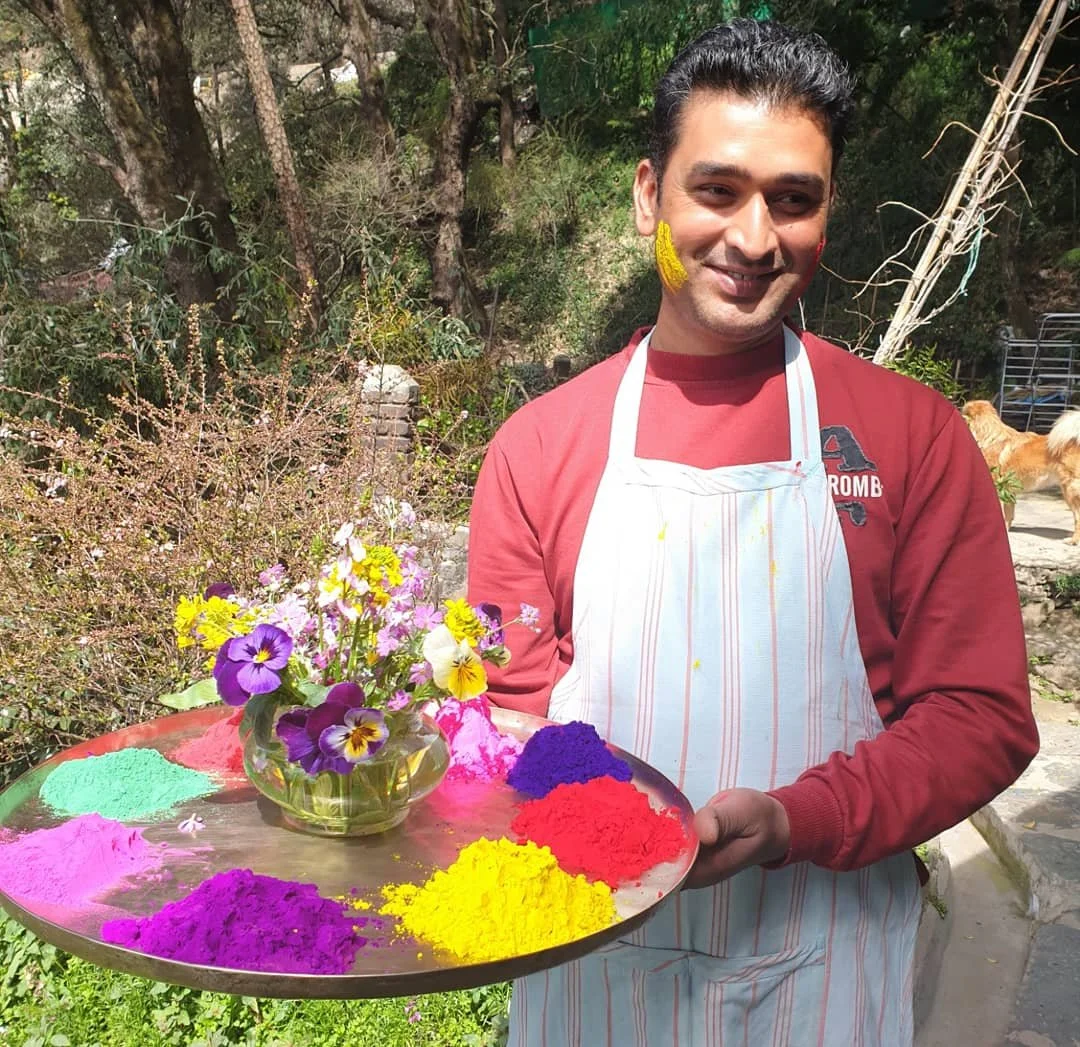
Deepak
The people who work here form part of the same continuity. The gardener, Motilal, has worked on the property for several decades and manages planting and soil cycles. The cook, Madhu, joined as a teenager and remains responsible for the kitchen.
Motilal has been working the garden for nearly half a century. He does not tend it so much as converse with it. Madhu has been cooking here since she was seventeen. Madhavi describes her, without ceremony, as being as much a part of the space as she is. The food is not a menu. It is a reading — of who is present, what they seem to need, what the kitchen has, what the season allows.
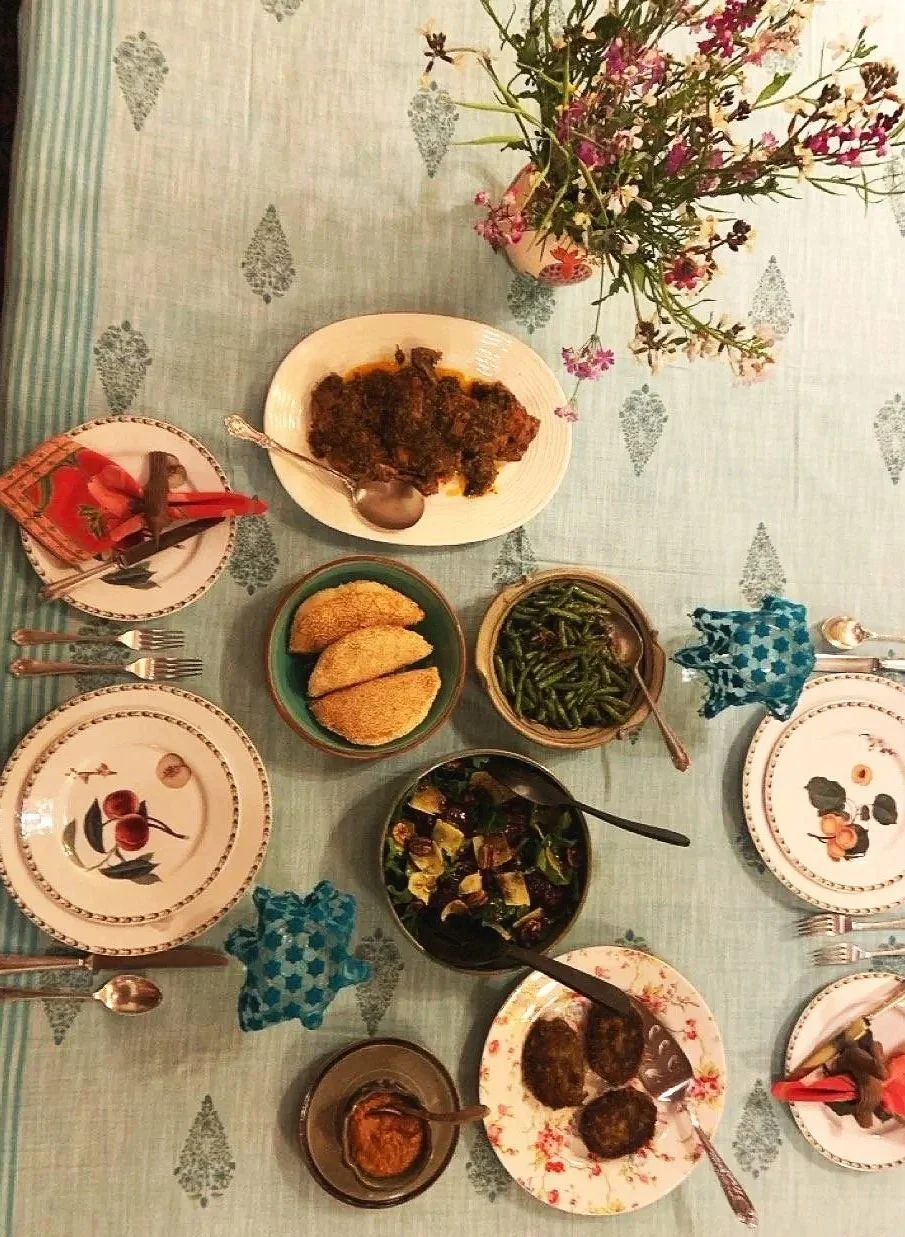
The remarkable thing is how little of this is performed. Madhavi is not trying to impress you. This matters because there is a kind of hospitality that is desperate to be liked. It is full of practised warmth and scripted curiosity. It anticipates your needs so aggressively you never get to have one.
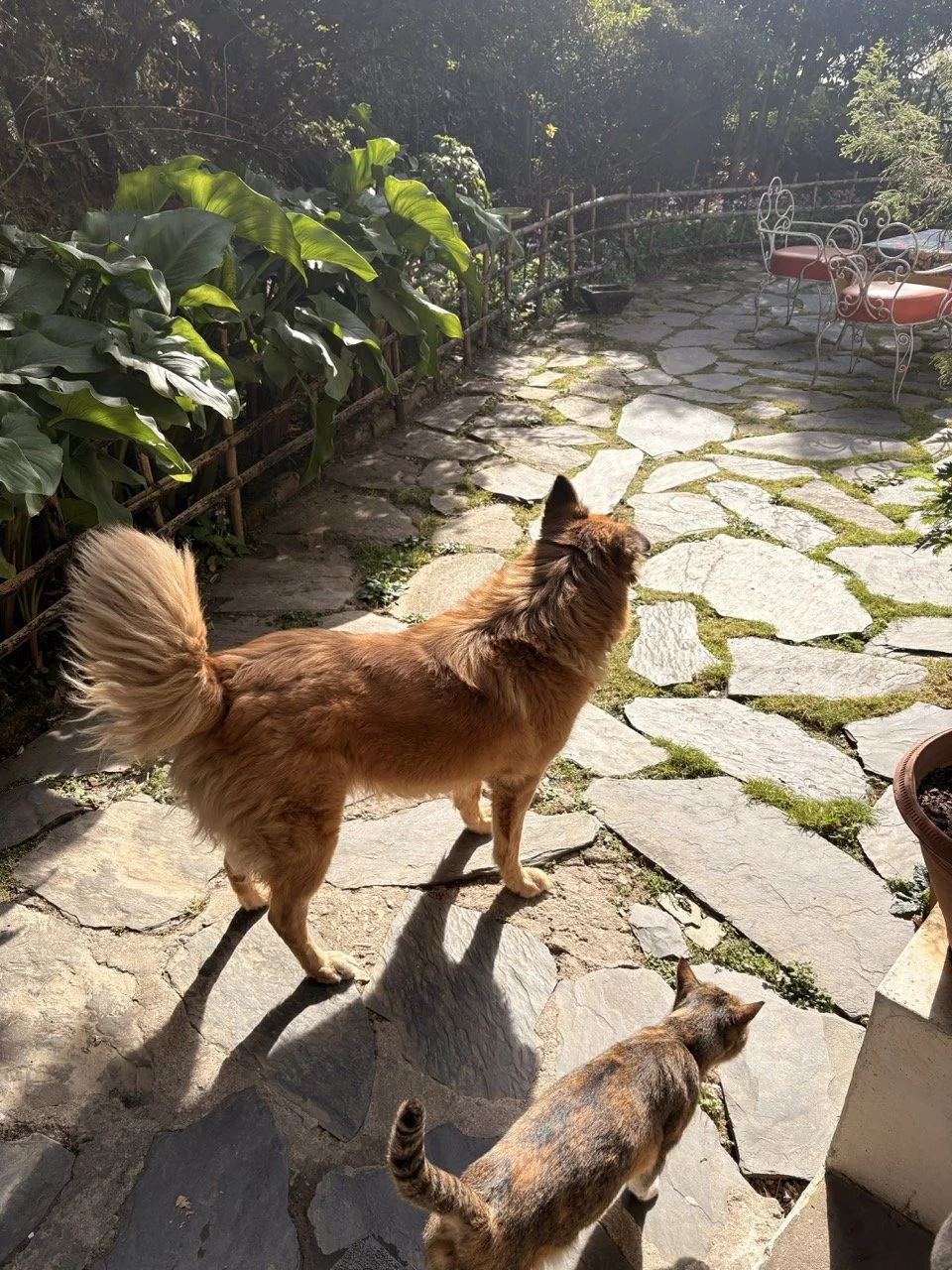
Sunnymead is the opposite. It has non-negotiables. There are dogs and cats. If you do not like animals, do not come. There is walking involved. If you need flat, easy, elevator life, there are other places and Madhavi will recommend them with startling honesty. This is not a venue for large family functions. It is not an amusement park for children. It is a place for people who still know how to be bored. Who can make their own entertainment. Who want to walk a hill town on foot, not through a windscreen. Who might, if they are lucky, find themselves talking until 3 a.m. to a woman they met that morning.
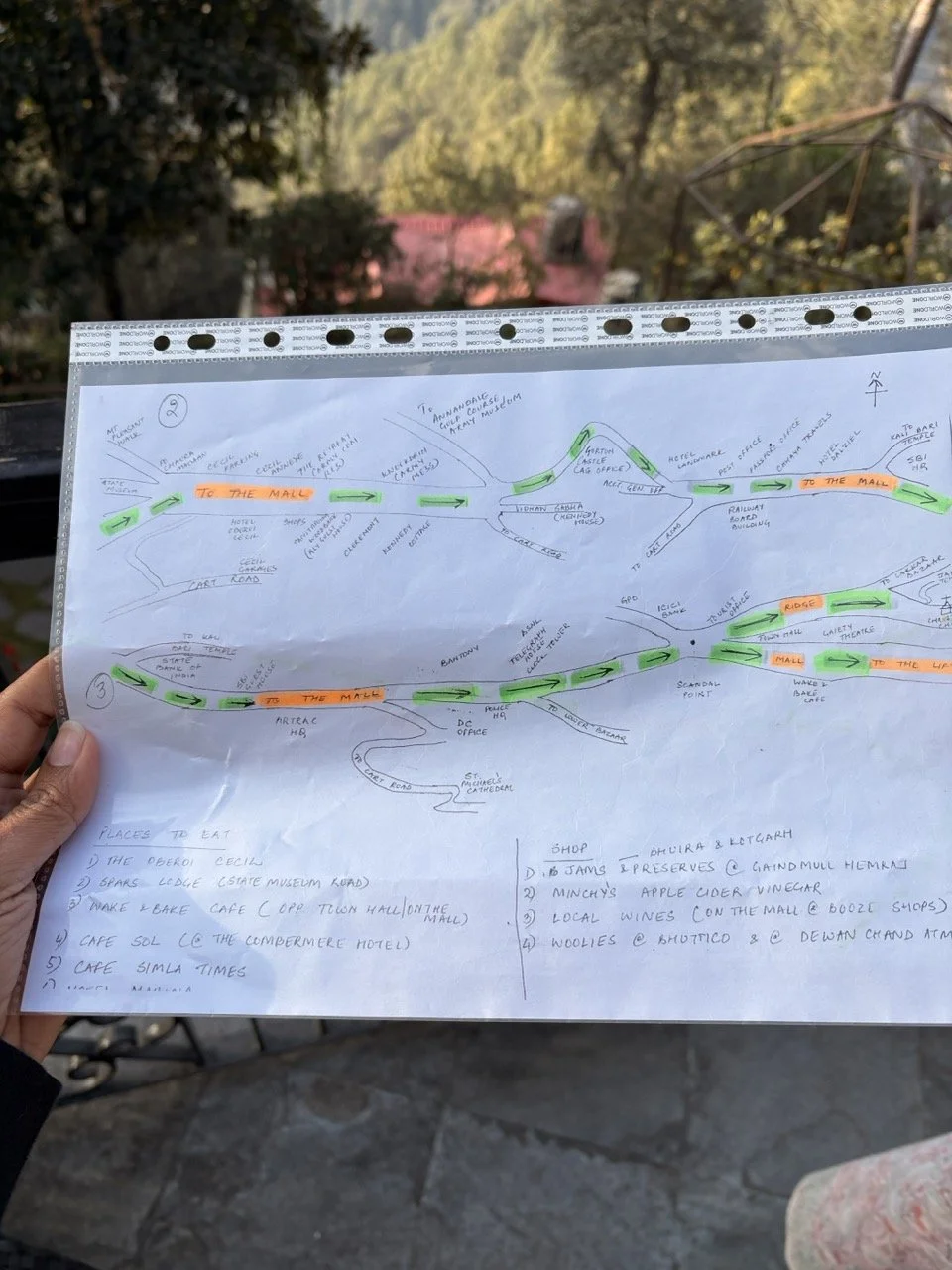
hand-drawn map
Madhavi also draws maps. Hand-drawn walking maps in each room, created out of frustration because Shimla maps are terrible.
These maps, like so many Sunnymead details, are not marketing. They are the natural by-product of someone who finds stupidity, irritating. Every material choice (the tiles from Green Bissell, the organic cotton towels, the toiletries from Kama and Yamini, the placement of the fireplace) was made not by asking "What would guests want?" but "What would I want?"
It is the first principle of great design that most properties forget. If you would not want to live there yourself, why would anyone else?
It shows up in her refusal of ugliness. Plastic kettles are hideous, so she sourced porcelain.
Madhavi is also irreplaceable. She has tried to train someone else to run Sunnymead. It failed, not because the person was incompetent, but because they did not speak the same language. Different people change the chemistry. What Madhavi can tolerate and transmute, others cannot.
So when she is not available, Sunnymead closes.
In modern business terms, this is unsustainable. In human terms, it is exactly why the place stays with you.
Sunnymead matters because it resists the prevailing model of scale and uniformity. It is not a hotel designed by committee.
It is a house shaped by time, family history, accident, and persistence. Its walls carry the intelligence of older building traditions. Its restoration preserved not only a structure, but a set of skills that are quietly disappearing.
My partner calls it her happy place. She uses those words with the simplicity of someone who has stopped needing to qualify joy. Sunnymead is home — as though some older part of you has been here before, or has been waiting to be here, and is relieved, finally, to arrive.
Notes
Advice from the Accidental Hotelier
- It is genuinely hard work. Not glamorous. Behind the scenes is mundane: mopping, dusting, cleaning.
- Be malleable. Listen to feedback even if you disagree. Think it through and respond later.
- Lead by example. Do manual work yourself before assigning it to staff. Ensure guests and staff see you doing it, and break caste-related barriers around labour.
- Do not expect cleanliness standards from staff who have not had that privilege themselves. Show them how it is done.
- Remind staff that you can do their job better. They are not indispensable.
- Base pricing on actual costs, not competitor pricing. Calculate what quality actually costs. Do not compromise to compete on price.

BELOW THE CART ROAD, NEAR THE OLD MLA QUARTERS AND HOTEL BLOSSOM
SHIMLA, HIMACHAL PRADESH, 171 004
PH. +91 97365 84045
EMAIL : sunnymeadshimla@gmail.com
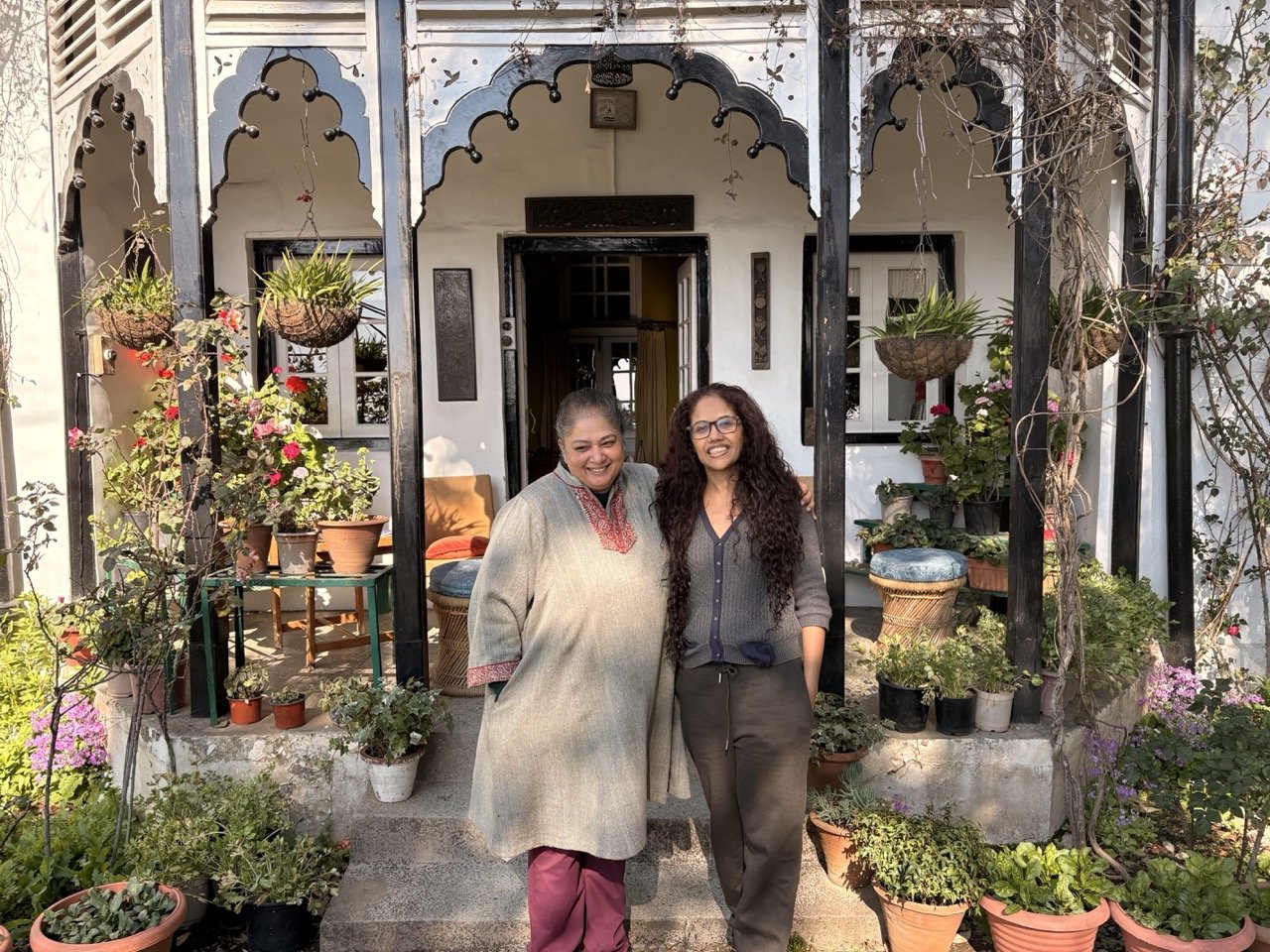
Madhavi with Arundhati
Sunnymead Reservation Confirmation
────────────────────────────────────────────────────────────
                 SUNNYMEAD ESTATE, SHIMLA
              Reservation Confirmation Details
────────────────────────────────────────────────────────────

Dear Guest,

Thank you for choosing Sunnymead.


IMPORTANT TO NOTE


• Sunnymead is home to 2 dogs and 1 cat.
  They are never tied up. We request that all guests are
  completely comfortable around animals.

• Sunnymead is NOT a drive-in property.
  Access involves a 110-foot unpaved hill path (pugdandi)
  from Cart Road. Please be prepared to walk.

• There are NO elevators.
  Movement between rooms and common areas involves stairs.

────────────────────────────────────────────────────────────
ABOUT SUNNYMEAD
────────────────────────────────────────────────────────────

Sunnymead is a heritage cottage dating back to the 1890s,
built using the traditional Dhajji construction method.


Opened to guests in 2011, it exists not as a commercial
hotel, but as:
→ A conservation effort
→ A lived-in family home
→ A way of life shared with like-minded guests


The house remains largely in its original state.

────────────────────────────────────────────────────────────
... (reservation details) ...
────────────────────────────────────────────────────────────


We look forward to welcoming you — not just as guests,
but as participants in a home that has been lived in,
restored, and shared with care.


Warm regards,
Madhavi
This story is part of Experiences That Stay With You , Hospemag’s ongoing editorial series exploring the people, places, and moments that linger long after the experience ends. Each feature is shaped through first-hand encounters and chosen for what it leaves behind.
Hotels & Accommodations
If you believe your work, your property, or your story belongs here — and is best experienced in person — you’re welcome to write to us at editor@hospemag.me .