Can every diner access your restaurant?
/
District by Zomato launches an Inclusive Dining Toolkit to help restaurants create more accessible and welcoming experiences for all guests.
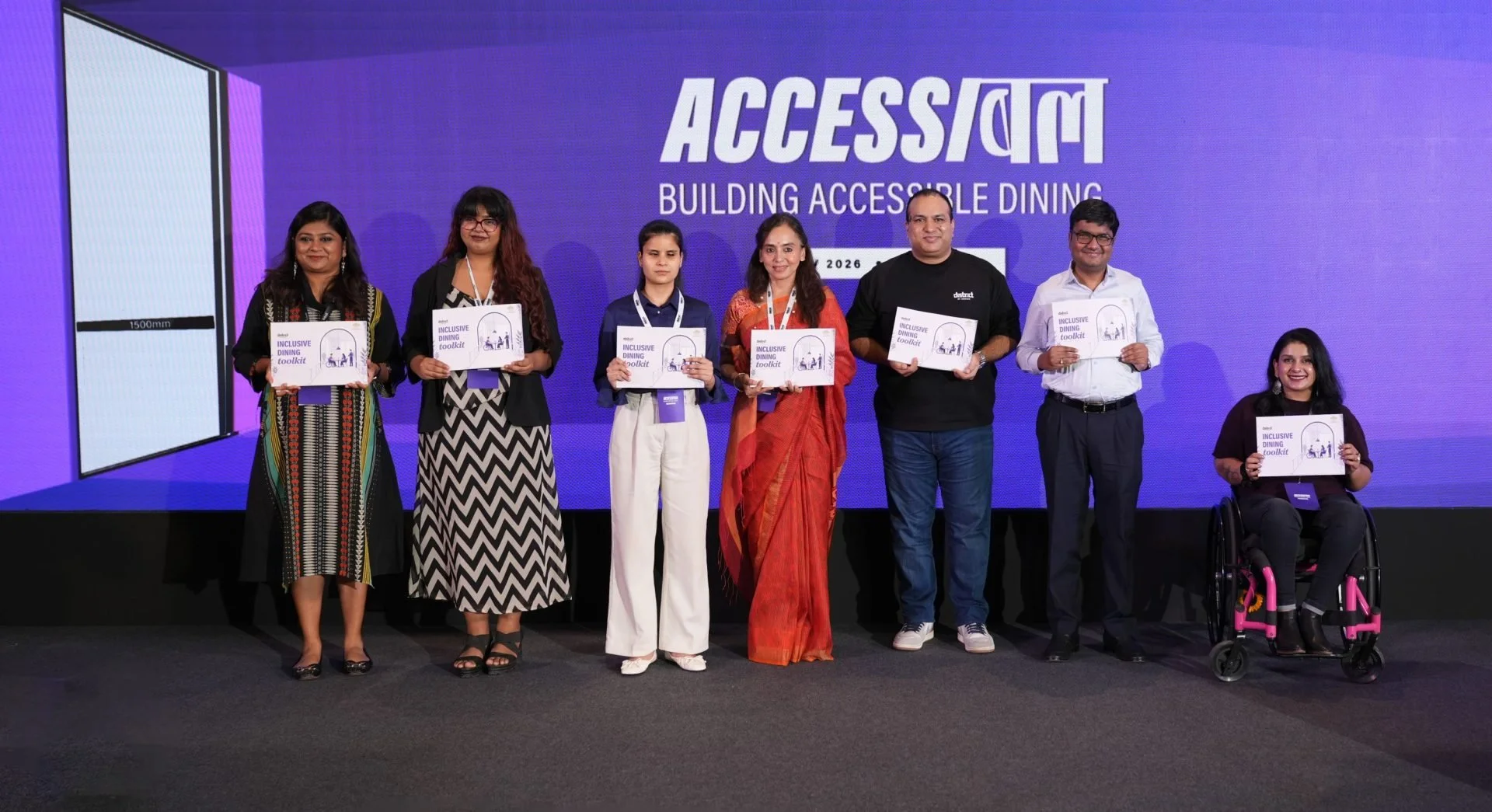
District by Zomato, the going out platform announced the launch of the Inclusive Dining Toolkit for restaurants. A first-of-its-kind initiative designed to enable restaurants to make dining experiences more accessible for Persons with Disabilities (PwDs), the elderly, pregnant women and others.
Collaboration and Development
Developed in collaboration with the Department of Empowerment of Persons with Disabilities, Samarthyam and The Association of People with Disability, and in consultation with persons with disabilities, restaurant partners and accessibility experts, the toolkit is intended to help restaurants identify accessibility gaps, implement practical improvements and provide diners with information related to accessibility. The initiative also highlights the role of accessibility in influencing customer experience and repeat visits.
Minister’s Message
B. L. Verma, Minister of State, Ministry of Social Justice and Empowerment noted in his message, “Accessibility and inclusion encompass all aspects of everyday life. Dining establishments are important public spaces, and it is essential that they are designed and operated in a manner that enables persons with disabilities to participate independently, safely, and with dignity. The Inclusive Dining Toolkit developed by District by Zomato is a valuable initiative that provides practical guidance to the hospitality and restaurant sector towards building environments that are truly welcoming and accessible to all. Creating an inclusive society requires collective efforts from government, industry, and the community, and I encourage all restaurants and hospitality establishments to utilise this Toolkit as a practical resource.”
Launch Event
The launch event was graced and addressed by the Additional Secretary, Department of Empowerment of Persons with Disabilities, Manmeet Kaur Nanda as the Chief Guest.
Additional Secretary’s Perspective
Manmeet Kaur Nanda, Additional Secretary, Department of Empowerment of Persons with Disabilities, as Chief Guest said, “2026 is no ordinary year for the PwD movement. It marks over a decade since India enacted the Rights of Persons with Disabilities Act and launched the Accessible India Campaign, Sugamya Bharat Abhiyan. Today, there are many initiatives that give us hope for the future. Across industries, we are seeing encouraging progress in accessibility, and we are moving in the right direction. At the same time, there is still much more to be done. District by Zomato’s Inclusive Dining Toolkit reflects a larger movement towards creating spaces where participation is truly accessible and inclusive for everyone. Inclusion must become the norm, not the exception. The true measure of a Viksit society lies in how inclusive its infrastructure, experiences, and opportunities are for every citizen.”
Accessibility Challenges
India is home to over 2.68 crore persons with disabilities, many of whom face challenges while dining out due to inaccessible infrastructure and limited information on accessibility.
Restaurant operators consulted during the development of the toolkit indicated an interest in improving accessibility but cited operational, awareness and infrastructure constraints, particularly in leased properties. The toolkit has been developed to help address some of these challenges by providing practical guidance on accessibility.
Leadership Comment
Commenting on the launch, Rahul Ganjoo, CEO, District by Zomato, said, “We often celebrate restaurants for bringing people together. But we rarely ask whether everyone can comfortably enter a space, move through the space, read the menu, and feel independent while doing so. The Inclusive Dining Toolkit aims to close this gap. We’ve designed this to be a quality resource for restaurants to build experiences that are more thoughtful, inclusive and better for everyone, regardless of their needs.”
Lived Experience
Sharing her lived experience as a person with visual impairment at the event, Meenakshi Chaturvedi, said, “Making our spaces accessible is not a technical hurdle. It is about understanding that sharing a meal is a universal joy, and no one should be left out of that experience. It is the thoughtfulness and empathy we bring that can truly change a person’s experience. Don’t just serve us food, make us feel welcomed, seen, valued, and cared for.”