Elemental Alchemy: Clay, Fire, and a Communal Table at Kaner Retreat
/In the Thar, clay is not craft. It is a kind of memory.
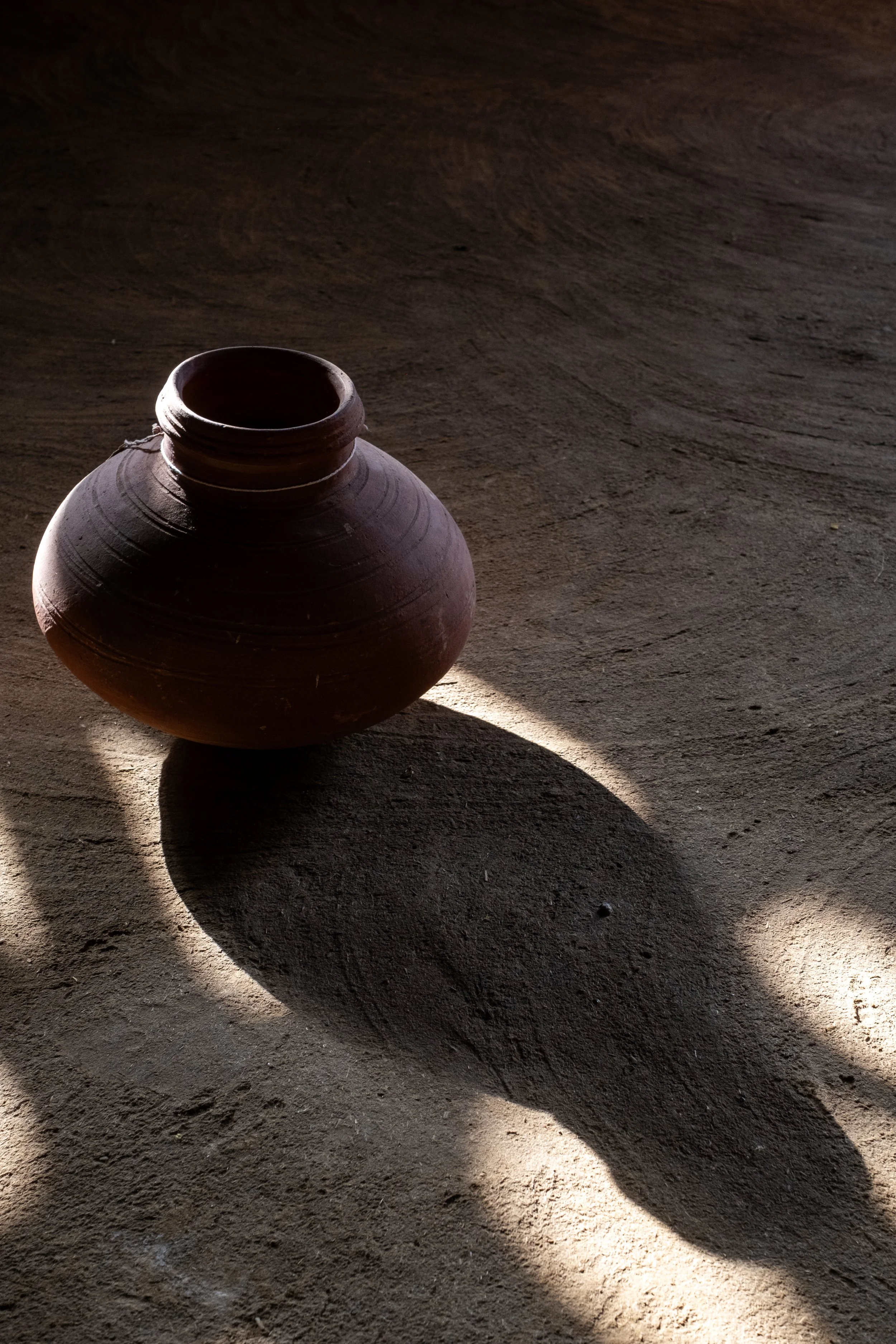
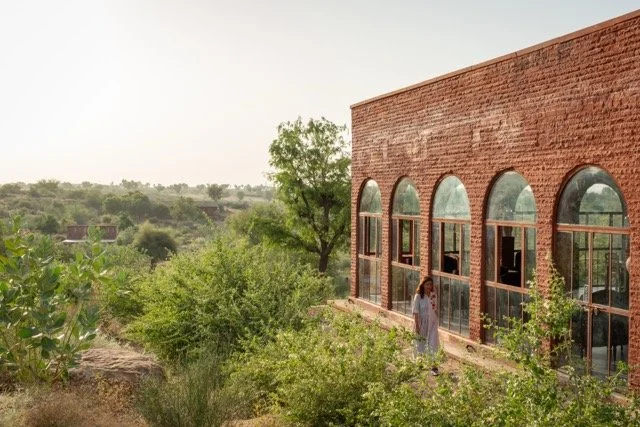
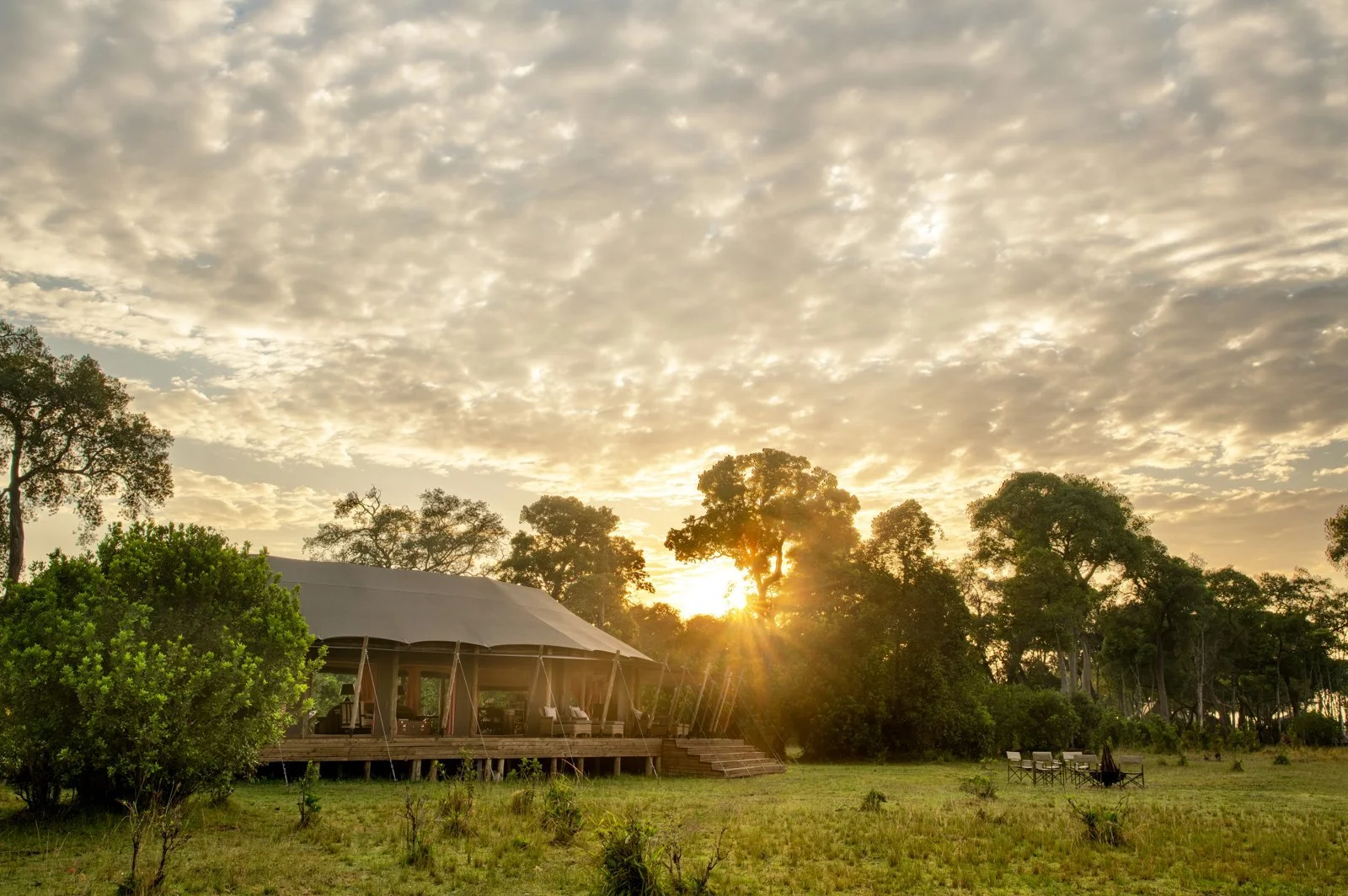
At Kaner Retreat, the desert does not present itself as a postcard. It arrives as a truth. Dry wind. Hard light. Silence that feels like a presence. And then, in the middle of that elemental theatre, a simple idea is offered with uncommon tenderness. Come, look at the vessels. Come, eat with your hands and your senses. Come, remember what a pot once meant to a place that has always had to negotiate with scarcity.
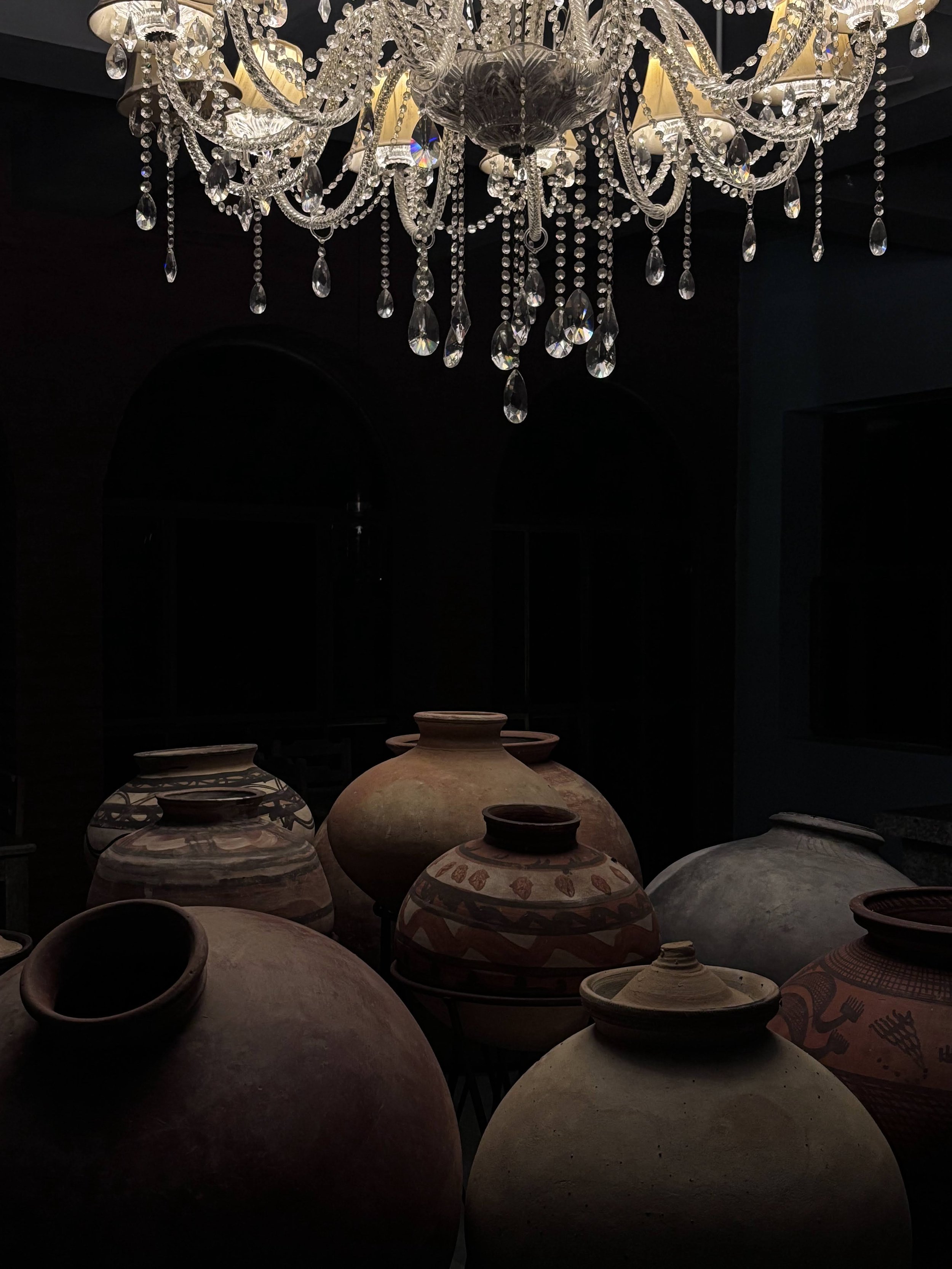
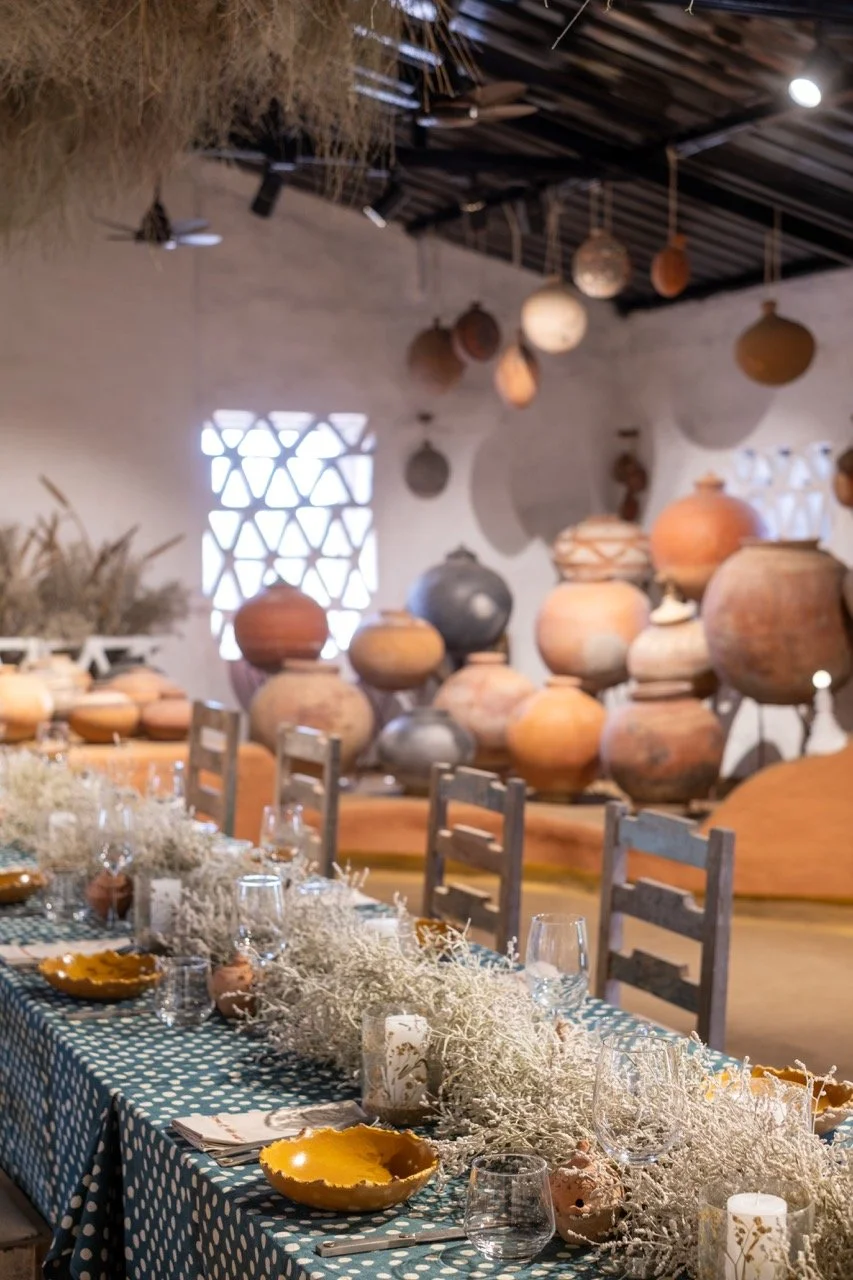
The experience begins with pottery, but not in the way we have learnt to consume “heritage”. There is no hurried performance, no decorative folklore boxed into an hour. Instead, there is the Thar Desert Pottery Project, curated by Dr Madan Meena, who has spent two years moving through desert communities and gathering more than 500 objects from across the Thar. The collection does not scream for attention. It sits. It waits. It asks you to slow down until you begin to notice the intelligence in everyday things. The lip of a vessel that knows how to pour without spilling. A curve that holds heat, then releases it. An object shaped by hands, yes, but also shaped by climate, by routine, by generations of listening to what the desert demands.
In Rajasthan’s desert villages, a pot is not an artefact. It is infrastructure. It is survival made tangible.
This is where the story of Jajmani culture enters, not as an explanatory paragraph, but as a heartbeat beneath everything. Traditionally, village potters would give 16 sets of utensils to their Jajmans, village patrons, on festivals such as Diwali and Eid. In return, the Jajmans would provide bajra, pearl millet, the grain that has fed desert life for centuries. It is a system built on mutual dependence, dignity, and the quiet elegance of exchange. A cycle of giving that holds a community together like wet clay holds shape.
And then comes the fracture that feels painfully modern. Single-use plastics. Convenience with a long shadow. A material that does not rot back into the earth, and does not belong in a place where everything, eventually, must return to dust.
Kaner’s attempt to keep that tradition alive is not loud activism. It is something rarer. It is alignment. An understanding that sustainability is not always a new language. Sometimes it is simply the old language spoken again, clearly, with respect. The project carries a desert proverb like a small talisman: to survive in a desert, one needs a pot and a plant.
A pot, for water and food. A plant, for shade and hope. Both fragile. Both essential.
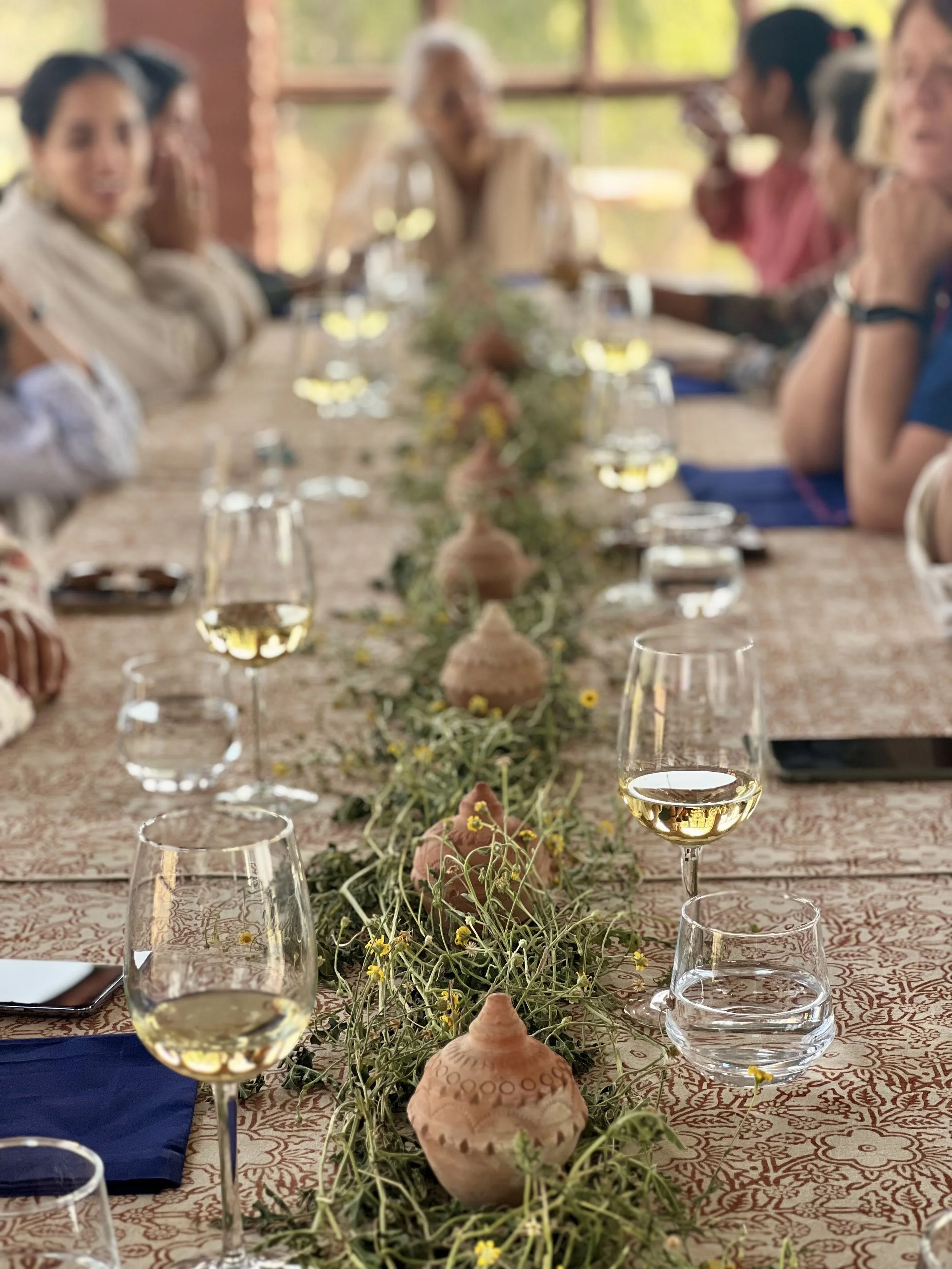
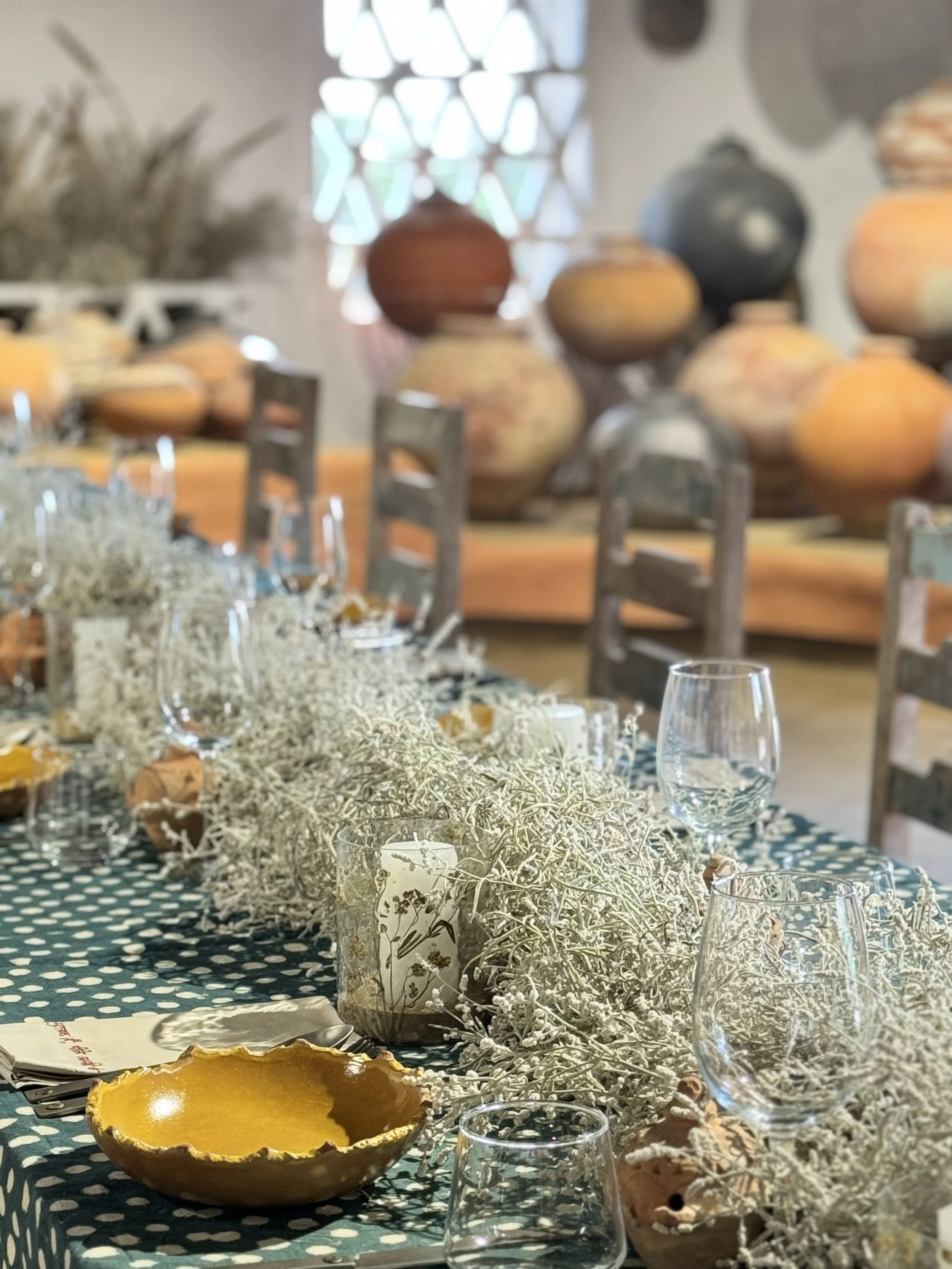
From there, you are led not to a dining room in the conventional sense, but to a table that is meant to feel communal. One table. All guests together. It is a gentle insistence on shared time, shared pauses, shared attention. In a world that increasingly eats alone, or eats distracted, this becomes its own kind of ritual.
The meal is seven courses, designed by Chef Pankaj Sharma, who has been named among Condé Nast Traveller’s 40 under 40 chefs. The premise is rooted in Panchmahabhuta, the five elements. But again, the experience refuses to be didactic. You are not given a lecture on philosophy. You are simply taken on a journey where the elements begin to appear not as abstract concepts, but as felt sensations on the tongue.
The menu mirrors the making of a clay vessel. An idea first. Then form. Then fire. Then function. Then, finally, a presence that can outlast the hands that shaped it.
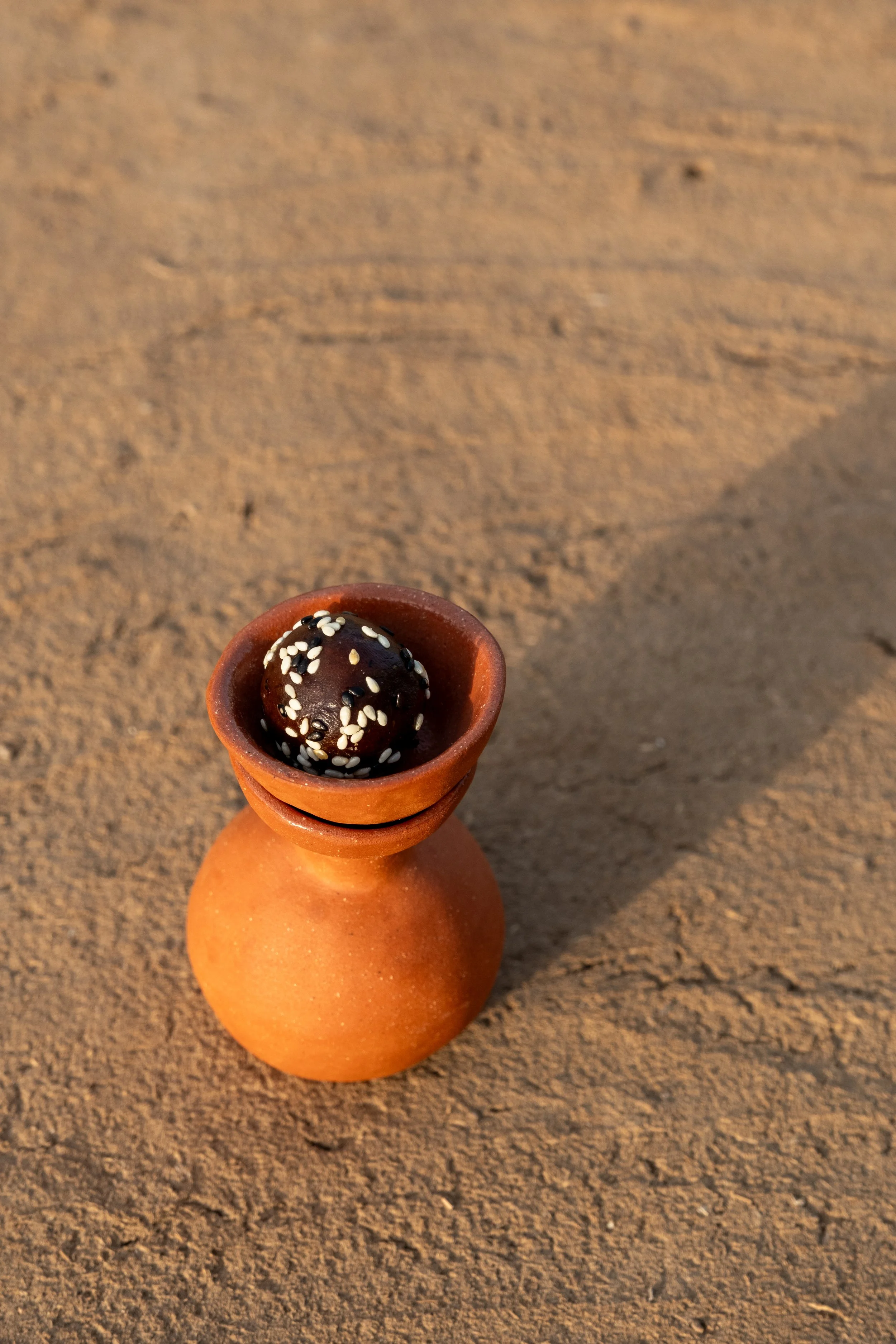
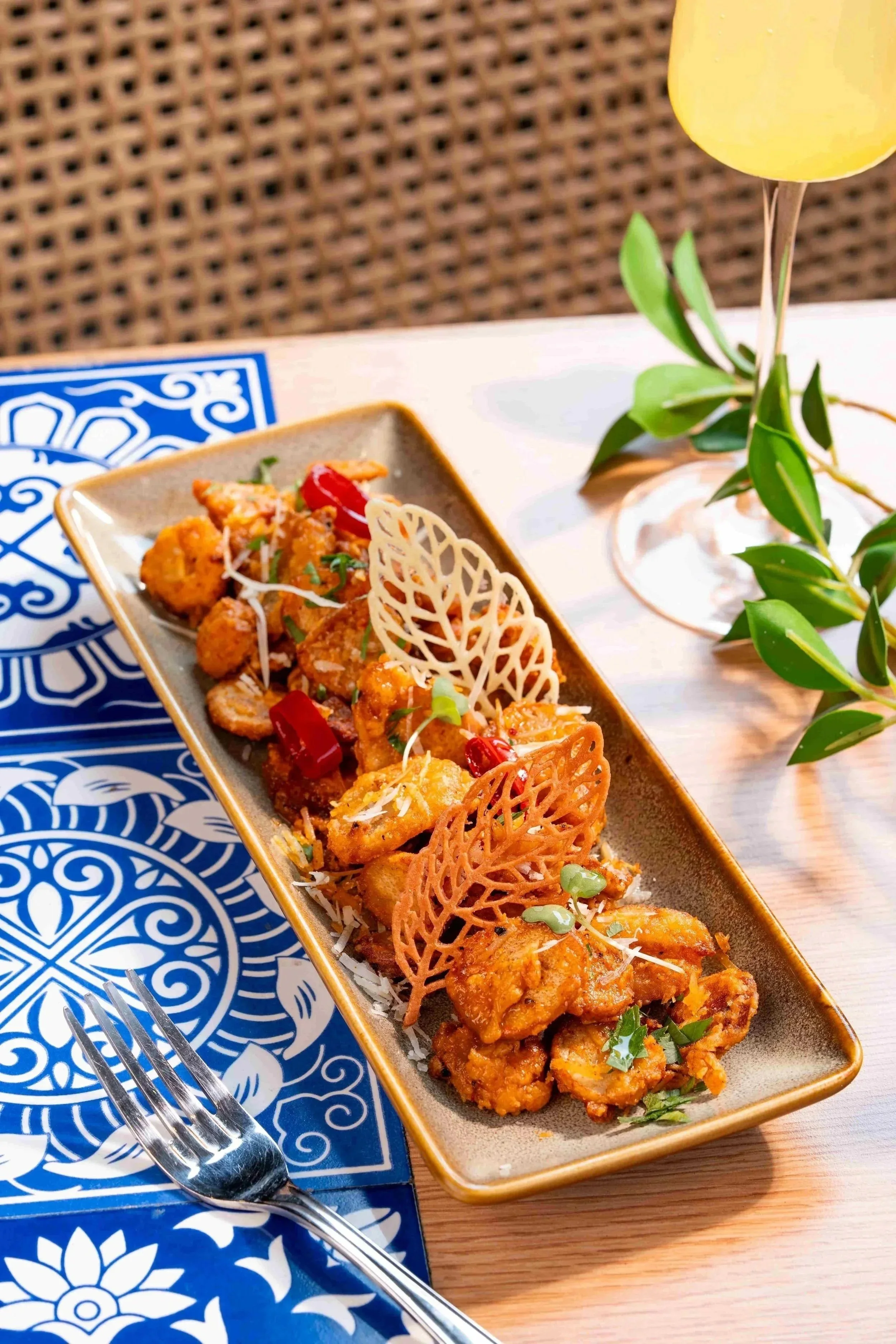
It starts with “The Birth of an Idea”. Jaisalmer dates and sesame laddoo, paired with aerated tomato and garlic water. There is sweetness, and then that sudden lift of acidity, as if the palate is being woken up gently, the way dawn wakes the desert.
Then “Earth”. Dehydrated watermelon, local arugula leaves, wild ber berries, olive-honey drizzle. Dryness and juiciness in the same bite. Fruit transformed by sun. The Thar’s own method of preservation, not as novelty, but as lived tradition.
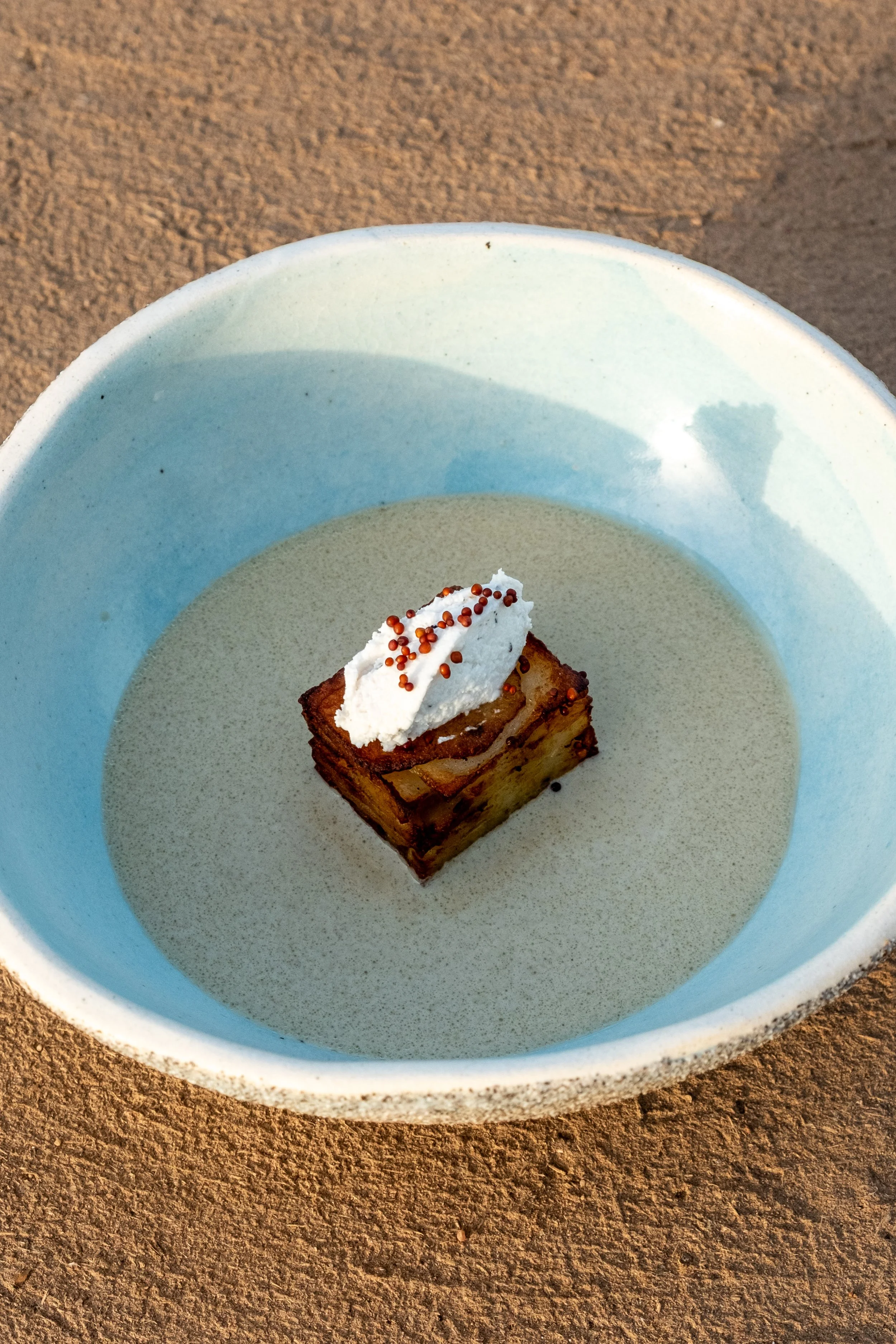
“Water” brings potato pavé with camel cream cheese, pickled mustard, and gwar bean soup. Camel milk feels like a desert answer to dairy, a reminder that even nourishment adapts its shape to geography. The soup arrives like comfort, but with a prick of something sharp, as if to say, yes, softness can still have spine.
“Air” offers a choice: homemade chicken sausage or lentil cake, with spring onions and curried kachra mousse. Kachra is one of those ingredients that carries landscape inside it. A desert cucurbit, often dried, often used in chutneys. Here it becomes mousse. The familiar becomes delicate. The rustic becomes refined, without losing its identity.
Then comes “Fire”. Lamb or kumatiya bean skewers, with bajra stew and garlic ghee confit. There is heat, but also that deep, anchoring comfort of millet. Bajra is the desert’s grain, unglamorous and powerful. In a menu built on elements, this course feels like the one that holds you in place. Like the kiln. Like the sun at noon.
“Space” follows. Double-cooked lamb or roasted sweet potatoes, accompanied by sour chilli gravy, cumin, and wild grass smoke. This is where the meal becomes almost cinematic. Smoke as atmosphere. Space as something you taste, not see. The wild grass note feels like a whisper from outside the retreat, the desert reminding you it is still there, stretching beyond the edges of your plate.
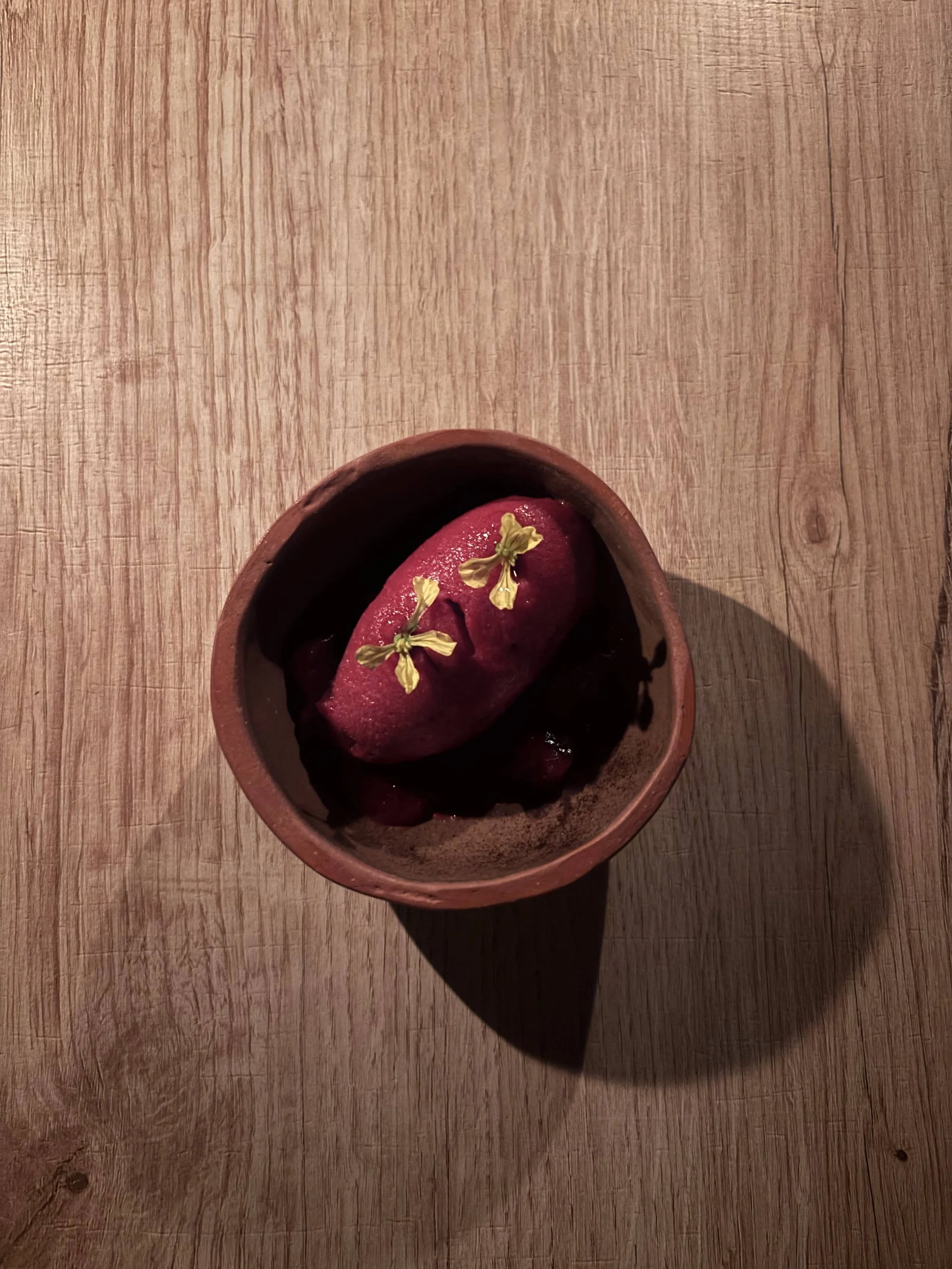
Finally, “The Culmination”. Pomegranate sorbet, pomegranate jam, fresh herbs, wild flowers, crisp biscuit. It is bright, almost celebratory. A reminder that even in places defined by austerity, there is colour. There is sweetness. There is the shock of fruit against heat.
What makes this experience unusual is not only its structure, or its cleverness, or the fact that it is available to both overnight guests and day visitors. It is the emotional coherence of it. Pottery and dining are not paired here as two separate attractions stitched together for a weekend itinerary. They are presented as part of the same argument.
That argument is simple. The desert has always known how to live sustainably, because it had no other option. The objects it created were not for display. They were for use, for ritual, for nourishment, for storage, for survival. When we lose those objects, we do not just lose a craft. We lose a worldview.
And yet, in a place like Kaner Retreat, you are given a chance to sit with that worldview again, without being asked to romanticise it. You see the vessels. You hear the story of exchange. You eat ingredients shaped by sun and scarcity. You share a table. You leave with your senses recalibrated, as if the desert has quietly re-taught you what matters.
Perhaps that is the real luxury being offered here. Not indulgence, but attention. Not excess, but meaning. Not the fantasy of escape, but the intimacy of returning to something older than us.
A pot and a plant.
A meal and a memory.
And the desert, holding it all, like clay holds water, like the earth holds the story of every hand that ever tried to shape it.