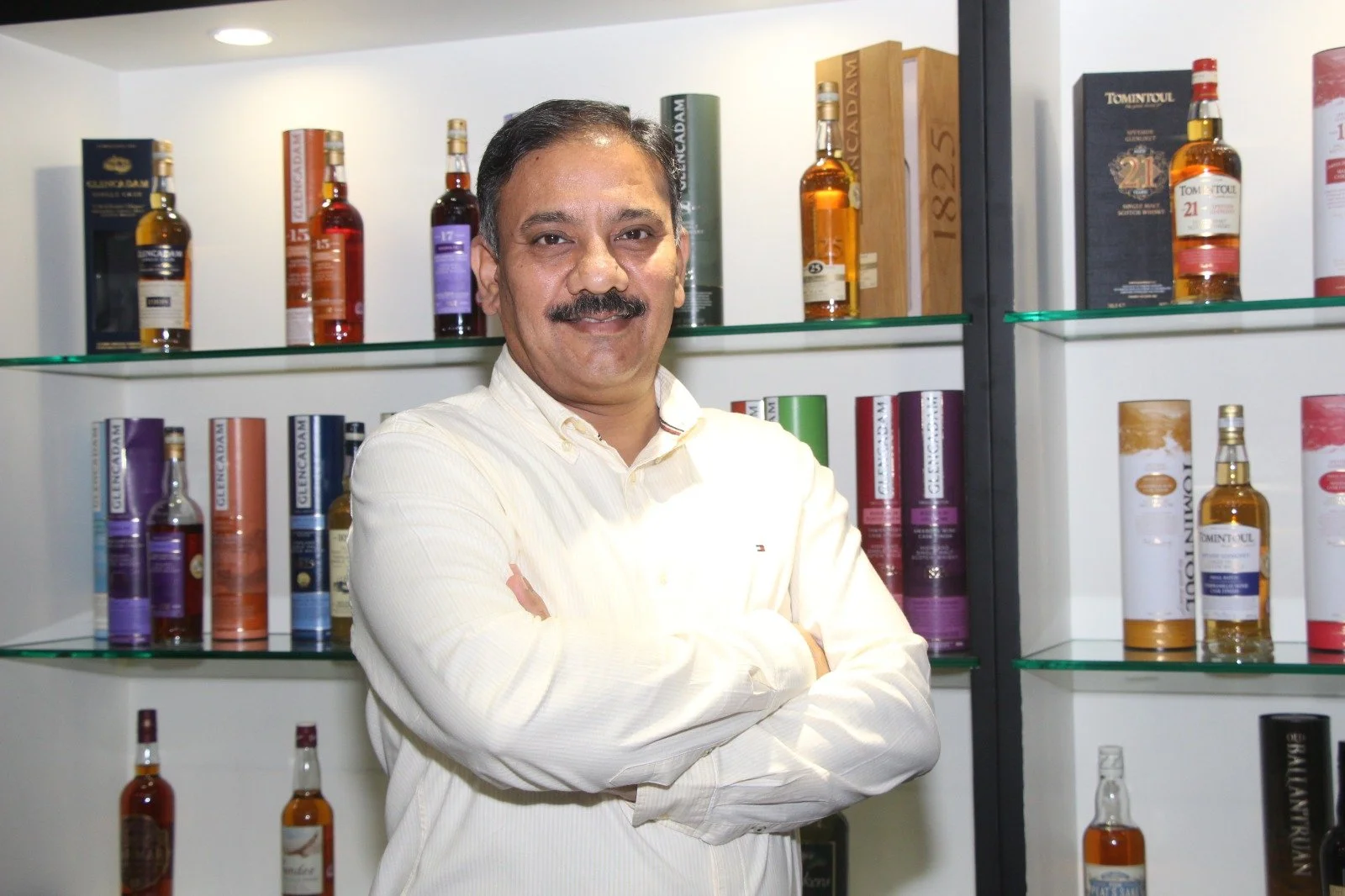
Scotch and Social Life: India’s Festival Companion by Mr. Hasan Bakhtawar, COO of Angus Dundee India Pvt. Ltd.
/
India has entered its busiest months of celebration. Durga Puja has filled neighbourhoods with gatherings, Diwali preparations are building across the country, and Christmas followed by New Year will bring the year to a close. Through this stretch of events, Scotch whisky remains a constant; shared at weddings, exchanged during festivals, and poured in homes and clubs alike.
From Rare Indulgence to Everyday Companion
Scotch first arrived through colonial clubs, where officers and dignitaries introduced it into exclusive circles. In the decades after Independence, bottles remained scarce, usually carried home from overseas trips or secured at duty-free shops. Families stored them carefully, opening one only for momentous occasions: a marriage celebration, an anniversary dinner, or the arrival of a respected guest. Offering Scotch meant extending one’s finest.
Economic liberalisation in the 1990s changed that scarcity. Liquor shops in large cities began to stock international labels, while hotel bars offered wider choice. Scotch moved from occasional indulgence into social routines; appearing at birthday parties, corporate evenings, and Sunday gatherings. With rising affluence and exposure to global trends, it became part of India’s wider drinking culture.
Blended Scotch played a crucial role in this spread. Its affordability and adaptability suited local preferences, whether poured neat, with soda, or over ice. Distribution networks carried it into tier-2 and tier-3 towns, where it became a fixture at community celebrations. At the same time, metropolitan audiences embraced it for its consistency and versatility, making blends the backbone of Scotch’s popularity across the country.
Signals of Aspiration and Shifting Rituals
Cinema reinforced Scotch’s association with confidence and success. On-screen characters sipping whisky turned it into a cultural shorthand for style and authority. Even as direct advertising faced restrictions, brands found visibility through sports, music, and lifestyle events, reinforcing Scotch as an aspirational choice.
The hospitality sector added new layers. Tastings at hotels introduced patrons to the vocabulary of flavour, from smoky finishes to oaky undertones. Enthusiast clubs grew in cities, giving Scotch a community dimension. Meanwhile, households began setting up their own bars, a trend accelerated during the pandemic. What once belonged to banquet halls now also sat in living rooms, poured as comfortably at a small dinner as at a formal reception.
Festivals have given Scotch an additional role as a gift. Diwali hampers often include bottles alongside sweets, Christmas dinners frequently feature whisky at the table, and New Year’s Eve toasts are incomplete without it. In professional settings, Scotch is exchanged as a token of goodwill. Its ability to move seamlessly between personal and professional contexts highlights its wide social acceptance.
References
IWSR Drinks Market Analysis, 2023 – India is the world’s largest whisky market by volume.
Confederation of Indian Alcoholic Beverage Companies (CIABC), 2022 – Scotch imports touched 5.2 million cases, with festive demand driving seasonal peaks.
The Drinks Business, 2022 – Blended Scotch continues to account for the majority of Scotch consumed in India.