Where Nepal’s soul still lives
/Inside Dwarika’s timeless world of heritage, Himalayan stillness and meaningful luxury.
Some luxury hotels dazzle with sheer scale and sparkle. Then there are those like The Dwarika’s Hotel and Dwarika’s Sanctuary in Dhulikhel that linger in your thoughts long after you leave.
Our four days spent there felt less like staying in a hotel and more like stepping inside a living museum of Nepal’s cultural soul – carefully preserved, and remarkably genuine. From the historic courtyards of Kathmandu to the calm stillness of the Himalayas in Dhulikhel, Dwarika’s reveals a Nepal that’s largely untouched by the usual tourist rush. Their idea of luxury isn’t about excess; it’s about meaning, something deeper.
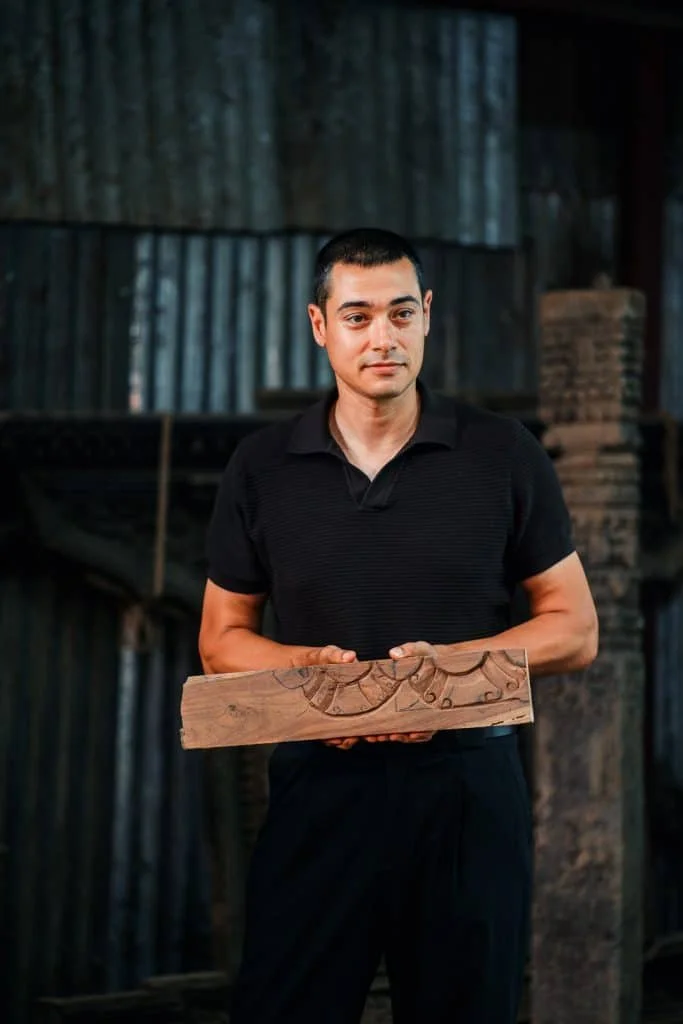
And at the heart of it all, you find René Vijay Shrestha Einhaus – a young hotelier with a quiet passion for sustaining the extraordinary legacy of his grandfather, Dwarika Das Shrestha.
Kathmandu: A Living Museum of Newari Heritage
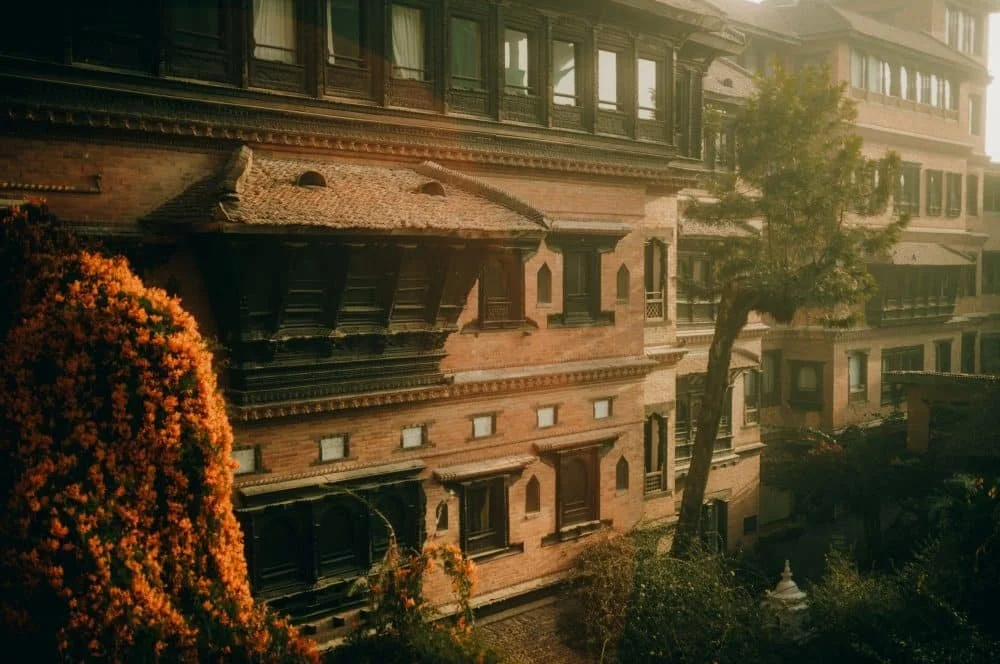
Cross those ancient carved wooden doors at The Dwarika’s in Kathmandu, and somehow the city’s hectic noise slips away. The place isn’t just inspired by Newari culture – it is Newari culture.
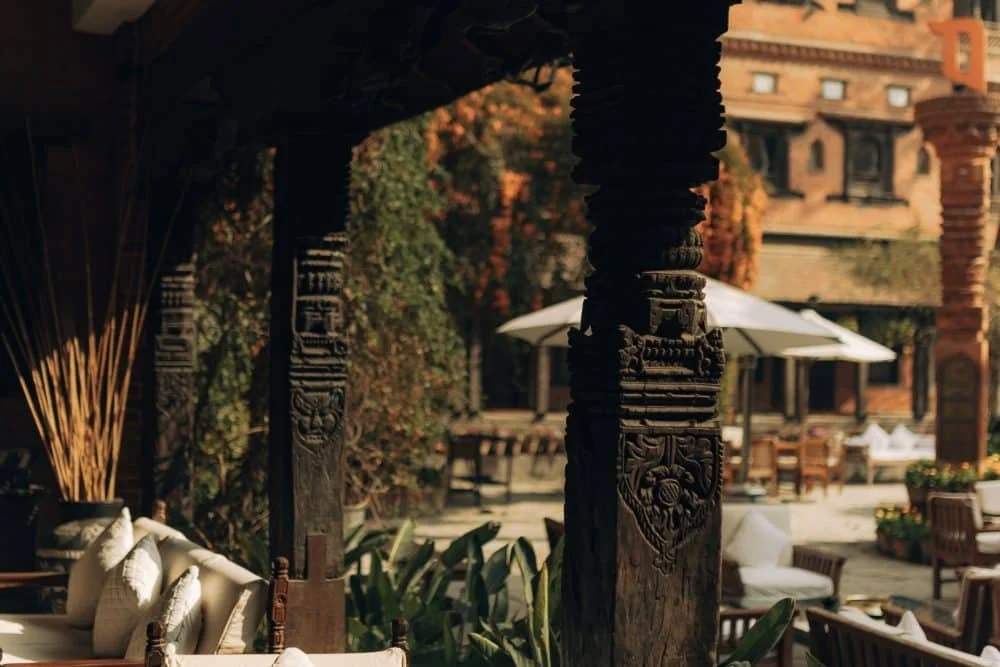
This hotel holds one of the world’s most extensive private collections of salvaged Newari woodwork, with more than 8,500 restored pieces dating back to the 13th century. Each window, arch, and hand-carved beam carries a story, as if history itself breathes through the timber. Staying here doesn’t feel like checking into a hotel at all; it’s more like entering into the living heritage of Kathmandu.
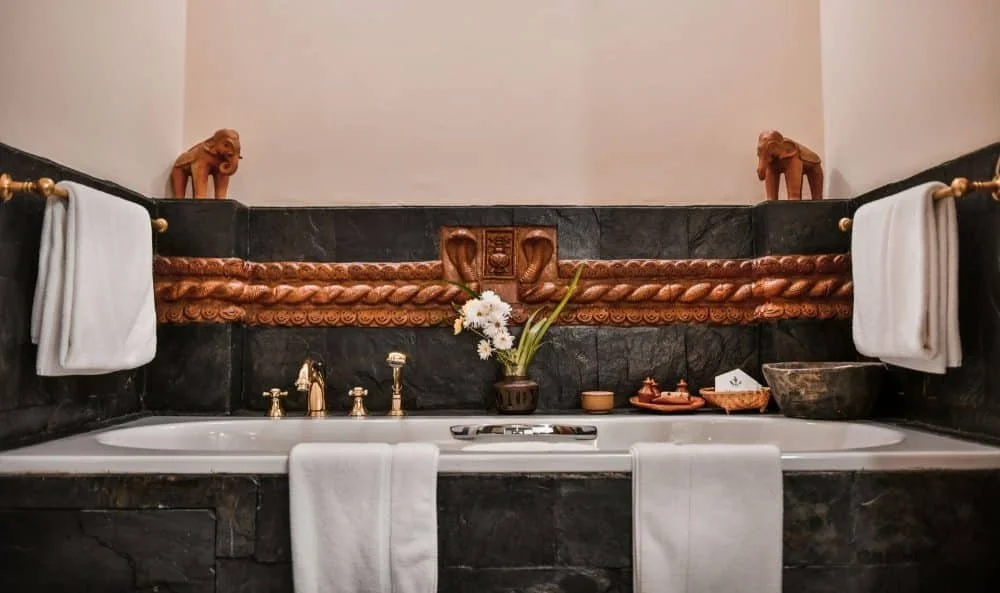
The 76 rooms and suites are crafted with care, showcasing intricate Nepali artistry. You’ll see original artworks, handmade terracotta tiles, handwoven fabrics, and linen that looks as soft as it sounds. The design holds a firm place in local tradition but speaks in a quietly elegant voice. Overlooking a serene courtyard, each room wraps you in a subtle Himalayan warmth – a rare kind of calm right in the city’s heart.
Our suite, in particular, echoed this quietly enduring spirit. When night fell and the temperature dipped, the place grew atmospheric – the glow of warm lamps against rustic brick walls, temple bells chiming faintly through the courtyards below. It felt like the city and its history lulled us to rest.
Craft, Culture and Restoration
Our first afternoon unfolded with a tour of the restoration workshop, personally guided by René. The scent of old timber mingled with the steady tapping of chisels carving Sal wood as artisans went about their centuries-old work. “My grandfather called Dwarika’s a ‘hospital for wounded art,’” René shared.
René Vijay Shrestha Einhaus
Observing the craftsmen breathe new life into ancient Newari motifs and explaining their traditional techniques offered a rare insight into the essence of this place. We also attempted woodcarving, which was unexpectedly grounding and demonstrated the patience and precision required for the valley’s celebrated craft.
René discusses Newari art with respect and a gentle sense of urgency. “In a world frequently divided by faith, Newari art serves as a reminder that cultures and religions can merge harmoniously,” he said, acknowledging how Hindu and Buddhist symbols coexist seamlessly within Newari designs.
Sacred Kathmandu Beyond the Guidebooks
In the evening, we joined the Aarti ceremony at the quiet Ram Mandir temple close to the hotel. The flicker of candlelight danced against ancient walls, while soft bells rang out into the darkening sky.
The following morning started with a tranquil walk through the sacred Pashupatinath Temple complex, Nepal’s most revered Hindu temple, covering over 246 hectares and containing more than 500 hidden shrines. As Kathmandu gradually awoke, rituals quietly took place along the Bagmati riverbanks, where life, death, and devotion co-exist with remarkable openness.
From there, we explored the hidden back alleys of Patan Durbar Square – wandering through temple-lined courtyards and artisan spaces where Newari heritage still thrives in everyday life. The Patan Museum, with its bronzes, repoussé artworks and royal artefacts, added further depth to understanding Nepal’s layered Hindu-Buddhist traditions.
A particularly memorable stop was a traditional singing bowl experience tucked within Kathmandu’s quieter cultural quarters, where the vibrations and sounds created an almost meditative stillness. Later, while wandering through the old city’s narrow lanes, we encountered hidden shrines, local spice markets and tiny courtyards where everyday life unfolded much as it must have centuries ago.
At Boudhanath Stupa, prayer flags fluttered against the golden evening light while monks circled the stupa in rhythmic silence.
Krishnarpan: A Culinary Journey Through Nepal
One of the most unforgettable evenings of our stay was dinner at Krishnarpan — Dwarika’s iconic Nepali restaurant. Dining here is not simply about food. It is ritualistic, immersive and deeply cultural.
Krishnarpan Nepali Restaurant
Guests sit traditionally on low seating while multi-course Nepali feasts arrive slowly, each dish representing different communities and culinary traditions across Nepal.
The flicker of lamps, hand-beaten metalware, warm spices and gentle hospitality create an atmosphere that feels timeless.
Even breakfasts at the property felt thoughtfully curated – fresh Himalayan honey, local fruits, warm breads and traditional Nepali touches presented with understated elegance in peaceful courtyard settings.
Lunch experiences became cultural discoveries too – whether it was dining in Dwarika’s beautiful open-air spaces or enjoying a refined modern Nepali tasting menu at Tusa before departing Kathmandu for Dhulikhel.
Dhulikhel: Silence, Space and Himalayan Stillness
If Kathmandu awakens the senses, Dwarika’s Resort Dhulikhel quietens them. About an hour away from the capital, the transition feels almost cinematic. The roads begin to open into forests, hills and sweeping Himalayan views. The air grows cleaner. The pace softens.
And then suddenly, the Sanctuary appears.
Spread across 25 acres of natural forest, overlooking the Himalayas, Dwarika’s Dhulikhel is breathtaking in scale and serenity. An all-suite property with 40 residential spaces, the luxurious and spacious suites are furnished with only natural and local fabrics.
Our villa was stunning. Floor-to-ceiling windows opened toward layered mountain ranges and pine forests, while earthy interiors, natural stone, warm woods and muted Himalayan tones created an immediate sense of calm. The private terrace quickly became our favourite spot – especially during early mornings when mist rolled slowly across the hills and evenings when the mountain air turned deliciously cold.
Wellness and Himalayan Philosophy
Built around principles of Himalayan wellbeing, Vedic wisdom and Buddhist philosophy, the resort encourages stillness rather than activity. Our days here unfolded almost spiritually.
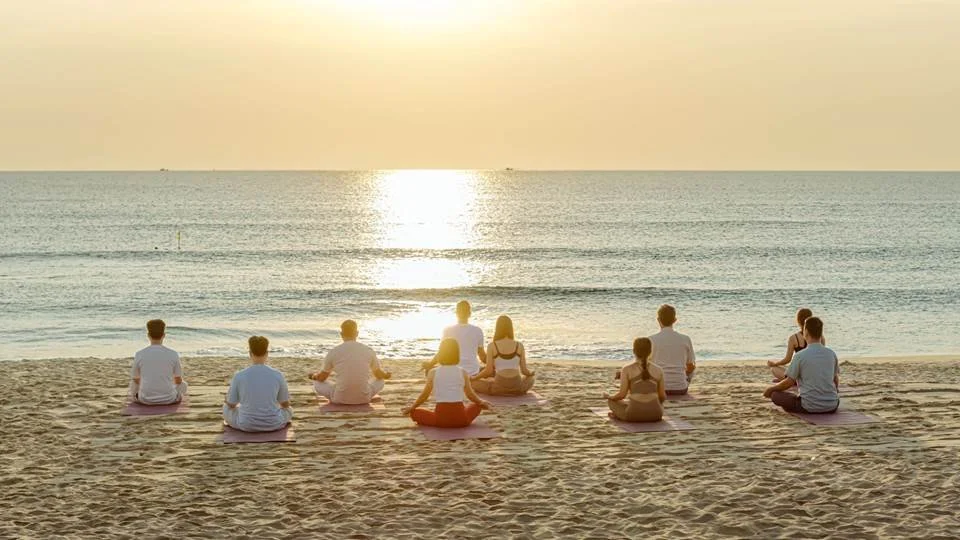
There was a private Ayurvedic consultation upon arrival, followed by pottery sessions that encouraged mindfulness through touch and focus. In the Himalayan Rock Crystal House, guided meditation sessions brought a rare calm, while evenings at the Zero Zone – the sanctuary’s highest point – offered breathtaking sunsets over the mountains, accompanied by complete silence.
The chilly nights in Dhulikhel added their own charm. Wrapped in shawls with warm tea in hand, the mountain air felt restorative in itself.
Mornings began with sunrise yoga, pranayama and open-air wellness rituals beneath clear Himalayan skies. One particularly memorable experience was the barefoot walk through the Shiva Linga Meditation Maze, dew-covered grass beneath our feet as the mountains slowly emerged from morning mist.