
70 years promoting Peru: the story of LIMATOURS, the tour operator that helped put the country on the tourist map
/· LIMATOURS was founded in 1956 with two employees and today is the country's longest-established inbound tour operator and the first Peruvian tourism company to reach seventy years of age.
· It serves clients in Europe, Asia Pacific, the United States, Canada and Latin America, and operates with its own team in Lima, Cusco, Arequipa and Puno.
· It faces its eighth decade betting on its own technology through Aurora, its digital booking platform, now powered by artificial intelligence.
Lima, Peru. In 1956, selling Peru was almost an act of faith. There were no established tours, no hotels in most destinations, and no easy way to get to Machu Picchu. That year, two people started organizing trips from a small office on Jirón Camaná, in Lima's Historic Center. That office was the origin of LIMATOURS, which this year celebrates its seventieth anniversary as the country's longest-running inbound tour operator and the first and only Peruvian tourism company to reach that milestone.
For the travel agent who sells Peru today from Madrid, New York, São Paulo or Tokyo, those seventy years translate into something very concrete: a good part of the product he offers exists because someone set it up before at the destination.
Seventy years opening destinations
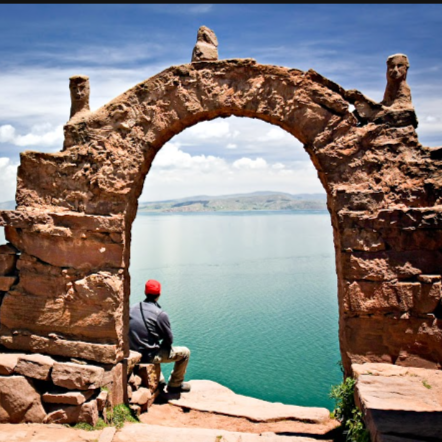
hydrofoil boats to Lake Titicaca , making the high plateau an accessible destination. In 1977, it organized the first bus tour for tourists to Nazca, with a program that included an overflight of the lines, a meeting with researcher Maria Reiche, and a visit to the Ballestas and Paracas Islands. In 1993, it took the first travelers to the discovery of the Lord of Sipán alongside archaeologist Walter Alva, opening northern Peru to international tourism. In 2002, it provided office space to the Caral team so they could analyze the materials from the excavations of the oldest city in the Americas.
In parallel, it built the operation: it was the first Peruvian tourism company with its own transport fleet, one of the first in the sector to incorporate automated reservation systems and the one that introduced the first shared services for tours in Lima, a modality that the market continues to use today.
The markets it works with
That history explains the current portfolio. LIMATOURS serves clients from Europe, Asia Pacific, the United States, Canada, and Latin America—a diversification built over decades that allowed it to move beyond dependence on a single source market.
The post-pandemic recovery reinforced this balance and was supported on three fronts: the opening of new source markets, with China, India and Asia in general leading the way; the reactivation of dormant markets, which had been put on hold after the halt in international tourism; and the improvement of their digital tools and processes, accompanied by the creation of new jobs.
The company adapts its product and service to each market: from long-distance travelers arriving with closed programs of several weeks to the shorter, later-booked Latin American regional demand.
What sustains the operation today
The company operates in all tourist destinations in the country and has its own offices in Lima, Arequipa, and Puno, in addition to three strategic locations in Cusco: the city of Cusco, Ollantaytambo, and Machu Picchu Pueblo. This on-the-ground control allows it to maintain competitive service standards and prices, offering products for FITs , groups, incentive trips, and tour series, in both private and scheduled services.
“We offer a high-value product with a lot of substance,” summarizes José Pedraza, who organizes the company’s proposition around six pillars: people, financial strength, the product, competitive pricing, technology, and sustainability. He adds, “The best of LIMATOURS will always be in its future.”
Long-term collaboration with suppliers and partners is part of that equation: LIMATOURS has been recognized as a Top Producer by the leading hotel chains and train companies operating in the country.
From the first automated reservations to artificial intelligence
The same company that filled out forms by hand in the 1980s now works with Aurora, its own online booking and quoting platform, available 24/7, which allows service confirmation in a matter of minutes. Aurora now incorporates artificial intelligence to respond more quickly and accurately to customer requests. The company emphasizes that digitalization is intended to free up time for its team, not replace them: the expertise of those who know the destination remains, it says, its key differentiator.
Seventy years also in the communities
Sustainability, which the company presents as the foundation of all its pillars, is backed by verifiable figures. Through the LIMATOURS Foundation, it works sustainably with Andean communities in Ollantaytambo: in Huilloc , more than 25 families are part of an experiential tourism association that has received 5,342 visitors between 2015 and 2025, and 336 women have received training in gastronomy, hospitality, leadership, and traditional textiles. This work earned it the LATA Responsible certification. Tourism Award 2026 in the Diversity , Equity & Inclusion category , its first international recognition, which is added to the Qori Q'ente 2025 award as an outstanding agency in Quality, Sustainability and Tourism Innovation.