India's 47 MICHELIN Keys: What the List Tells Us About Indian Hospitality
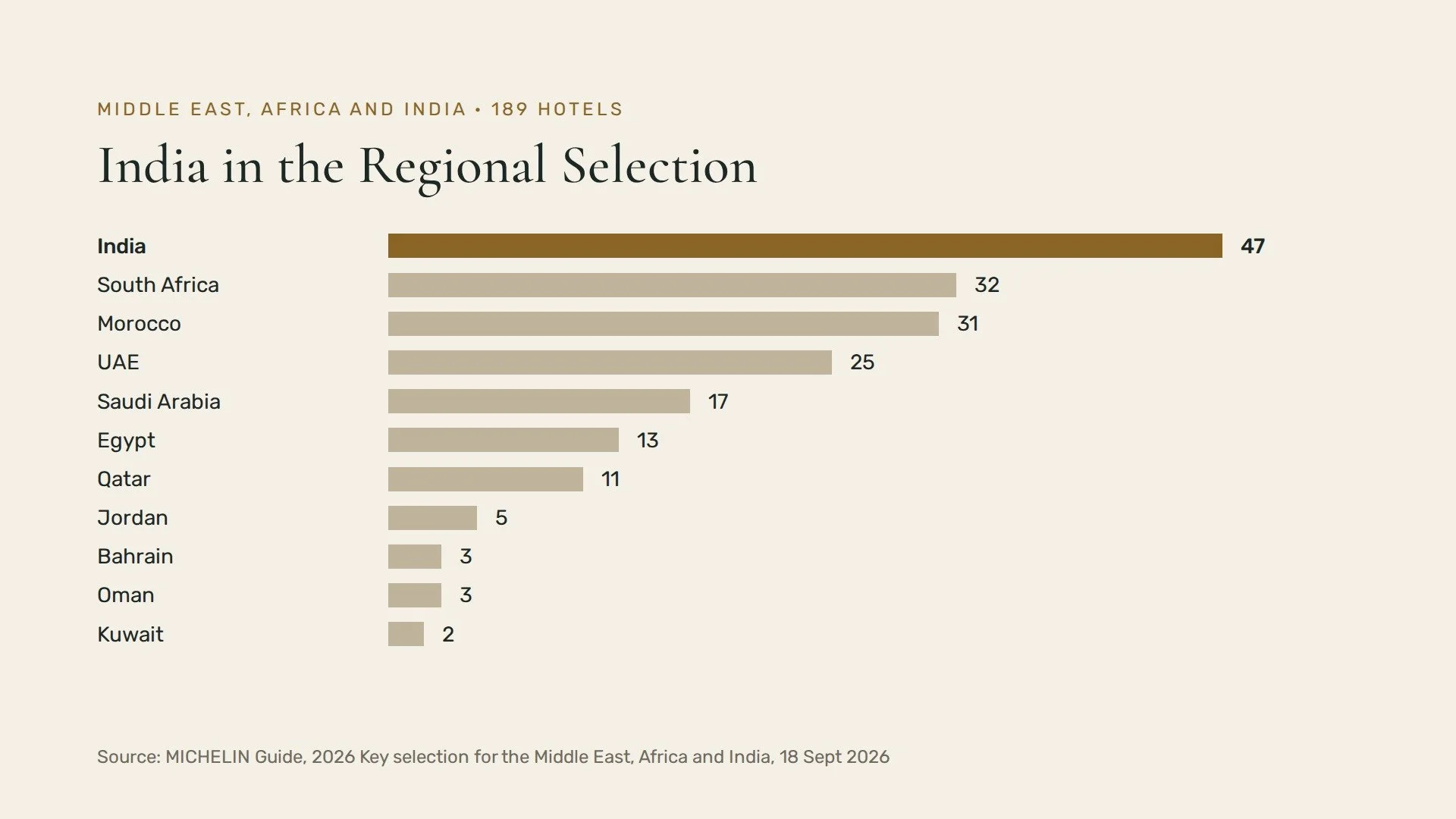
/India now has more MICHELIN Key hotels than any other country in the Middle East, Africa and India selection. For owners and operators, the more useful question is what it took to get there, and what it will take to stay by Prabhjot Bedi, Founder and CEO, Eclat Hospitality
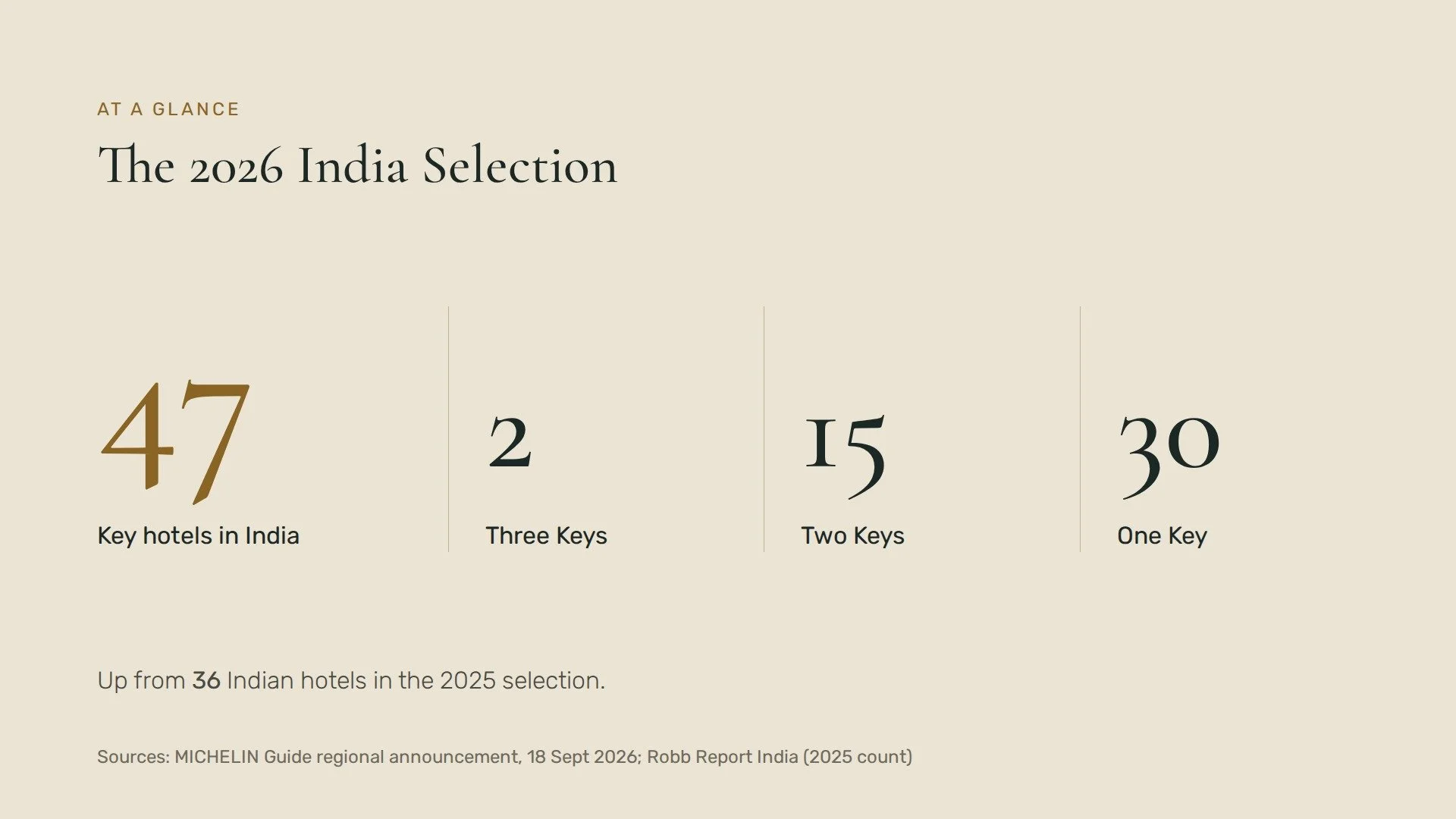
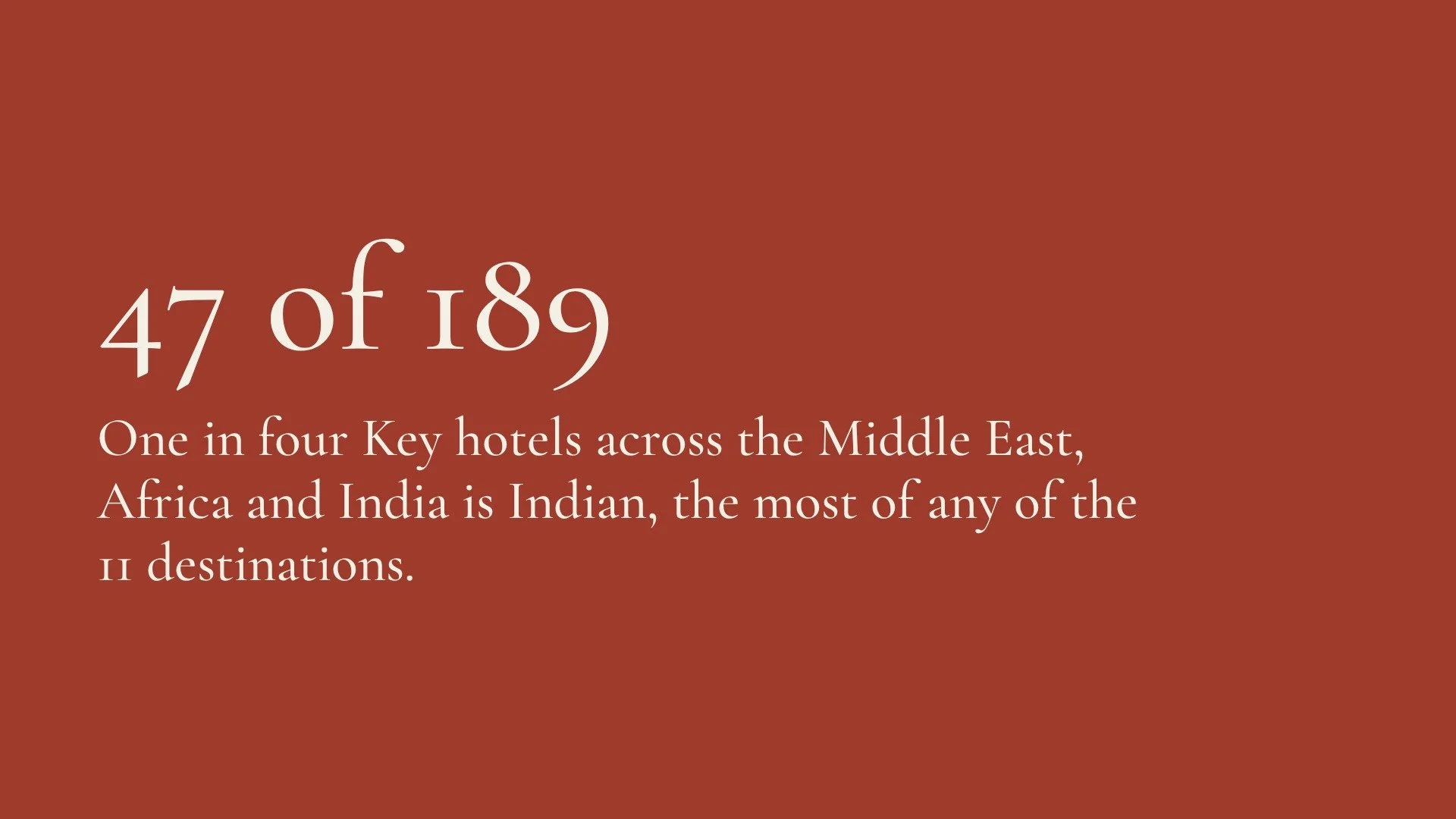
On 18 September, the MICHELIN Guide announced its 2026 Key selection for the Middle East, Africa and India, and India came out on top. Of the 189 hotels recognised across 11 destinations, 47 are Indian, roughly one in four. Last year India had 36.
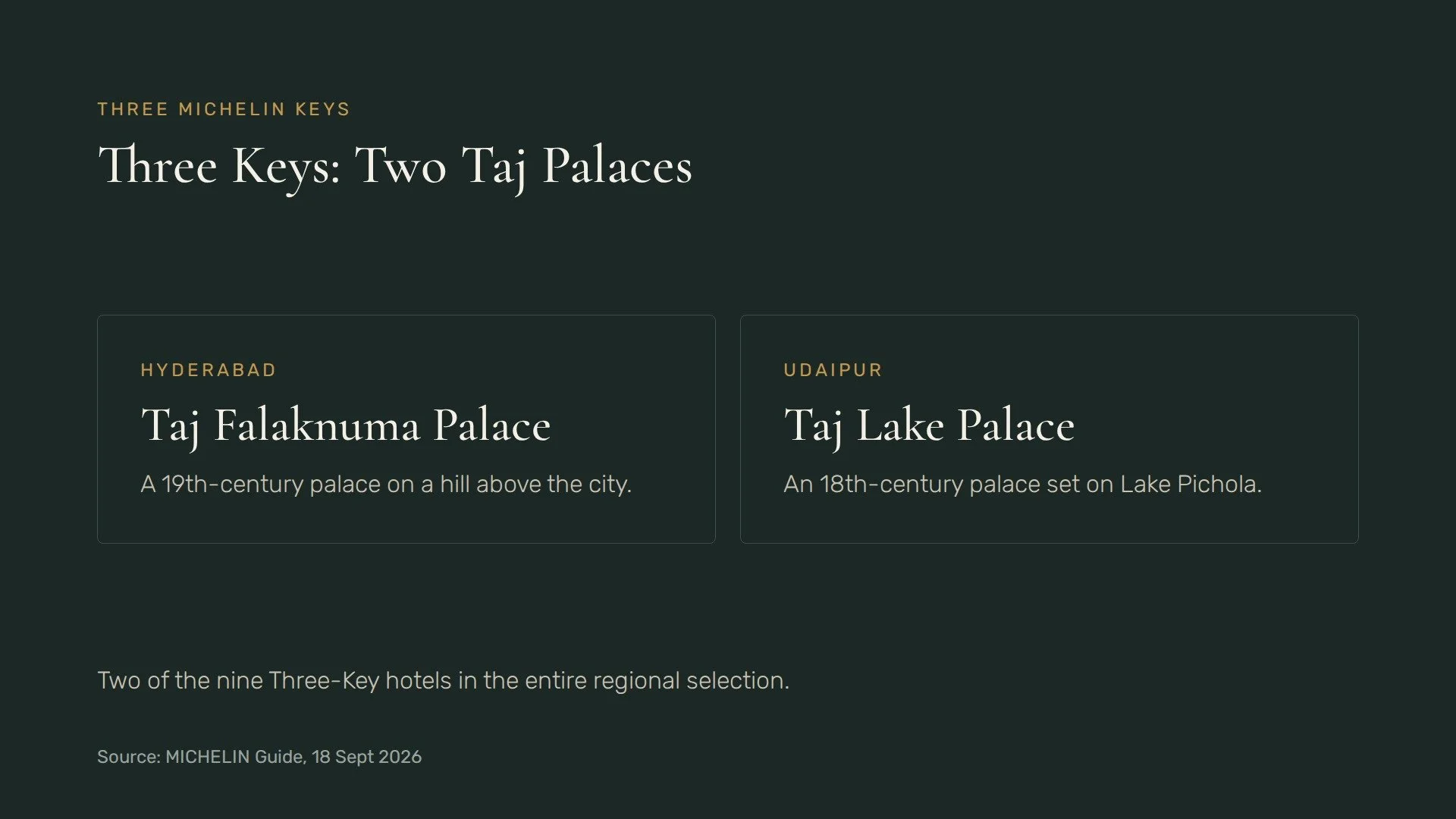
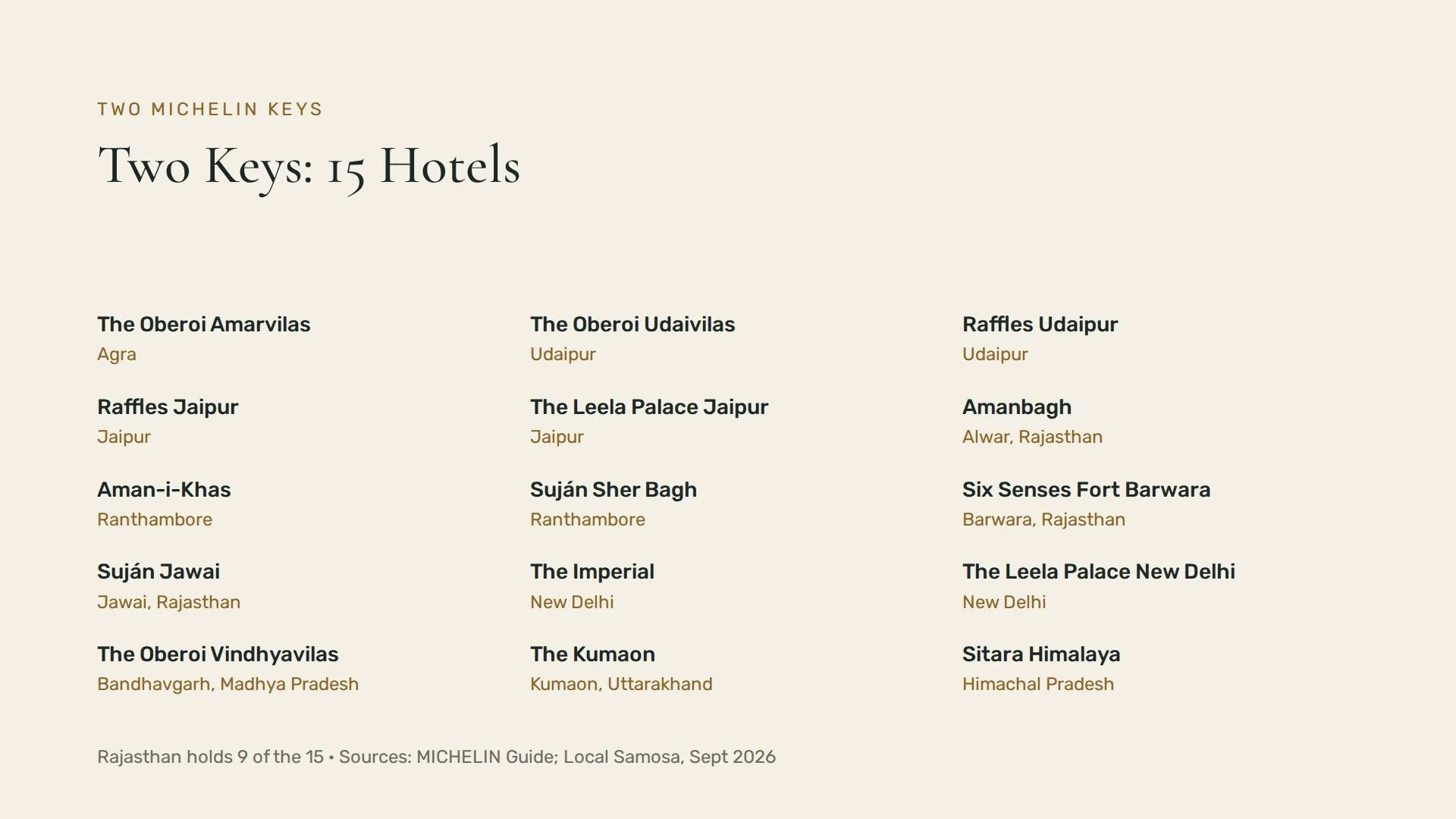
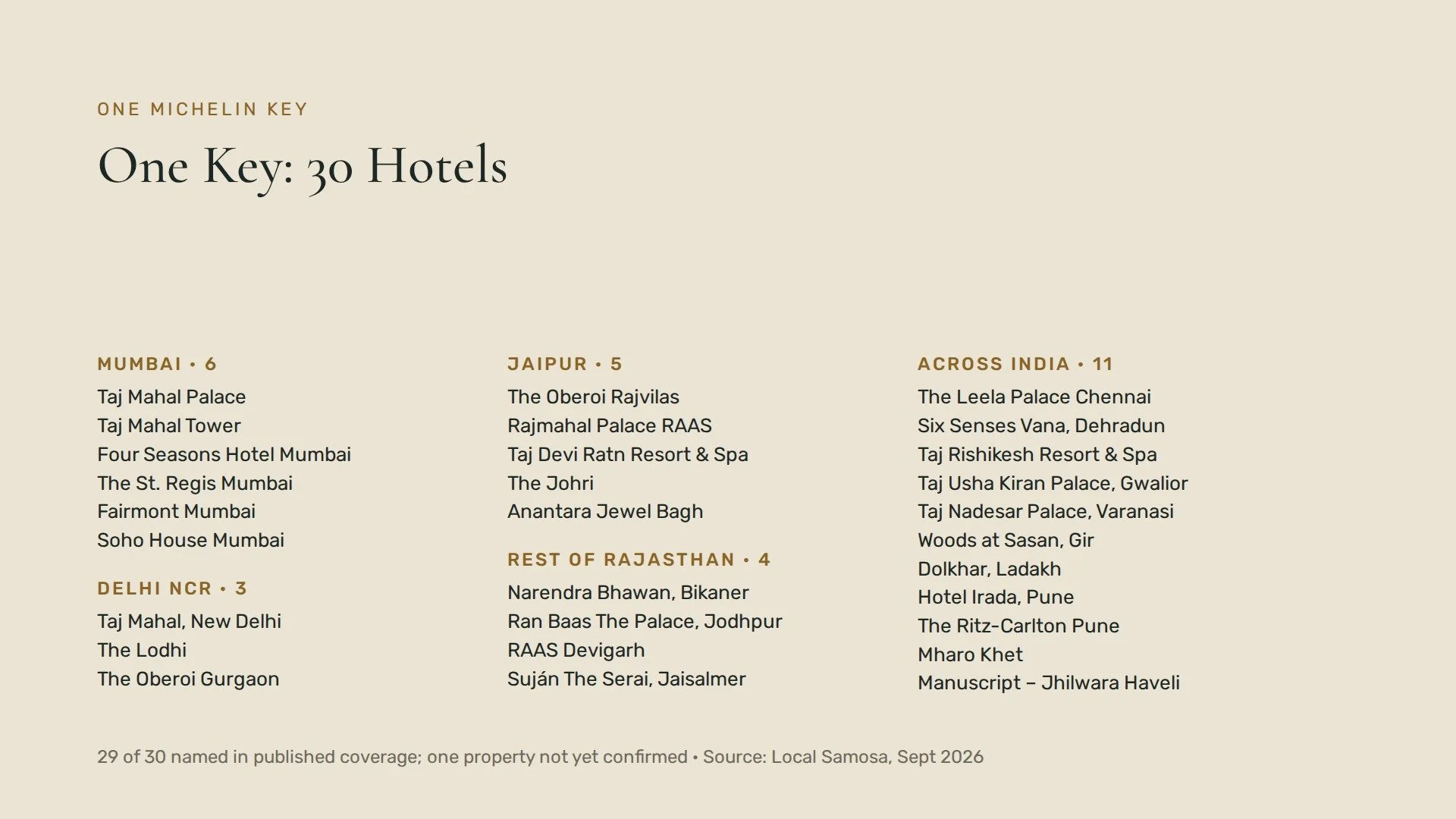
At the top are two Taj palaces, the only Indian hotels to receive Three Keys, the Guide's highest distinction: Taj Falaknuma Palace in Hyderabad and Taj Lake Palace in Udaipur. Fifteen hotels hold Two Keys and 30 hold One.
I spent part of my career at Taj Lake Palace, so I'll admit to some personal pride. But it's worth being clear about why a hotel like that earns three Keys. It isn't because the building is old or beautiful, though it is both. It's because everything that happens inside the building gets the same care as the building itself.
Where the Keys landed
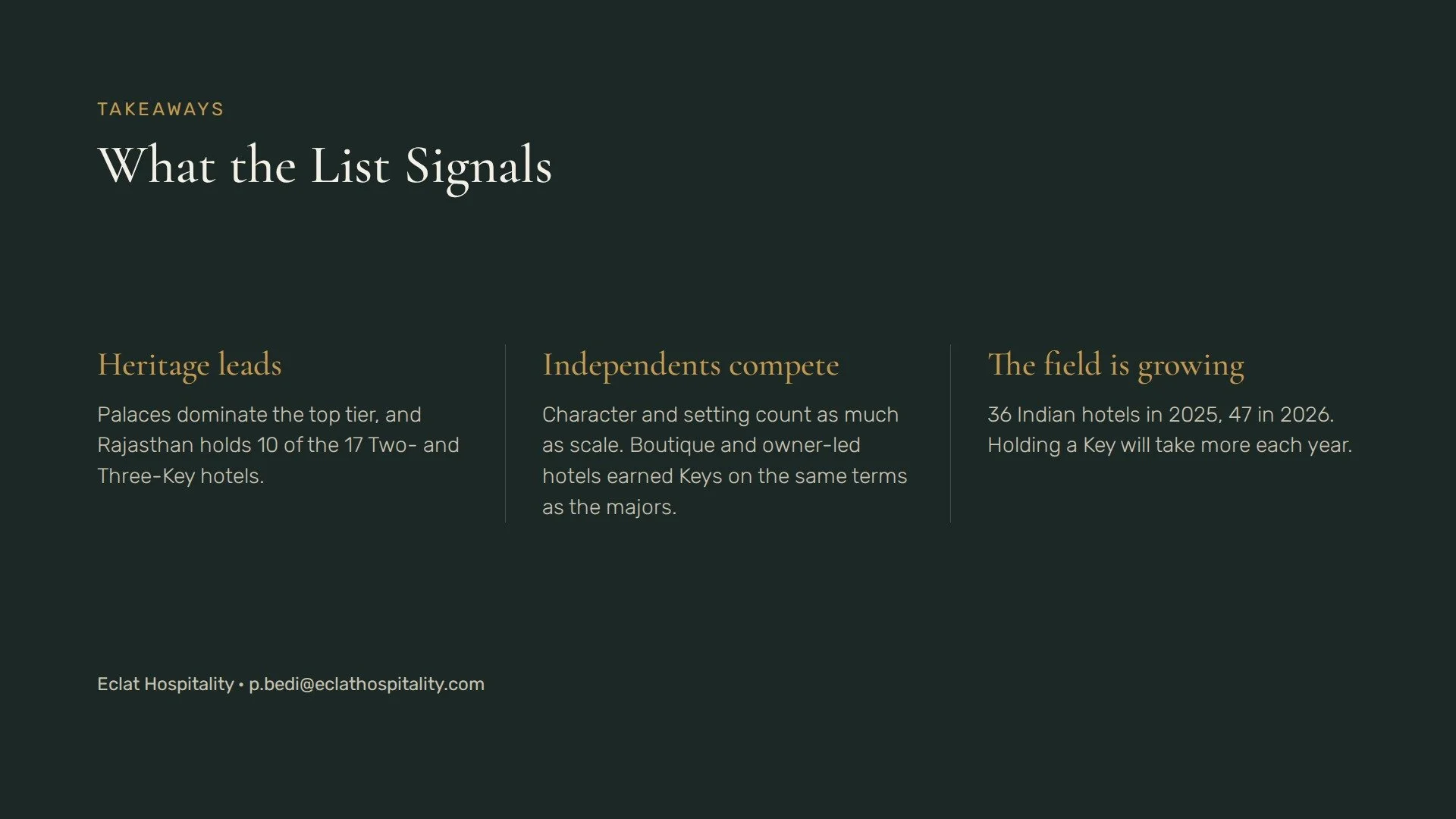
Rajasthan dominates, and that's no surprise. It holds 10 of the 17 Two- and Three-Key hotels in the country. Ranthambore alone has two Two-Key properties, Aman-i-Khas and Suján Sher Bagh, and Udaipur and Jaipur each have several.
The cities hold their own too. Mumbai has six One-Key hotels, led by the Taj Mahal Palace, and Delhi NCR has five across the levels, including The Imperial and The Leela Palace New Delhi at Two Keys.
The list also reaches well beyond the usual circuit: Dolkhar in Ladakh, Woods at Sasan in Gir, Taj Nadesar Palace in Varanasi, Taj Usha Kiran Palace in Gwalior, and Hotel Irada in Pune.
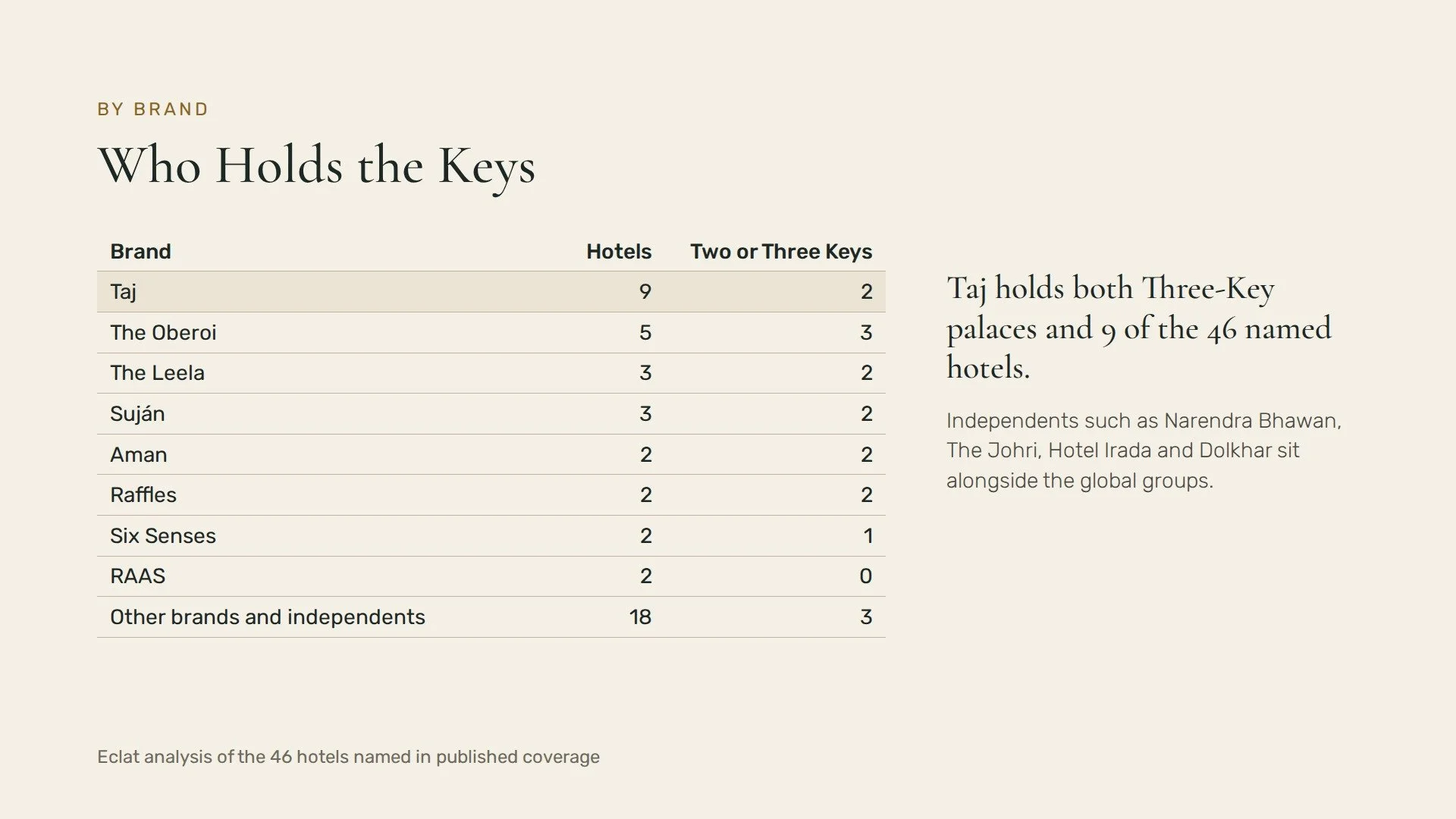
The big groups are well represented. Taj has nine hotels on the list, The Oberoi five, and The Leela and Suján three each. What I find more encouraging is how many independent and owner-led hotels sit alongside them: Narendra Bhawan in Bikaner, The Johri in Jaipur, Mharo Khet, Hotel Irada and Dolkhar among them. A Key is not reserved for scale.
Five criteria, and none of them is size
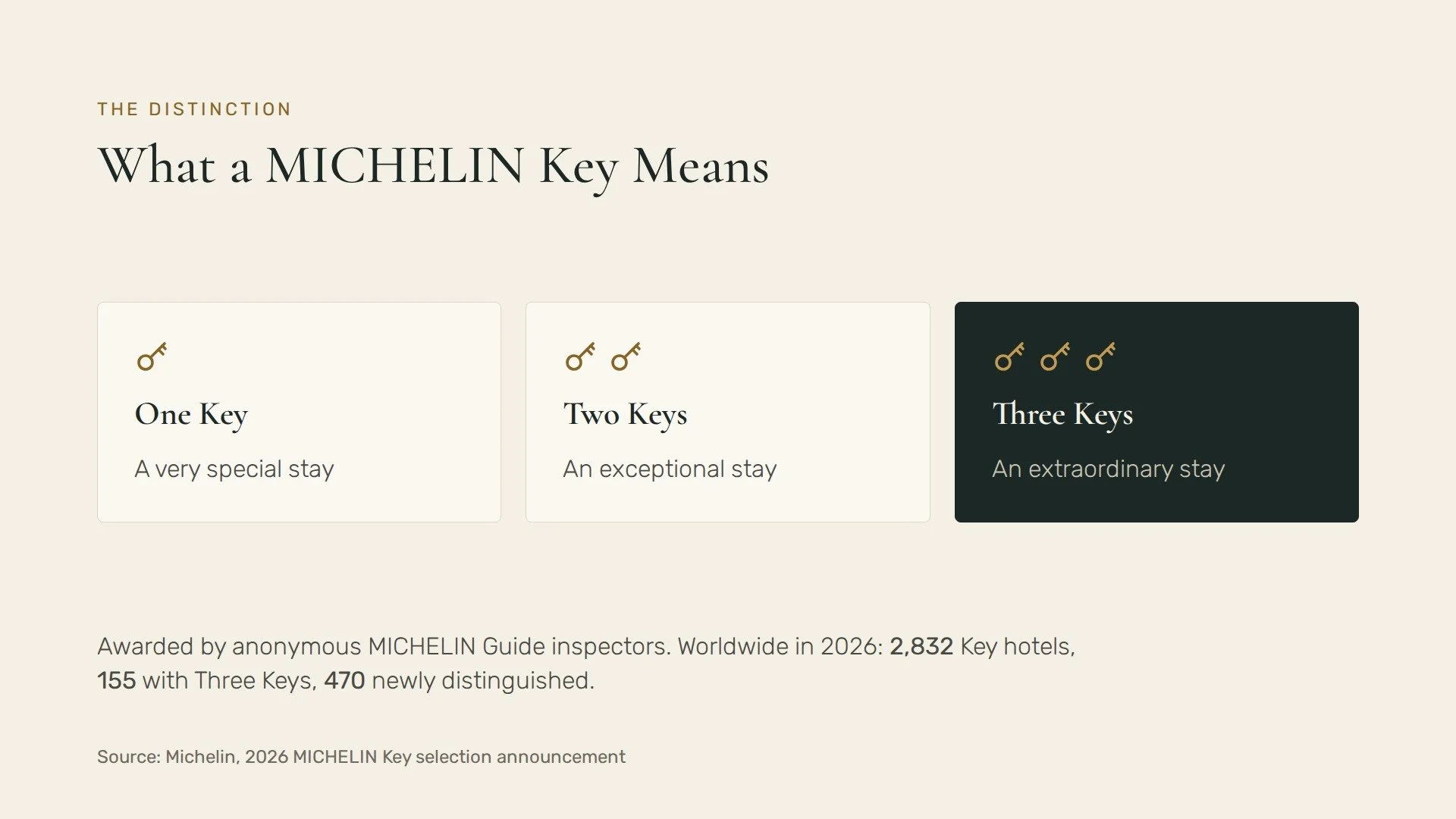
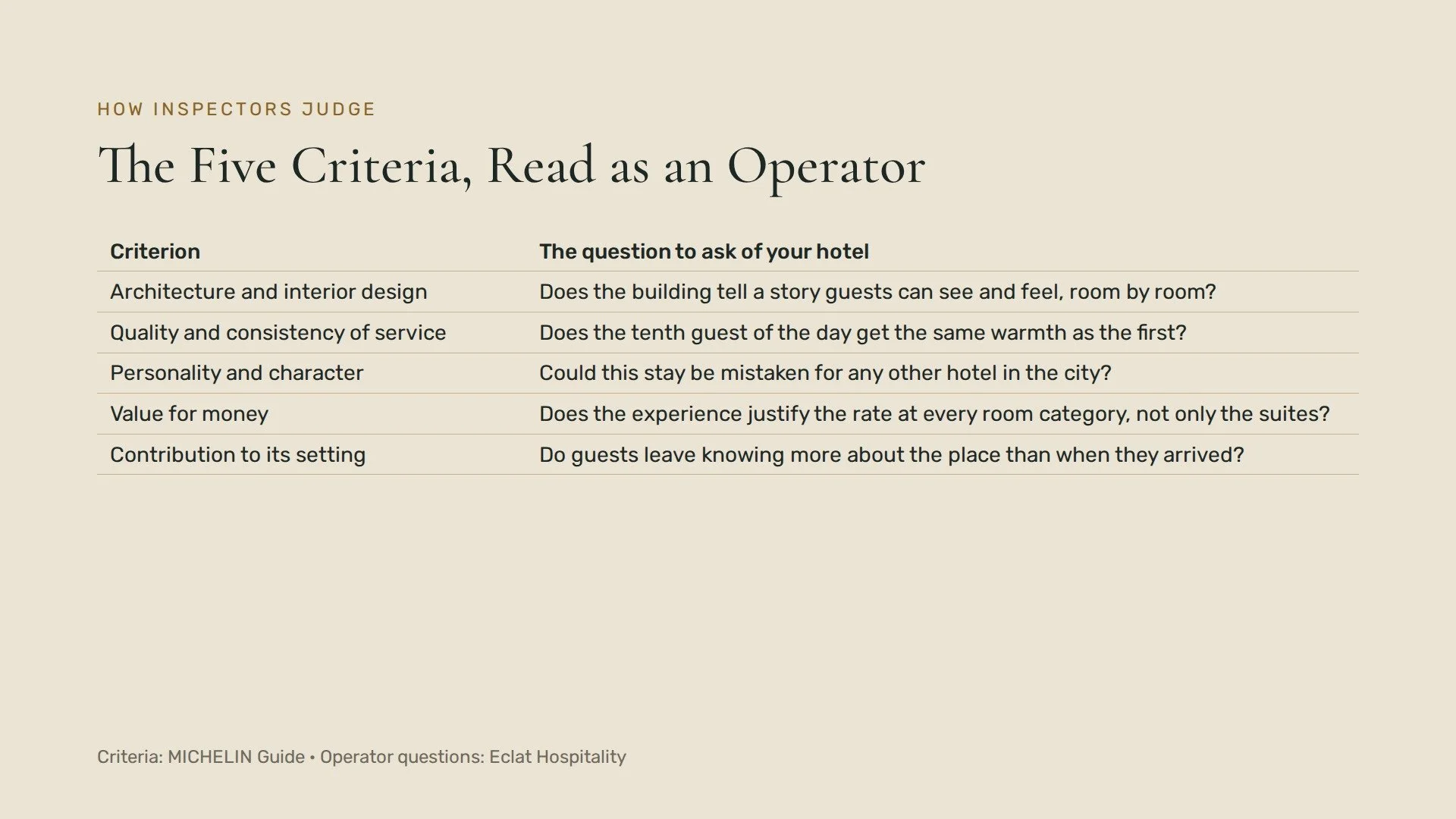
MICHELIN's inspectors visit anonymously and judge hotels on five things:
architecture and interior design
quality and consistency of service
personality and character
value for money
contribution to the setting.
Read that list as an operator and one thing stands out. Only the first is mostly about what you built. The other four are about how you run the hotel and how it feels to stay there. You can't buy personality from a brand standards manual. Consistency comes from training and systems, not from a launch budget. And value for money has nothing to do with being cheap. It asks whether the guest feels the rate was earned.
The commercial case
A Key is independent, third-party validation from a name that travellers in Europe, the Middle East and East Asia already trust. In my experience, that kind of recognition does real work for a hotel:
It supports rate positioning, because the price now comes with outside proof.
It gives guests a reason to search for the hotel by name, which is where direct bookings begin.
It hands sales teams a credible story for international markets and luxury trade partners.
It won't fix a service culture that isn't there. The selection is revisited every year and inspectors arrive unannounced, so every ordinary day counts as inspection day. A hotel that shines once and then slips has gained very little.
Five questions to ask of your own hotel
Whether or not you're chasing a Key, these questions are a sound test of any luxury or boutique property:
Does the building tell a story that guests can see and feel, room by room?
Does the tenth guest of the day get the same warmth as the first?
Could a stay with you be mistaken for a stay at any other hotel in the city?
Does the experience justify the rate in every room category, not only the suites?
Do guests leave knowing more about the place than when they arrived?
If any answer is "not always", that's where the work is. In most hotels I visit, the gap is not in the product. It's in how consistently the team delivers it.
The bar will keep rising
Going from 36 hotels to 47 in a year tells us two things. Indian hospitality is being taken seriously on the world stage, and standing out will get harder each year as more hotels come in. For independent and heritage owners especially, the path is clear: be specific about who you are, and make sure every team member can deliver it on a quiet Tuesday afternoon as well as on a full Saturday night.
Congratulations to all 47 hotels, and to the teams behind them. The Keys go to the hotel, but the stay is made by its people.
Prabhjot Bedi is Founder and CEO of Eclat Hospitality, an India-based consultancy working with independent and luxury hotels and F&B businesses across India on training, service design and talent.