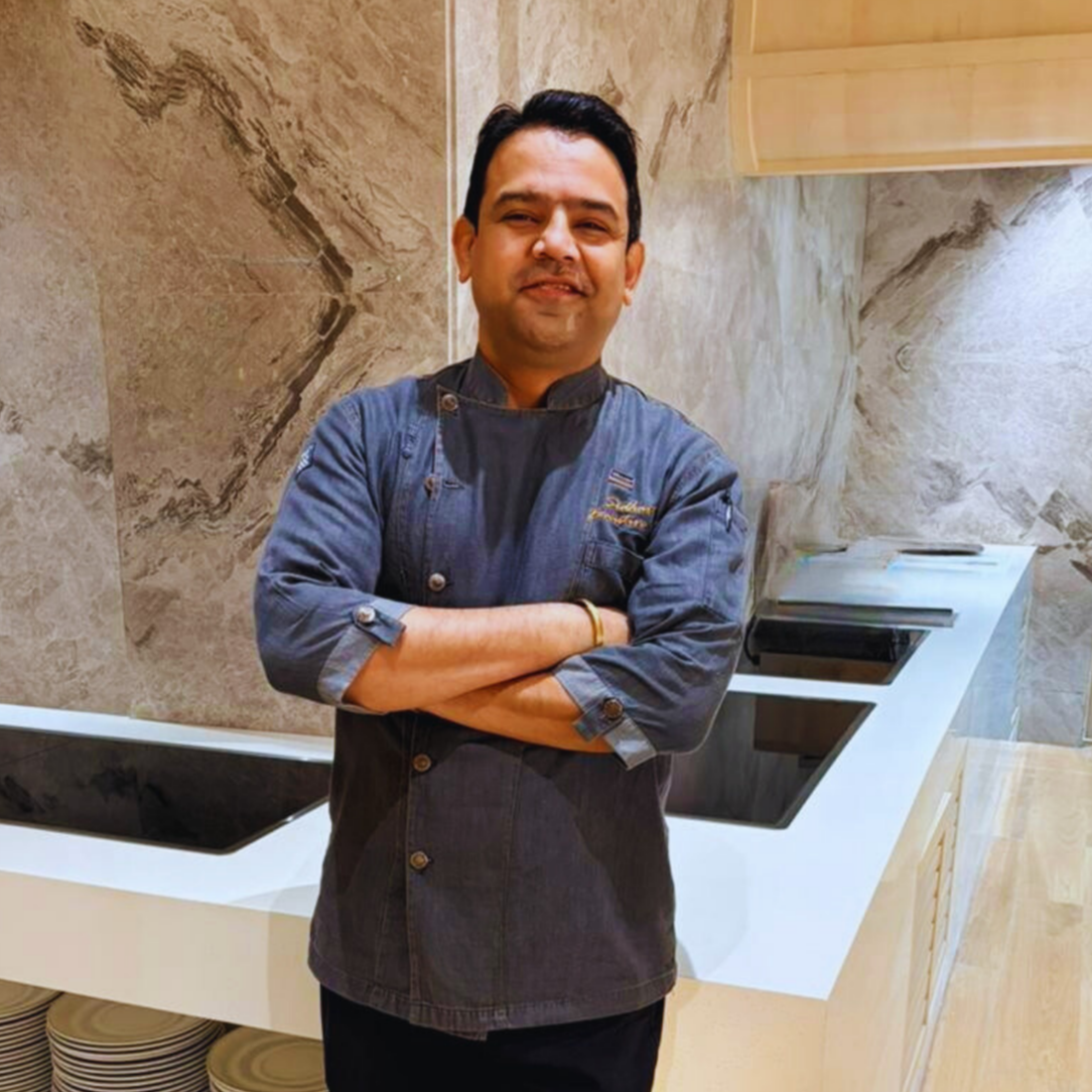
Role of Industrial training in moulding future Hospitality Professionals by Rahul Chowdhury, Assistant Professor In-charge of Food & Beverage dept, Dept of Hospitality, Sister Nivedita University

 
My Image.jpg

For many, the thought of going out in the field with limited knowledge of how it operates is an unnerving prospect as they may not know what to do or even how to go about the whole process of industrial training (IT). Training is the process of providing guidance and education to increase the skills and capacity of trainees. Industrial training refers to the accretion of practical skills and firsthand knowledge about the industry concerning a profession whilst still acquiring a relevant degree or diploma.

A young trainee’s first industry exposure is likely to be the most prestigious in that persons career. IET/IT is an affair where a student/trainee closely works with other hospitality professionals & follows the instruction to get intuition about the operations. So what’s the target/purpose of an Industrial training for students/trainees?

It is to provide to them the feel of the actual working environment and to procure practical knowledge and skills, which in turn will stimulate, develop and build their confidence. Industrial training is a supreme part of the curriculum, since it conditions students to work with the industry, and get hands on experience in hotels. It acts as an exposure to the industry, wherein students are required to be observant, as well as understand the importance of training, punctuality, rules, regulations, grooming and etiquette.

The practical training provides them with an insight into the industry, which they can tally with their theory lessons. For students/trainees, industrial training is an opportunity for learning and practice skills which are beyond the capacity of the classroom learning Hospitality industry falls under the crown of Tourism industry as well as the service sector. Being part of the service sector its success lies on the providing best services to the guest. Quality manpower is required to understand and work with many intangible and tangible aspects associated with services.

Communication between employees and guests determine the success of any business. So what’s the goal of IET (Industrial exposure training)? -The goal of IET is to unmask the students to the actual working environment and to gain practical knowledge and skills. A positive workplace is one where all the trainees are valued, supported and nurtured irrespective of gender, sexual orientation or colour.

Past research has also pointed out that attrition rate of the hospitality industry are highest than any other industry and the huge number of employees either change the employers after short duration of work or leave the industry. Hotel industry as a whole needs to be extremely conscious & must focus on motivating the students to construct careers with hotel industry.

The effort needed to make the IET more effective and positive is rather small compared to dealing with the overall effects of attrition, as highlighted above. Hence it is advised that the hotel industry takes a much longer term view on the impact of the industrial training(IT), and be prepared to forego some medium-to- short term benefits of IT students like cheap labour, coverage during lean periods etc. It also provides a platform to train and select their budding recruit without actually making any long term commitment.

It is therefore concluded that both the Hospitality institutes/schools as well as the companies, training the future professional must review their roles and the content of the IET and make it a more worthwhile and a positive contributor in retaining the future workforce in the industry. Therefore on that note, this article goes ahead to present the comforts of Industrial training to all parties directly and indirectly involved with the aim of changing the unenthusiastic attitudes of both the students and the business community as well as gaining a better understanding and valuing for it.


ABOUT THE AUTHOR

Mr Rahul Chowdhury is an alumnus from IHM (NCHMCT) Bhubaneswar with specialization in Food & Beverage Service. He has earned many accolades. He was also the topper of the college & he was conferred the “Best Student of the Academic Year Award” from NCHMCT “Govt. of India” for securing the first position all over India. He holds an MBA degree in “Tourism Management” from a prestigious University & was placed in the 1st Division. His operational experiences range from working with leading hotel chains: The Taj, Fairmont, Park, luxury liners- among others.

Mr. Chowdhury is a dynamic, young, enthusiastic, quality driven professional with over 10 years of demonstrated success with Pre-opening of Hotel management colleges, top notch Luxury Cruise-ships of USA, Europe & Asia also Pre-opening of luxury hotel experience with some leading 5tar deluxe luxury hotels, resorts & palaces of Taj Group, The Park & Fairmont hotels & Resorts in India and abroad in U.A.E (Dubai & Abu Dhabi) in various positions around the world.   His academic experiences include working as the HOD- Food and Beverage dept at School of Hospitality and Culinary Art, The Neotia University. Presently, he is heading Food and Beverage department as the HOD at Sister Nivedita University (Techno India Group).

The Art of War, Post-Covid19, and the New Sales and Revenue Managers by Robert Hernandez

carlos-muza-hpjSkU2UYSU-unsplash.jpg

Whether the recovery of the hospitality industry is fast or slow is completely out of our hands. The only thing we can all do is prepare for the comeback. It’s almost as is if we need to adopt, for lack of a less cringy word, a warrior mindset. And that’s exactly what led me to write this post.

Sun Tzu was a general in a time where war was neverending and his people were under constant attack. Yet, unlike his enemies and counterparts, Tzu preferred to win by using intelligence instead of force. To prepare for the unprecedented business environment that all Sales and Revenue Managers will soon have to navigate, I found some ideas in Tzu’s timeless book, Art of War, that can provide us with some wisdom as to how to best maneuver through a Post-Covid19 world.

“Plan for what is difficult while it is easy, do what is great while it is small.”

The New Sales and Revenue Manager should always be strategizing. As horrible as this crisis is, it presents a pause that can be used to become smarter about your work. Whether you are digging into reports that you never had the time to analyze, playing with data that you never had the time to explore, or learning new concepts which you never had the time to engage in, you should be getting better at your profession. You should be growing in knowledge and always thinking about what you will do when your company re-opens. Do this and by the time you get back to work, the crisis will seem less overwhelming.

“The general who wins the battle makes many calculations in his temple before the battle is fought. The general who loses makes but few calculations beforehand.”

The New Sales and Revenue Manager should be more analytical than ever before. It is through a deep understanding of guest behaviour, spending patterns, and demand curves, that you will be able to construct a multifaceted plan of attack. Those who only know their data on a superficial level will be caught at a serious disadvantage when they are flying blind in the face of constant changes. You have a world of information that you need to re-examine to be ready for the post-Covid19 market. These include data from previous Pace Reports, Forecasts, Comp Set reports, P&Ls, Google Analytics data, etc.

“Victorious warriors win first and then go to war, while defeated warriors go to war first and then seek to win”

The New Sales and Revenue Manager needs to be prepared for anything. No one really knows what is about to happen with the economy and the travel industry, but you should know what tactics you are going to use depending on how the situation plays out. Get together a comprehensive list of all your discounts and promotions and decide from now what you will try and under what scenario. Before you try these RM tactics, you should have a reasonable expectation of what the likely outcome will be. You should be digging into your rate code data to model the potential impact of different tactics.

“In the midst of chaos, there is also opportunity”

The New Sales and Revenue Manager needs to forget the pre-Covid19 world. When there is an economic reset, all the old rules are discarded, at least for a while. Accounts that you could never reach, will now be open to speaking with you. People who would have never accepted your invite on Linkedin are more likely to accept now. Dig into your PMS or CRM and extract your old contact file. If you have data on old bid requests, begin to segment them by group size first since you will not be able to bring large groups for now. Then segment these contacts by as many dimensions as your system has and attack that list with no recollection of when they last rejected your offer.

“If quick, I survive. If not quick, I am lost..”

The New Sales and Revenue Manager needs to act fast and decisively. In this new world, you won’t really know what will work and what won’t until you try it. To minimize the risk associated with failure you need to try out ideas before your competitor does and be ready to abort very quickly. If you try a new discount, put it out there before anybody else does, but be sure that you can easily get out of it before it erodes your profit. Analytics on discounts performance will be critical. Knowing when a discount’s performance is statistically significant will help you quickly judge whether it is working in this new world. Obviously, most discounts will underperform last year’s results, but if you can put their performance in some historical context, then you can better explain your decision to open or close them.

“Do not repeat the tactics which have gained you one victory, but let your methods be regulated by the infinite variety of circumstances.”

The New Sales and Revenue Manager needs to be creative. The vast majority of hotels will reopen their operations offering only a slightly more relaxed version of the same old cancellation policy, contract terms, and rewards policies. That’s not going to cut it. You need to rethink your norms from the point-of-view of a traveler that is scared to make a decision that may cost them more than just money. To create more flexible terms, you need to understand your cancellation data, your group wash numbers, and any other data on business that did not materialize. This information is waiting for you in your PMS.

“Know yourself and you will win all battles”

The New Sales and Revenue Manager needs to understand their position. All hotels will reopen from a position of weakness because they will be begging for business. However, you can leverage your data so that you know more about your guests and competitors than they know about you. Understand your value position in your market. Know your weaknesses from past guest reviews and surveys. Be very clear about how you are perceived so that you have a better chance of pricing correctly and attracting the right guest. If you can, figure out your cross-price elasticity, then you can estimate the impact on your demand when your competitors lower their rates.

“Thus the expert in battle moves the enemy, and is not moved by him.”

The New Sales and Revenue Manager needs to be proactive. When times are good, we can be reactive and not lose much. However, under crisis mode, only those that are ready for anything, will thrive. You have to get to a position where you are satisfied that you have done all the analysis that you need to do so that you are confident in your decision. Trust me, your bosses are just as confused as you are, and they will be looking to you for insight. If you have done your homework, and have all the deep analytics, and can clearly explain your thinking, they will believe in you even if you fail.

“The art of war teaches us to rely not on the likelihood of the enemy’s not coming, but on our own readiness to receive him; not on the chance of his not attacking, but rather on the fact that we have made our position unassailable.”

The New Sales and Revenue Manager needs to be ready to lower rates. I know that these days you will read many articles and studies that implore you not to lower your rates. You should know the flow impact on your P&L of different pricing levels. In other words, you need to understand your break-even pricing. Most Sales and Revenue Managers have never had to think about the rest of the P&L, but in a world where occupancy levels may be limited to less than 50% for a while, you will have to be able to model how rate decisions impact profit. Using a combination of PMS and General Ledger analytics, you can build an understanding of how much you can resist an all-out price war.

“He will win who knows when to fight and when not to fight”

The New Sales and Revenue Manager needs to stay calm. Again, the first reaction of the market will be to lower rates. Hotel owners are just under too much financial pressure right now to stand their ground. However, while you may have to make adjustments, you don’t have to show all your cards at once. You can limit the number of promotions and discounts that you offer until you see that there is enough occupancy, web traffic, and reservations inquiries to justify experimenting with more aggressive rate tactics. To accomplish this, you would have to have a clear understanding of the performance of each of your rate codes to know when and where to release them into the wild. You have all this data, don’t be afraid to use it.

“We are not fit to lead an army on the march unless we are familiar with the face of the country-its mountains and forests, its pitfalls and precipices, its marshes and swamps.”

The New Sales and Revenue Manager needs to think like the competition. Look back at your old STR reports to see what your competition did when demand was slow. How far did they lower their rates? It’s very likely that they will run the same playbook. Know what to expect so you can plan how you will react. The last thing you need is to adopt the old attitude that you are smarter than your competition or that they have different motivations than you do. Everyone is now in the same boat trying to get to the same destination. Your competition is just as eager as you are, but you can be way more prepared.

“Therefore, just as water retains no constant shape, so in warfare there are no constant conditions.”

The New Sales and Revenue Manager needs to embrace the unknown. Everyone in the hospitality business is now in learning mode. There are no experts, just people who are willing to do the work and make adjustments as they go along. Don’t be afraid to give your opinion and then take it back the next day. Have a flexible mindset and don’t get frustrated if management is constantly changing the rules, they are winging this just like the rest of us. We are all taking this one day at a time. Leverage your data and let it give you peace in the knowledge that it provides. And that is, that we always get past the crisis and onto better times.

Robert Hernandez | Statistical Analysis and Data Mining for Revenue Growth | robert@originworld.com
Robert is an expert in the field of Mathematical Pricing and Optimization. He has spent the last 17 years building data-driven forecasting and optimization models for companies in over 20 different industries, from tech to tourism