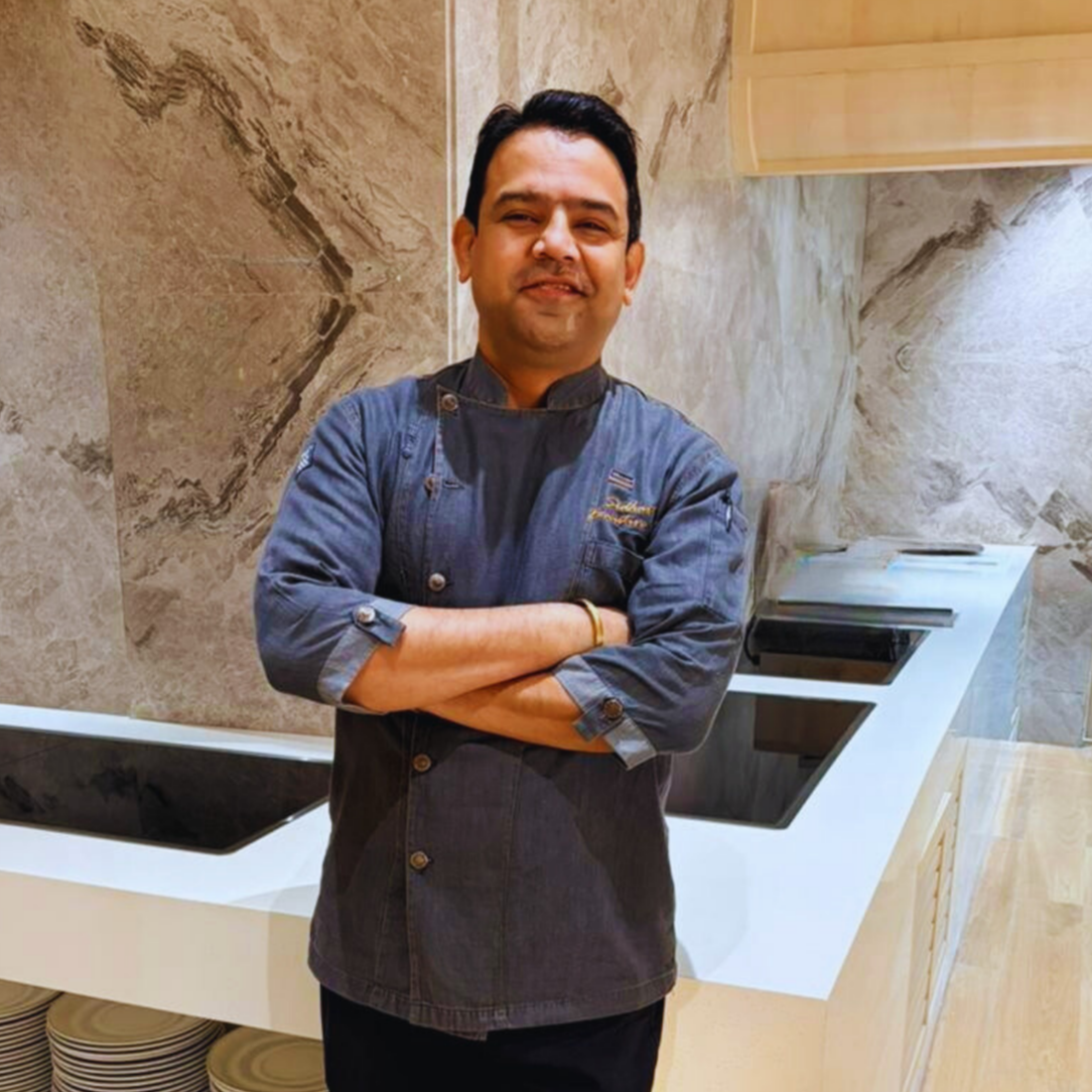
Exclusive Interview | Chef Aditya Kulkarni, Executive Chef at Four Seasons Hotel Mumbai
/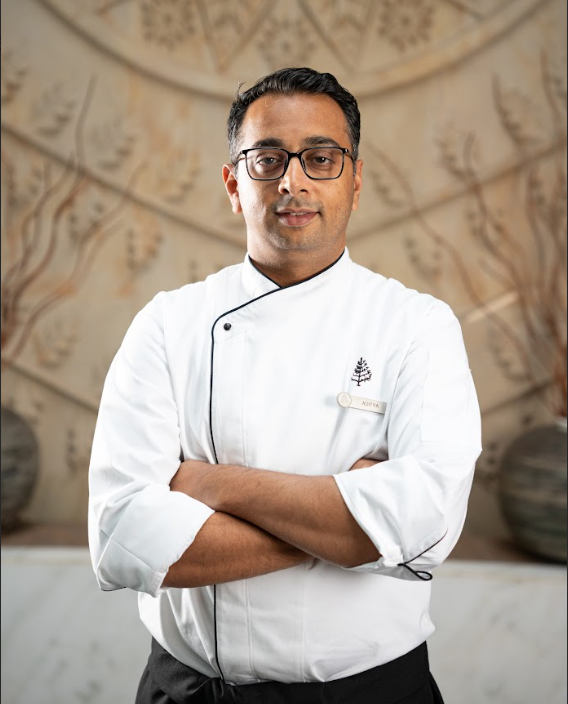
Chef Aditya Kulkarni
Without learning, work becomes boring, mundane-it just becomes “work” in the truest sense of the word.
Executive Chef at Four Seasons Hotel Mumbai
Culinary Philosophy & Journey
You’ve worked across a wide spectrum of cuisines and kitchens. How has that diversity influenced your current food philosophy?
I wouldn't define or limit myself by saying I like to cook a particular cuisine, because I believe every cuisine is essentially about taking a set of ingredients and, through good technique, the right equipment, and sound knowledge, transforming them into a flavourful and interesting dish. Over time, I’ve come to appreciate how those experiences have shaped me into a more well-rounded chef—someone who can contribute across different areas and support my team more effectively, simply because I’ve stood in those shoes and done the work myself.
From pastry to pan-Indian and global cuisines — what has been the most challenging transition in your culinary journey?
Each cuisine has its own rhythm, techniques, and flavour sensibilities, but being ‘thrown into the deep end’ multiple times helped me adapt. Ultimately, those challenges shaped me into a more well-rounded chef. I’ve come to realise that while the ingredients and methods may vary, the core philosophy remains the same: good technique, respect for produce, and a desire to create something delicious. Having walked different paths in the kitchen allows me to contribute more meaningfully and support my team across the board.
Leadership & Team Development
As you lead a large team through upcoming openings, how do you instill consistency while encouraging creativity?
I always share what I call the “pyramid of skills.” At its foundation are skill, knowledge, and the most crucial layer is adaptability. I encourage my team to treat their job as a continuing education.
My philosophy of work is that work should be about learning. Without learning, work becomes boring, mundane—it just becomes “work” in the truest sense of the word.
Creativity is essential to evolve cuisine, but when food gets too experimental, it can lose its soul. So while we innovate, I believe it’s important to get the basics right using authentic recipes and techniques. Creativity can be expressed through textures and presentation, making the food contemporary while staying true to its roots.
“Even if there’s one percent more learning than yesterday, life is good.” What has been your most recent one percent?
My most recent one percent has been a deeper understanding of what it means to trust your team. Even when I have to step away to handle something else important, I trust my team to deliver with the same intensity, love, and care that I would—and that’s incredibly important.
There’s also a strong sense of camaraderie in a kitchen. Like in any sport, you’re only as good as your weakest link. So how we train the youngest team members and inspire them to be equally passionate is critical.
Especially in great companies like Four Seasons, which take pride in their people and in developing them, the kitchen becomes a space for real growth. Even something as simple as eating a sandwich involves so many people working together—someone makes the bread, someone cooks the filling, someone cuts the salad, someone ensures it’s plated beautifully, and someone delivers it with a smile. Seeing how all of that comes together is always a learning experience.
What are your current learning & development initiatives for your team, especially the younger chefs?
The best advice I give youngsters is to do it with full conviction. Don’t sit on the fence. If you’re passionate about it, dive in with your heart and soul.
This is a profession that requires passion. It’s not something you can do just as a job. It demands an obsession with doing things right. Young chefs who aspire to grow in this field need to be genuinely passionate. Only then is it fun—otherwise, it becomes just like any other job.
But being a chef is not like any other job. It’s a lifestyle. It’s something you live and breathe all the time.
Cooking food is simple, but to do it well and enjoy it, you need to be truly passionate about it.
Staying Rooted While Evolving
As Mumbai’s food scene evolves rapidly, how do you balance staying current with staying true to your roots?
My relationship with food has always been dynamic. Just like my cooking, my eating preferences continue to evolve. Over the years, I’ve immersed myself in a wide range of cuisines, from Japanese and European to Indian, Thai, and Middle Eastern flavours. Each phase brings a new wave of inspiration and learning.
Right now, at Four Seasons Hotel Mumbai, we’re gearing up for the launch of new restaurants, and my focus is heavily on Chinese and Japanese cuisine. I’ve been reading, tasting, and studying these culinary traditions quite deeply.
But even as I explore global influences, I keep returning to Mumbai’s incredible local food culture. One of my favourite local dishes is crisp-fried Bombay duck. It’s something I keep coming back to not just for comfort, but also for its balance, depth, and the sheer joy it brings.
Dishes like that remind me how much simplicity and technique matter. Those are the principles that continue to guide my cooking, no matter what cuisine I’m exploring.
Final Reflection
If you had to sum up your leadership style in the kitchen in one sentence, what would it be?
I try to lead by creating an environment where learning never stops, where trust, teamwork, and passion matter deeply, and where even a 0.1% improvement every day is seen as meaningful progress.