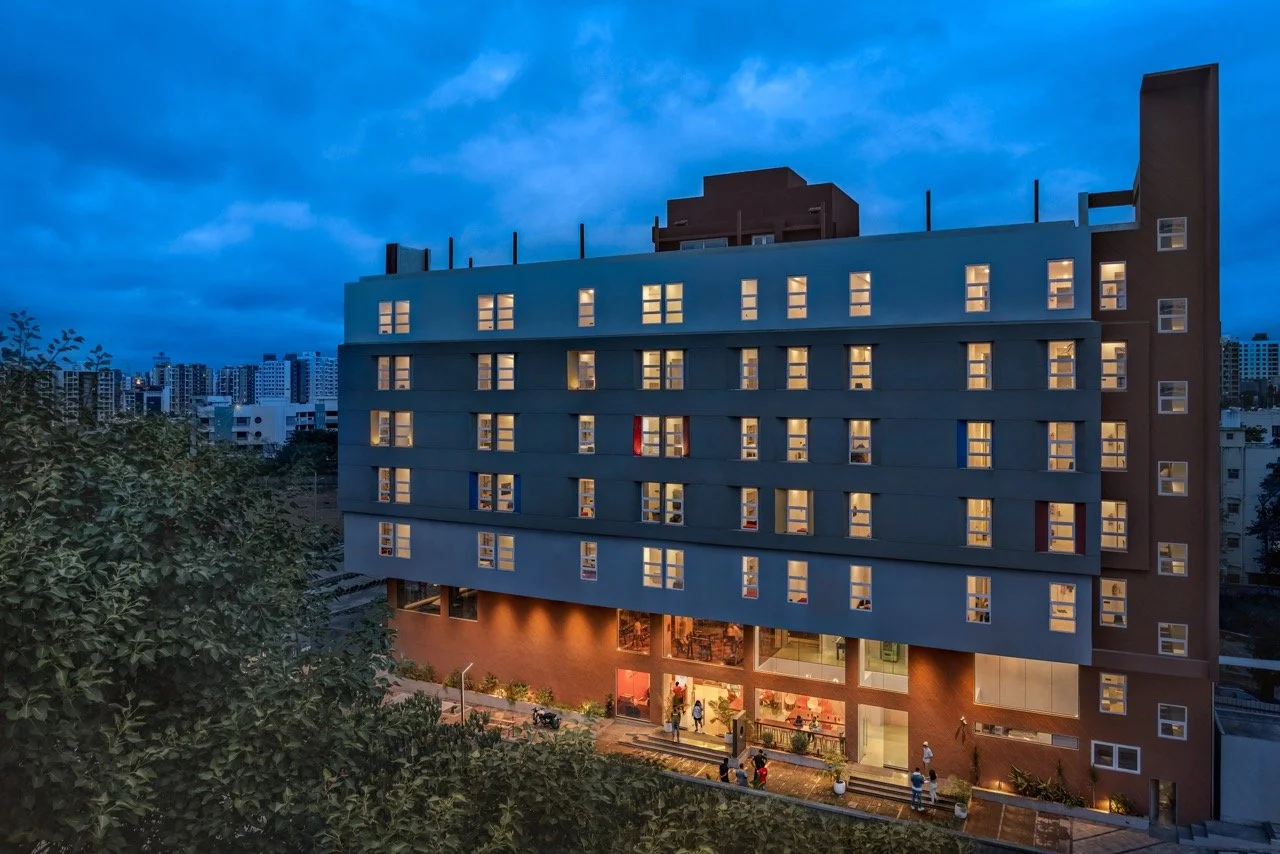
Why a new generation of travellers is choosing lifestyle hotels

A new CBRE report highlights how experience-led travel, evolving consumer preferences and Gen Z spending habits are accelerating the growth of lifestyle hotels.

The spending by Indians on experiences – recreational and cultural activities, restaurants, hotels, and travel – is expected to outpace the spending on physical goods between 2025 and 2030, according to a report titled “Gen Z Checks In: The Rise of the Lifestyle Hotel” released by world’s leading real estate services and investment firm CBRE. The expenditure on hotel accommodation is expected to grow even faster, making it one of the most dynamic consumer spending categories in the country.

An analysis of Oxford Economics data by CBRE Research projected that household expenditure by Indians on physical goods is likely to grow at a compound annual growth rate (CAGR) of 9.1% between 2025 and 2030. However, broader experiential spending is forecast to grow at a higher 10.3% CAGR over the same period. The spending on hotel accommodation is expected to grow at an even sharper 10.6% CAGR.

The report noted that the shift towards experiences was fundamentally accelerated by the COVID-19 pandemic. Pent-up demand and a desire to make up for lost time have been driving the trend since 2022.

Gen Z driving the shift

The trend is being primarily driven by Generation Z, which currently accounts for the largest demographic bloc across the Asia Pacific region. As Gen Z, born between 1997 and 2012, achieve financial independence, their spending is forecast to expand faster than any other living generation, according to the report.

It added that Gen Z travelers demand striking, curated design environments that double as social media backdrops, personalized service that avoids corporate predictability, and activated communal spaces that host experiences such as wine tastings, acoustic performances, and local cultural events.

Wellness integration is equally non-negotiable, with seamless technology from self-check-in to smart-room automation, now firmly an expectation rather than differentiation.

Emergence of lifestyle hotels

According to CBRE, a new category of property, the lifestyle hotel, has emerged as the industry’s answer to this generational demand. Unlike boutique hotels or global chains, these hotels occupy a middle ground: the design and local character of an independent property, backed by the operational scale, distribution networks, and loyalty programs of an institutional brand.

Between 2015 and 2025, the overall hotel supply across the Asia Pacific region grew at a steady 5% CAGR. However, lifestyle hotels grew at 19% over the same period. Now till 2030, the supply of lifestyle hotels is projected to maintain a 10% CAGR, five times the 2% growth forecast for the broader hotel market.

Moreover, this growth is backed by clear pricing power. The report highlighted that in 2025, upper upscale lifestyle hotels across Asia Pacific commanded a 13% revenue per available room (RevPAR) premium over traditional properties in the same category. Upscale lifestyle brands added a further 7% premium, achieving this despite smaller room sizes by generating stronger food and beverage revenues and running leaner operations.

In India, the penetration of lifestyle hotels remains low as compared to markets like Singapore and Hong Kong. That gap is increasingly being read by developers and investors as an opportunity.

Industry perspectives

“The contemporary consumer no longer just purchases lodging but wants unique, culturally immersive, and digitally shareable environments,” said Anshuman Magazine, Chairman & CEO – India, South-East Asia, Middle East & Africa, CBRE. “This structural shift towards experiential consumption is an enduring macroeconomic trend. For property owners and institutional investors, the lifestyle hotel segment represents a compelling double-win: measurable RevPAR and ADR premiums over standardized assets, and a capital-efficient conversion pathway that maximizes long-term asset value.”

Ada Choi, CFA – Head of Research, Asia Pacific, CBRE, said, “The experience economy is not a trend but a structural reset. The hospitality sector in the APAC region is at an exciting point in this journey. In India specifically, rising incomes, a maturing Gen Z consumer base, and a significant undersupply of lifestyle hospitality product are converging to create one of the most attractive investment environments in the region.”

The investment opportunity

According to CBRE, developers are increasingly turning to existing properties rather than building from scratch, given the rising land costs and construction expenses. Older, independent, unbranded hotels – of which India has a significant stock – are being converted and repositioned as lifestyle properties, often at a fraction of the cost of new development.

The smaller asset transactions are also dominating market liquidity. Assets valued under $100 million grew from 31% of total hotel investment volume across Asia Pacific in 2020 to 42% by 2025, with roughly 30% of traded assets comprising independent hotels ripe for repositioning.

To capitalize on the opportunity, CBRE suggested that developers adopt a market-specific approach, identifying local white spaces, prioritizing design flexibility to preserve future exit optionality, and activating public spaces and food and beverage concepts as community-facing amenities that serve transient guests and local neighborhood demand alike.
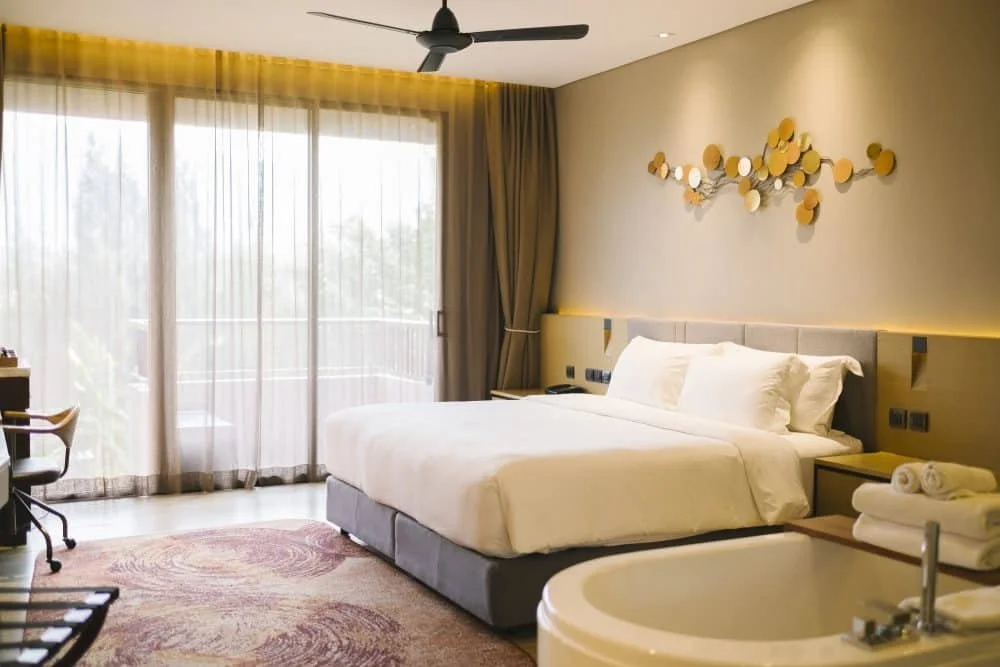
India’s hotel sector to add over 70,000 keys by 2030

According to CBRE, India’s hospitality sector is set for sustained growth driven by demand, investment, and expansion

India’s listed hotel operators are projected to add over 70,000 keys by 2030 to capitalise on strong underlying growth potential, according to the India Alternate Sectors Outlook 2026, released by leading real estate consultancy and infrastructure company CBRE South Asia Pvt. Ltd. The report notes that the sector is transitioning from a phase of post-pandemic recovery into structural maturity, characterised by disciplined expansion and pricing stability.

Market growth and demand trends

According to the consultancy, the industry’s market size is projected to rise from approximately USD 24.6 billion in 2024 to ~USD 31 billion by 2029. Domestic tourism is likely to lead this growth, having posted a 40% year-on-year (YoY) rise in visits to 4.1 billion in 2025.

Industry perspective

“The hospitality sector’s trajectory is a testament to India’s economic resilience, supported by rising disposable incomes and improving accessibility facilitated by large-scale infrastructure development,” said Anshuman Magazine, Chairman & CEO – India, South-East Asia, Middle East & Africa, CBRE. “As the industry accelerates its transition towards experience-driven travel and captures institutionalised demand across spiritual and cultural centres, we anticipate robust and long-term expansion for the country’s hospitality ecosystem.”

Performance indicators in 2025

The sector maintained strong growth momentum throughout 2025 despite year-end headwinds such as geopolitical tensions and operational disruptions in aviation sector.

During the year, overall occupancy levels reached ~64%, providing a foundation for improved financial performance for operators. Revenue per available room (RevPAR) rose 11% year-over-year, surpassing the 9% growth recorded in 2024, while average daily rates (ADR) increased by 8.7%.

Shift towards premiumisation

The supply pipeline in 2025 shifted decisively towards premiumisation, addressing the heightened consumer appetite for luxury experiences. The Upper Midscale, Upper Upscale, and Upscale categories cumulatively accounted for ~60% of new openings.

Investment activity and capital markets

Since 2024, India’s hospitality sector has seen a sharp rise in investment activity, with institutional players acquiring large stakes. In 2025, hotel deal value reached USD 456 million, marking a 2.5x YoY increase from USD 184 million in 2024.

This momentum is expected to continue, with investors exploring portfolio-led deals and targeted acquisitions, while major players tap public markets through IPOs to raise capital and support expansion.

Investor outlook and strategic realignment

“Institutional players are aggressively acquiring large stakes in the hospitality sector,” said Rami Kaushal, Managing Director, Consulting & Valuations, India, Middle East & Africa, CBRE. “Investor interest is increasingly shifting towards diversification into leisure destinations, pilgrimage centres, and emerging commercial cities with a constrained supply of branded inventory. The strategic realignment towards asset-light expansion models is enhancing the sector’s institutional appeal, paving the way for sustained consolidation and M&A activity as operators look to scale their platforms.”

Asset-light growth and consolidation trends

The sector is witnessing a realignment, with operators increasingly adopting asset-light expansion models such as management contracts and franchise partnerships to strengthen balance sheets and pursue more disciplined growth strategies. This is likely to enhance the sector’s institutional appeal, according to the report. As the industry expands, consolidation activity is expected to gain momentum in 2026.

Expansion into emerging markets

Moreover, operators are increasingly exploring acquisition-led growth strategies to scale portfolios and broaden market presence. Major hospitality players are evaluating such opportunities across tier-II and tier-III cities, supported by improving connectivity and expanding tourism infrastructure. Additionally, the country’s extensive base of independent and unbranded hotels presents opportunities for asset aggregation and brand conversions.

Outlook for investment activity

Against this backdrop, investment activity in the hospitality sector is likely to remain active through 2026, supported by sustained travel demand and continued investor interest in scalable hospitality platforms.

Evolving development strategies

Developers and operators are also transitioning towards higher-yield, experience-driven assets. They are increasingly focusing on integrated mixed-use hubs and residential-style luxury offerings to cater to high-net-worth individuals seeking a “hotel-at-home” lifestyle. Recent policy initiatives are expected to support the continued development of this ecosystem.

Infrastructure and policy support

The spiritual and heritage segment is emerging as a year-round demand driver, supported by infrastructure upgrades and improved connectivity.

GST rationalisation in September 2025 boosted competitiveness and affordability, while the Union Budget FY2026–27 proposed measures to strengthen training and long-term sector growth.

U.S. Hotel Profits Per Room Cratered to Losses in March

Gross operating profit per available room at U.S. hotels dropped nearly 102 percent in March, translating to an average 2 percent in losses, according to STR.

Coronavirus hotspots saw some of the worst drops in hotel profits. New York City had the steepest profit decline, with a 203 percent drop, followed by Chicago, at 201 percent, and Seattle, at 158 percent. Upper-upscale properties were the worst performing sector with a 108 percent decline in profits

The U.S. hotel industry expected a slowdown in 2020, as new supply delivered and the country entered a very late stage of its more than 10-year economic expansion. But coronavirus accelerated the predicted market correction to an unprecedented nosedive.

Hotel occupancy levels hit single digits. Demand dropped 41 percent in March and 14 percent for the entire first quarter, according to CBRE Hotels Research. The real estate firm predicts a 46 percent decline in revenue per available room, or RevPAR, for the year. The previous worst year on record was the 25 percent RevPAR decline seen in 1932.

With occupancy levels so low, it is almost impossible for hoteliers to generate enough revenue to cover operating expenses let alone debt service obligations. Many have decided to temporarily suspend operations until some level of travel demand returns. More than 5,000 U.S. hotels have closed as a result of depleted demand, according to CBRE. Mandelbaum still expects many of those to reopen.

download (9).jpg