Mise en Place: The Secret to Kitchen Sanity
/Mise en Place: The Secret to Kitchen Sanity
![[HERO] Mise en Place: The Secret to Kitchen Sanity](https://cdn.marblism.com/HjKc_HzUWDN.webp)
Let's be honest: if you've ever worked a service shift in any professional kitchen, you know that feeling. The one where orders are flying in, the printer won't stop chattering, and you're suddenly realizing you haven't chopped the shallots yet. Your heart races. Your chef's looking at you. And all you can think is, "Why didn't I prep this earlier?"
That, friends, is the exact moment you understand the sacred power of mise en place.
What Mise en Place Really Means
Sure, we all know the textbook translation: "everything in its place." The French gave us this beautiful phrase, and while it sounds simple enough, there's so much more simmering beneath the surface.
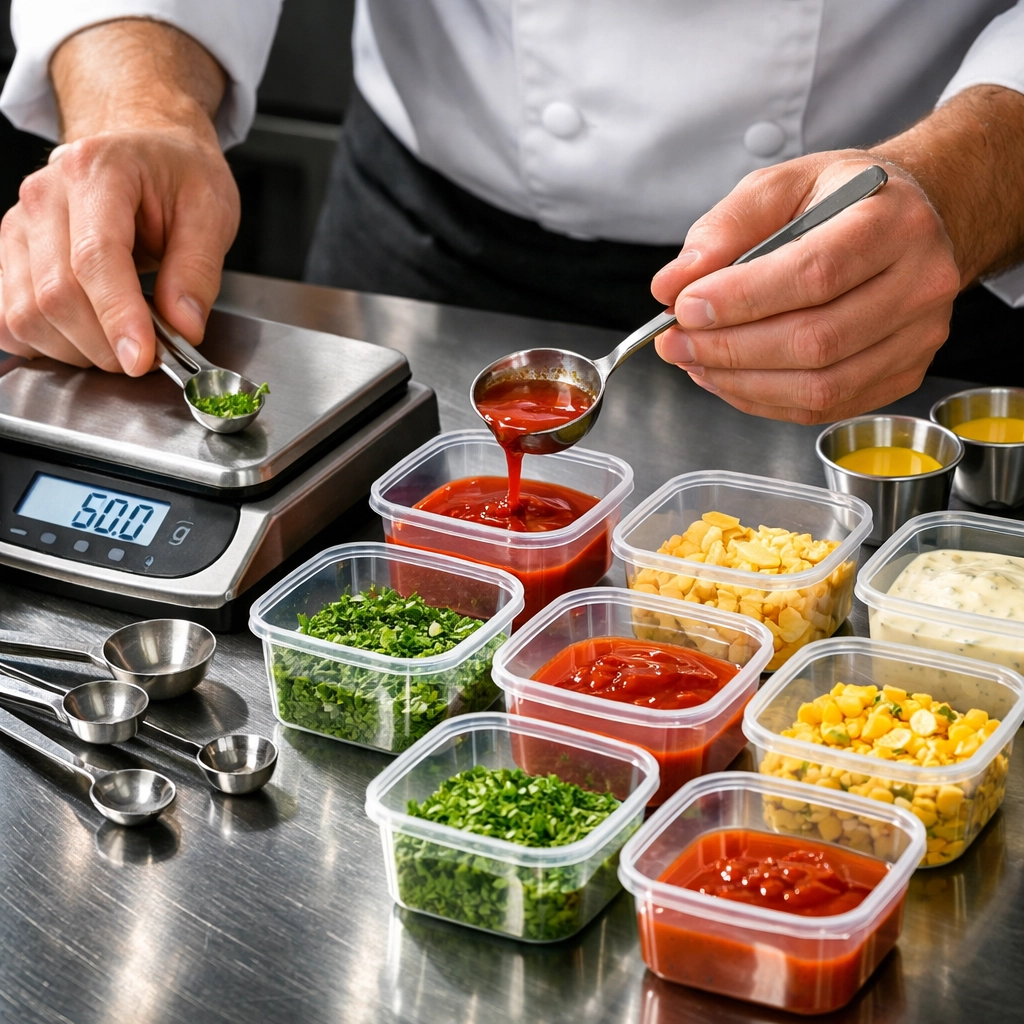
Mise en place isn't just about lining up ingredients in cute little bowls (though we admit, it does look satisfying). It's a philosophy. A discipline. A way of thinking that transforms chaos into choreography. When we talk about mise en place, we're talking about the mental and physical preparation that happens before a single flame touches a pan.
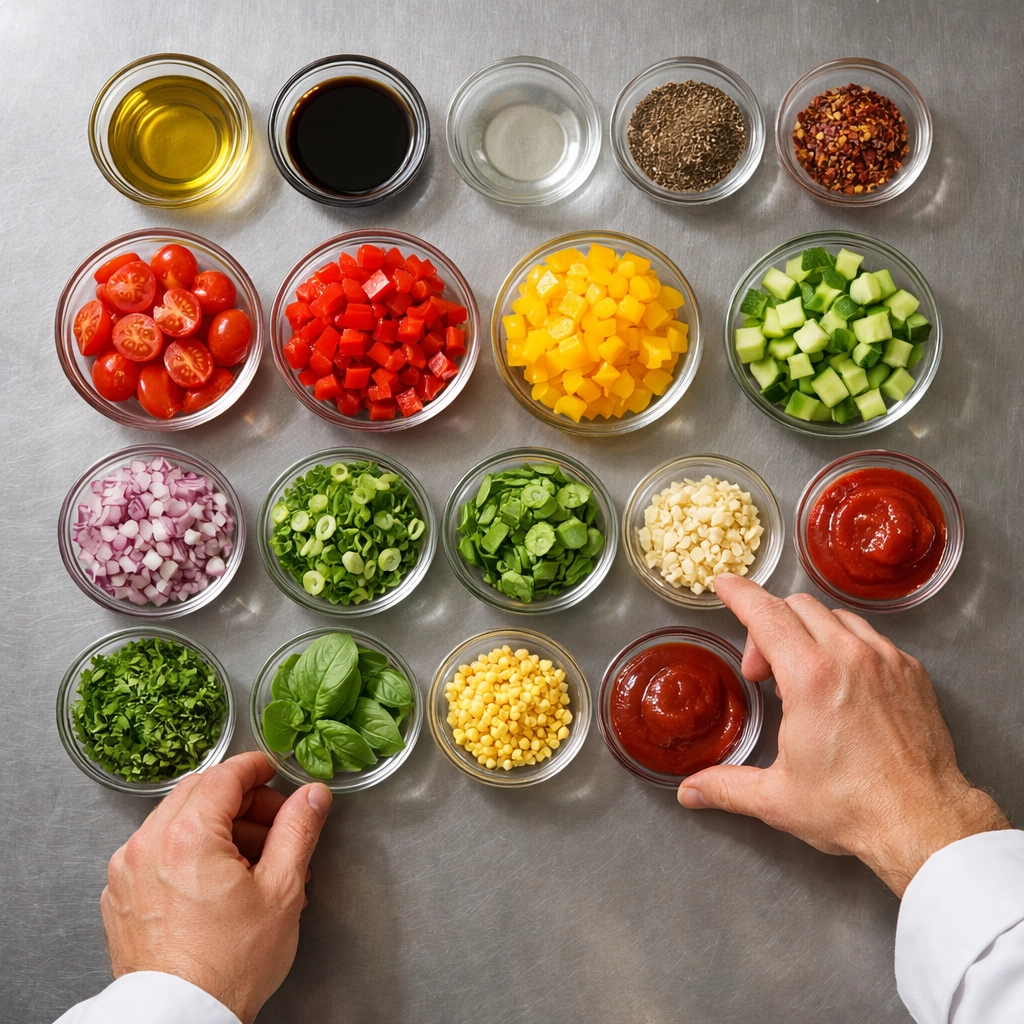
Think of it as the behind-the-scenes ritual that turns a good cook into a confident one. You've read your recipes. You've gathered every ingredient, every tool, every container. You've washed, chopped, measured, and arranged everything within arm's reach. And when service hits? You're not scrambling: you're flowing.
It's that forced moment of clarity where you realize you're missing the fish sauce or that you only have two ramekins instead of six. Better to discover these things at 2 PM than at 7:30 PM when the dining room is full and expectations are high.
Why It's the Backbone of Kitchen Sanity
We've seen kitchens that embrace mise en place, and we've seen kitchens that don't. The difference? Night and day.
Efficiency becomes your superpower. When everything is prepped and positioned at your station, you're not running back and forth to the walk-in or rummaging through drawers mid-sauté. Your hands know exactly where to reach. Your movements become instinctive. You're cooking, not treasure hunting.
Surprises disappear. There's nothing worse than being halfway through a dish and realizing you're out of stock or missing a garnish. Mise en place eliminates that panic. You've already checked. You know what you have. Orders get completed on time, dishes come out consistent, and your stress levels? They actually stay manageable.
Your workspace stays clean. Here's a secret: when you prep ahead, you can clean as you go. Instead of facing a mountain of dishes and mess after service, you've been maintaining order all along. It's like magic, except it's just smart planning.
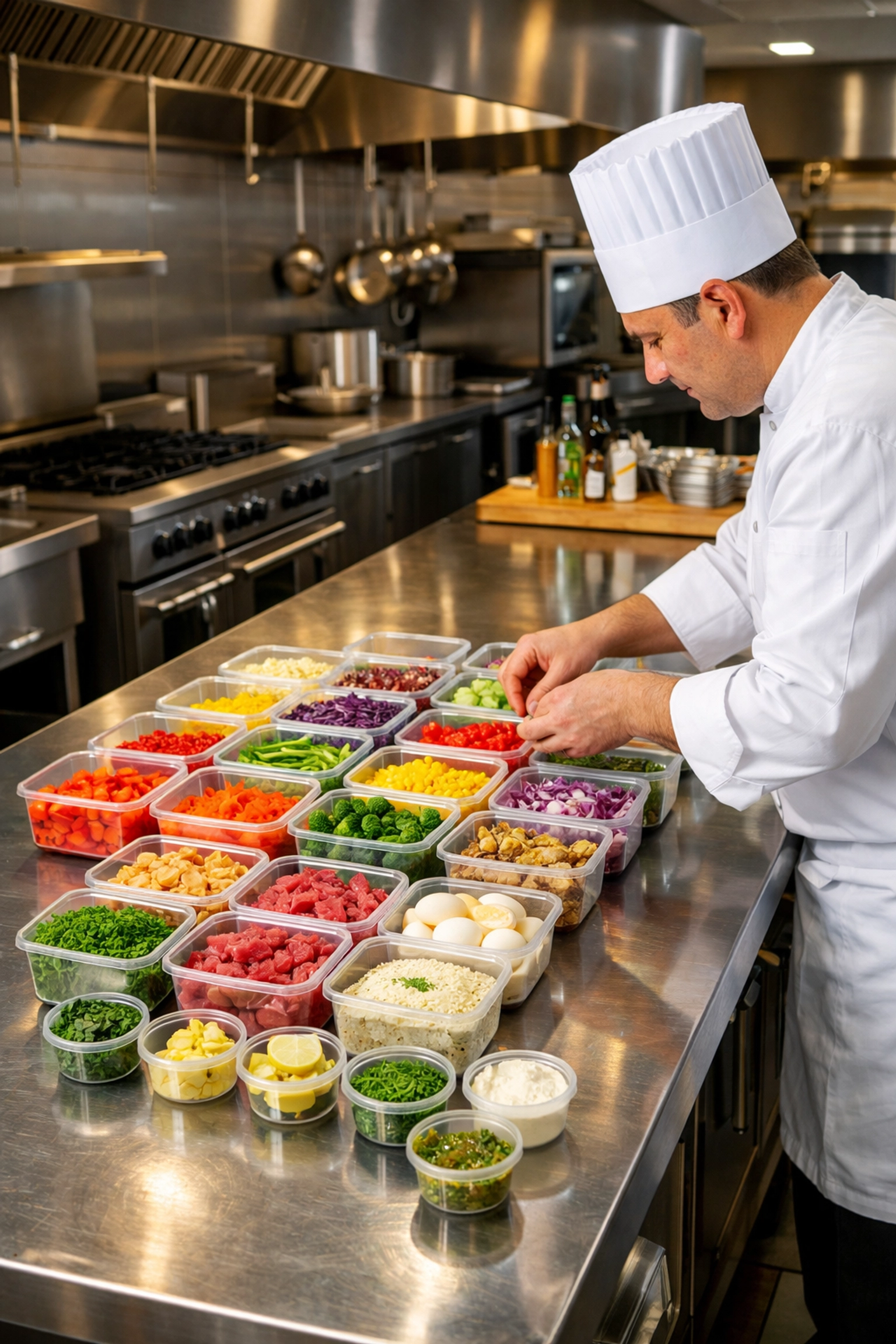
Waste reduction is real. Measuring and portioning ingredients beforehand means you're using exactly what you need: no more, no less. Over time, this saves serious money and aligns with sustainable kitchen practices we're all trying to embrace in 2026.
From French Kitchens to Global Standard
The concept was born in the brigade system of classical French cuisine, where legendary chefs like Auguste Escoffier built their empires on organization and precision. Back then, kitchens were military operations: each station had its role, and mise en place was non-negotiable.
Fast forward through decades of culinary evolution, and the practice has transcended its Parisian roots. Whether you're working in a Michelin-starred restaurant in Tokyo, a bustling hotel kitchen in Mumbai, or a farm-to-table bistro in Brooklyn, mise en place is the universal language we all speak.
What's evolved is how we approach it. Traditional mise en place relied entirely on manual prep: every dice, every brunoise, every sauce made from scratch daily. And while that craftsmanship is still celebrated (and necessary), modern kitchens have found ways to adapt.
Commercial prep equipment, blast chillers, and vacuum sealers have streamlined portions of the process. Centralized prep kitchens supply multiple outlets. Some high-volume operations even use pre-portioned ingredients that maintain quality while allowing teams to focus on execution during service.
But here's the thing: technology enhances mise en place; it doesn't replace the mindset. You still need to think ahead. You still need to organize. You still need that moment of intentional preparation.
The Future: When AI Meets the Prep Station
Now we're entering fascinating territory. Imagine AI-powered kitchen management systems that predict exactly what you'll need based on reservations, historical data, and even weather patterns. Some hotel kitchens are already experimenting with this.
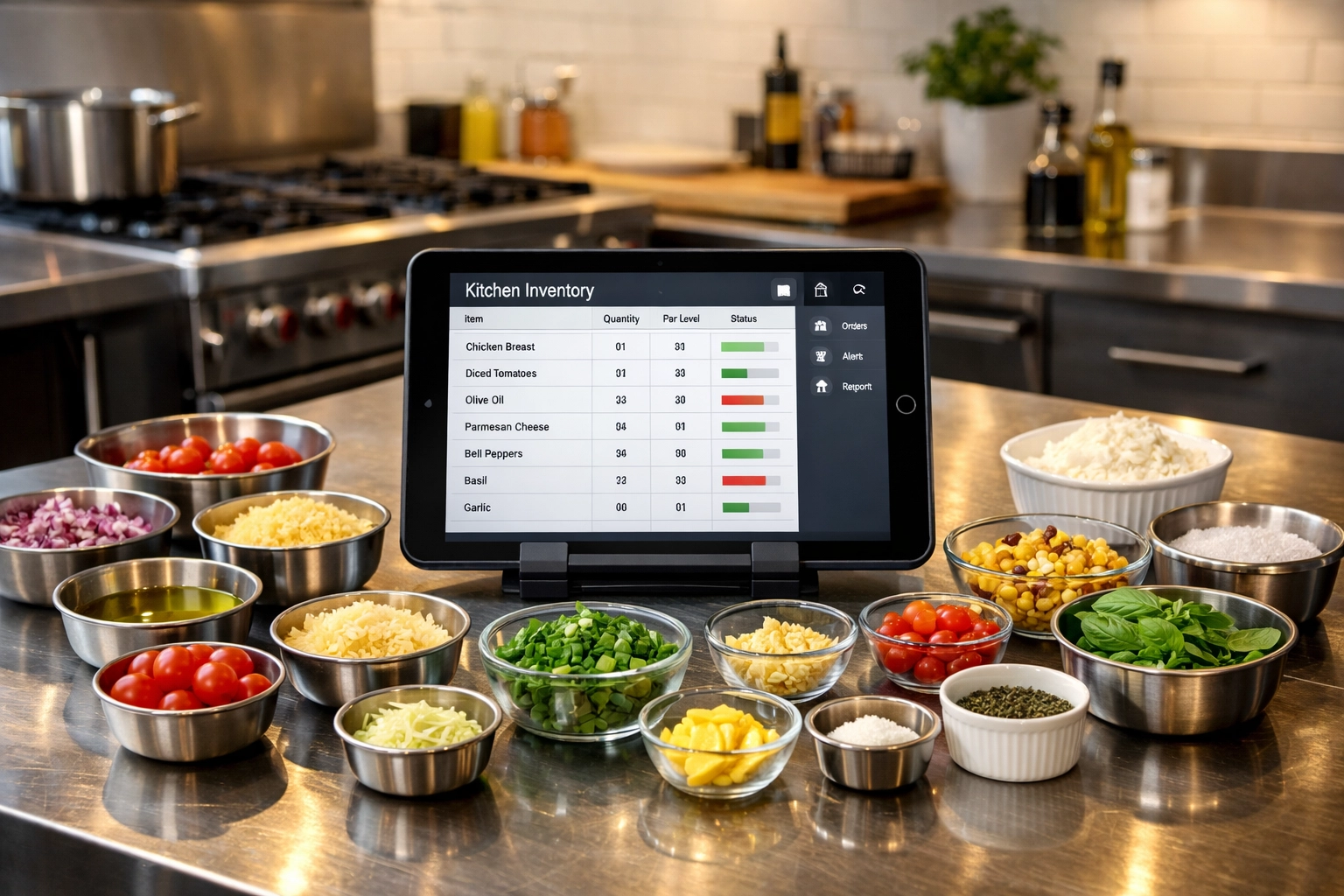
Smart inventory systems can alert you when stock is running low before you even check. Recipe management software calculates precise quantities to minimize waste. Robotic prep stations are handling repetitive tasks like peeling, slicing, and portioning with impressive consistency.
We've even heard about AI-assisted mise en place apps that generate prep lists, organize tasks by priority, and send reminders to team members. It's like having a digital sous chef who never forgets anything.
But let's keep it real: automation works best when it supports human skill, not replaces it. The most successful kitchens of tomorrow will blend traditional discipline with smart technology. Your team still needs to understand why mise en place matters, not just follow what a screen tells them.
Global Best Practices from Top Kitchens
We've picked up wisdom from chefs around the world who've mastered this art. Here's what the best do differently:
Label everything, always. In multi-station kitchens, clear labeling with dates and contents prevents mix-ups and ensures food safety. It seems basic, but it's where many operations fall short.
Color-code your containers. Some kitchens assign specific colors to different stations or allergen categories. Red for proteins, blue for seafood, green for vegetables. Visual systems reduce errors when the pressure's on.
Time your prep strategically. Not everything needs to be done hours in advance. Understanding which ingredients hold well and which need last-minute attention is an art. Herbs stay fresher when picked closer to service. Delicate emulsions are made fresh. But stocks, braised items, and mise for volume dishes? Those can be prepped ahead.
Create mise en place checklists. Written systems ensure consistency across shifts and team members. When your Monday opener and your Friday closer follow the same checklist, quality stays consistent.
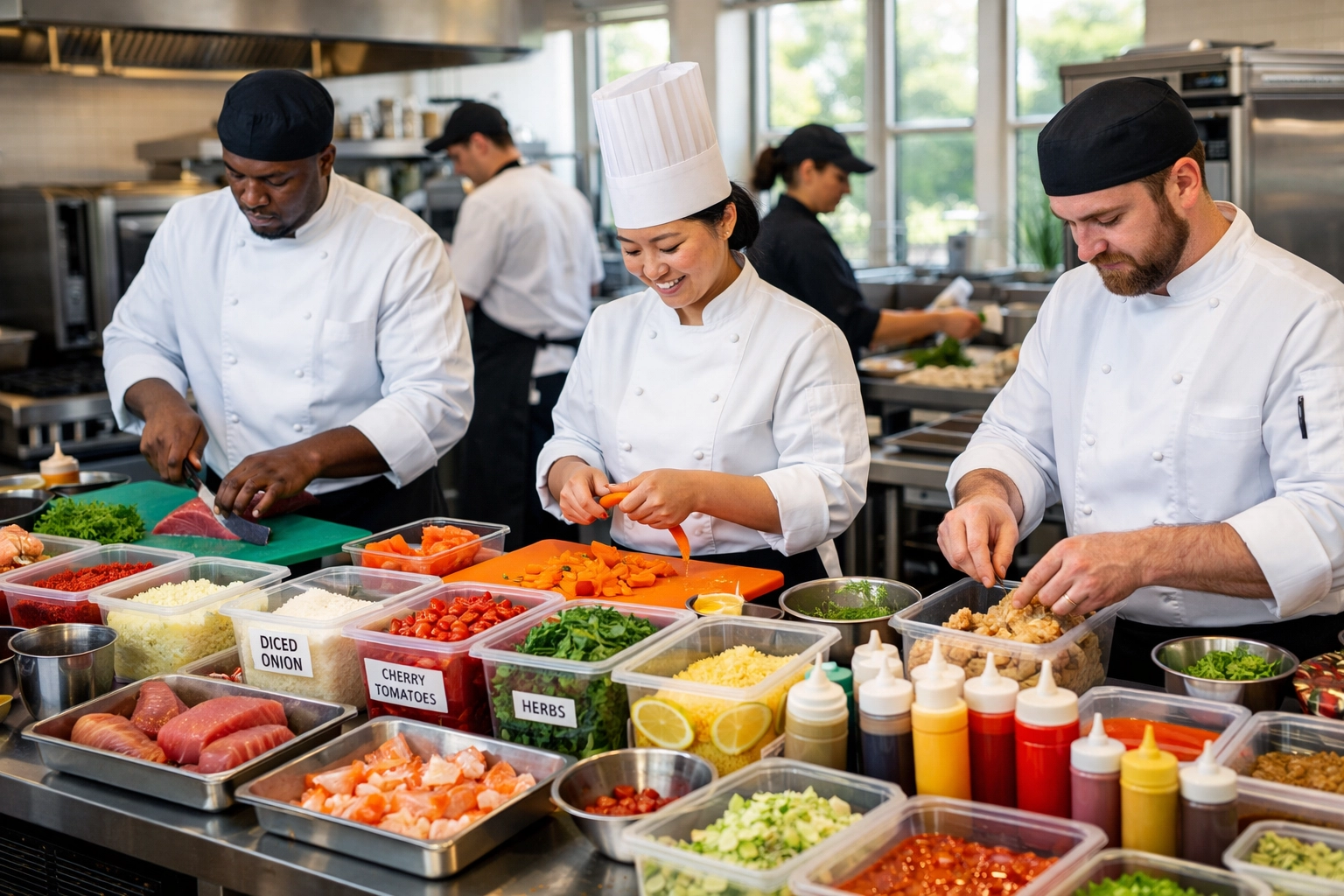
Practice portion control religiously. Every hotel kitchen we admire measures their mise precisely. This ensures consistent plate presentations and accurate food costing. Those little two-ounce ladles and portion scoops? They're worth their weight in gold.
Clean your station before you start cooking. The best cooks wipe down their surfaces, organize their tools, and remove anything unnecessary before service begins. A clean canvas invites focused work.
Making It Work in Your Kitchen
Whether you're running a boutique hotel kitchen or managing food production for a large resort, the principles remain the same. Start by reading through your entire service menu before each shift. Identify common elements across dishes: those herb oils, that garnish puree, the sauce base multiple plates need.
Group your prep tasks logically. Knock out all your vegetable prep in one session. Handle all your protein fabrication together. Prepare your mother sauces before you start derivatives. This batch approach saves time and reduces the mental load of constantly switching tasks.
Invest in quality containers and storage solutions. Those clear plastic quart containers, properly labeled? They're a game-changer. Hotel pans in multiple sizes create standardization. Squeeze bottles for sauces and oils give you control during plating.
And here's something we've learned from experience: don't skip the end-of-shift mise replenishment. The worst way to start tomorrow is inheriting yesterday's mess. Take those 15 minutes to restock, clean, and set up your successor for success. Future you will be grateful.
The Mindset Beyond the Kitchen
What makes mise en place truly powerful is how it extends beyond cooking. The discipline of preparation, the clarity of organization, the peace that comes from knowing you're ready: these principles apply everywhere in hospitality.
Front desk agents preparing for check-ins. Housekeeping teams organizing carts. Event planners staging materials. The bartender setting up their station. They're all practicing their version of mise en place.
If there's one thing we've learned working in this industry, it's that success rarely happens by accident. It happens because someone took the time to prepare. They thought ahead. They organized deliberately. They created the conditions for excellence.
That's what mise en place really is: the practice of respecting your craft enough to show up prepared.
So whether you're a culinary student learning the basics or a seasoned chef running a high-volume operation, remember this: chaos is optional. Stress is manageable. And sanity? It starts with everything in its place.
Created by the hospemag research team