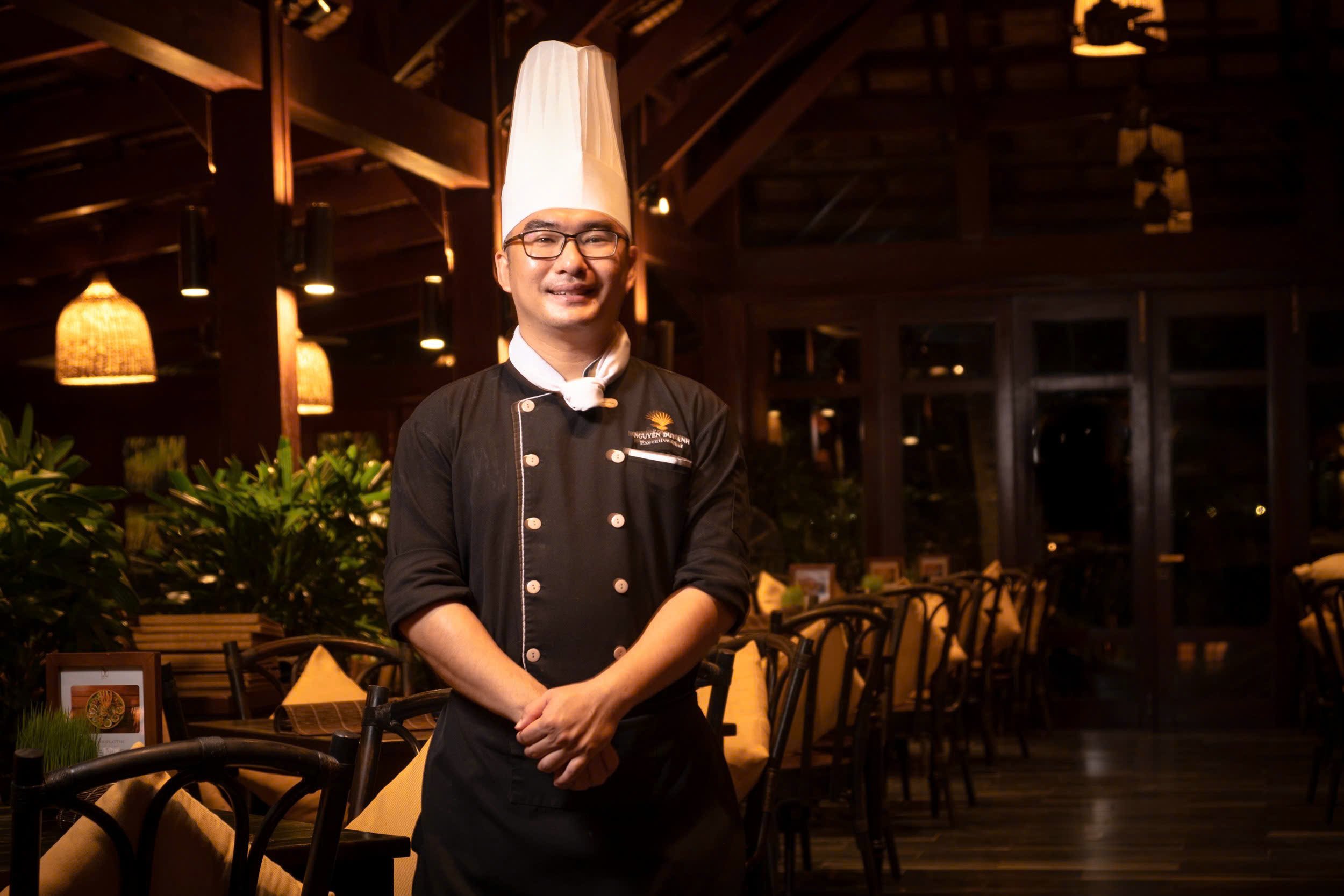
When a Menu Becomes a Journey: Executive Chef, Nguyen Duy Anh, The Anam Cam Ranh
/Why the future of fine dining lies in authenticity, storytelling, and menus designed to live beyond the last course
How do you ensure the menu reflects the identity and positioning of your property or brand?
For me, a menu is much more than a list of dishes, it is a reflection of the property's identity and a key part of the guest experience. At The Colonial Restaurant, our culinary philosophy is rooted in classic French cuisine, elevated by the richness of Vietnamese ingredients and culture. Every dish must communicate that story consistently.
Before developing a new menu, I always begin by understanding our guests, the positioning of the resort, market trends, and the seasonality of local produce. We then create dishes that are elegant, memorable, and true to our brand while remaining commercially viable.
Every menu goes through several stages of tasting, refinement, and collaboration with senior management to ensure it reflects not only our culinary vision but also the overall luxury positioning of The Anam Cam Ranh.
How involved are you in menu decisions—and where do you draw the line between roles?
As Executive Chef, I lead every aspect of menu development from the initial concept and recipe creation to sourcing ingredients, presentation, and execution standards.
However, creating a successful menu requires collaboration. I work closely with the F&B team, Sales & Marketing, and the GM to ensure the menu supports the resort’s business objectives.
My responsibility is to deliver culinary excellence, while management provides valuable input regarding pricing strategy, market positioning, guest expectations, and financial performance. When everyone contributes from their area of expertise, the result is a menu that is both inspiring and commercially successful.
What role does the menu play in driving revenue beyond just food and beverage sales?
A great menu creates value far beyond restaurant revenue. Today, luxury travellers are looking for experiences rather than simply meals. A signature dining experience enhances the overall perception of the resort, encourages repeat visits, generates positive reviews, and strengthens brand reputation.
At The Colonial, our tasting menu has become one of the highlights of the guest journey. It attracts local diners, increases wine sales, creates opportunities for private celebrations, and generates media exposure.
Ultimately, a memorable culinary experience contributes directly to guest satisfaction, loyalty, and even room bookings, making it an important driver of the resort's overall commercial success.
How do you align menu strategy with broader business goals—occupancy, loyalty, events, or F&B mix?
Menu strategy should never exist independently from the resort's overall business strategy. We continuously adjust our offerings based on occupancy, guest demographics, seasonal demand, and special events.
During peak seasons, we focus on operational efficiency while maintaining premium quality. During quieter periods, we introduce seasonal degustation menus, wine pairing dinners, and chef’s table experiences to attract both resort guests and local residents.
For weddings and corporate events, we develop bespoke menus that balance guest expectations with operational efficiency.
By analyzing guest feedback, sales performance, menu engineering, and food cost, we ensure that our menu continues to support profitability while strengthening guest loyalty and brand reputation.
As a leader, what do you look for when evaluating a menu for the first time at a new property?
The first thing I want to understand is the guest.
Who are they? Why are they dining here? What experience are they expecting?
From there, I evaluate whether the menu reflects the property's identity and whether it differentiates itself from competitors.
I also assess operational practicality, food cost, profitability, consistency, seasonality, and the kitchen team’s capability to execute every dish to the same standard every day.
A beautiful menu has little value if it cannot be delivered consistently. Ultimately, a successful menu is one that delights guests while supporting the business financially.
How do you create a menu that works across different guest segments—leisure, business, local, international?
Instead of trying to satisfy everyone with an extensive menu, I prefer creating a clear culinary identity that appeals to a wide audience.
Our guests come from more than sixty countries, but they all share one thing in common they want an authentic experience.
By combining classical French techniques with premium Vietnamese ingredients, we create dishes that feel familiar enough for international travellers while remaining genuinely connected to Vietnam.
The menu also offers flexibility through tasting menus, à la carte selections, vegetarian options, seasonal dishes, and wine pairings, allowing different guests to personalize their dining experience without compromising the restaurant’s identity.
What’s one menu decision you’ve made that had a surprisingly significant impact on the business?
One decision that exceeded our expectations was introducing a six-course degustation menu celebrating. Vietnamese ingredients through classical French techniques. Initially, we expected it to appeal mainly to fine dining enthusiasts. Instead, it quickly became one of the signature experiences of the resort.
Guests began extending their dining time, spending more on wine pairings, and sharing their experiences across social media and travel platforms. More importantly, it strengthened The Colonial reputation as a culinary destination rather than simply another hotel restaurant.
That experience reinforced my belief that a menu is far more than a sales tool it is a strategic asset that shapes guest perception, builds brand value, and creates long term business growth.
Where do you see menu experiences heading in the next five years?
I believe menus will evolve from being simply a list of dishes into a fully immersive storytelling experience. Today’s guests are no longer looking only for exceptional food they want authenticity, connection, and memorable experiences. They want to understand where ingredients come from, who produced them, and the cultural story behind each dish.
Over the next five years, menus will become more seasonal, more personalized, and more experience- driven. Instead of offering dozens of choices, restaurants will focus on carefully curated menus that celebrate local identity and craftsmanship.
Technology will certainly enhance the dining journey, but I believe genuine hospitality and human interaction will always remain at the heart of fine dining.
What’s the most exciting shift you’re seeing in how menus are being imagined and designed today?
The most exciting change is that luxury is no longer defined by expensive ingredients alone.
Today, the world’s best chefs are redefining luxury by celebrating local products, sustainability, and cultural heritage. A simple ingredient, when treated with respect and creativity, can become just as memorable as caviar or truffle.
At The Colonial, we embrace this philosophy by showcasing premium Vietnamese ingredients through classic French techniques, allowing guests to discover Vietnam in a sophisticated and unexpected way.
I believe the future of menu design is less about extravagance and more about authenticity.
Is the traditional printed menu at risk of disappearing—and would that be a loss?
Digital menus are becoming increasingly common because they offer flexibility and convenience. However, I don’t believe printed menus will disappear from fine dining.
A beautifully designed printed menu is part of the overall luxury experience. The texture of the paper, the typography, and the presentation all contribute to the first impression before the meal even begins.
Technology should complement hospitality, not replace it. In a fine dining restaurant, I believe a printed menu remains an important expression of craftsmanship and attention to detail.
How do you think sustainability, provenance, and ethical sourcing will reshape menus going forward?
Sustainability is no longer a trend it has become a responsibility. Guests today care about where ingredients come from, how they are produced, and their environmental impact.
As chefs, we have the opportunity and the responsibility to support local farmers, fishermen, and artisan producers who share the same values.
At The Colonial, we continuously seek seasonal Vietnamese ingredients from trusted suppliers because sustainability also delivers better freshness, stronger local identity, and superior flavor.
I believe future menus will focus less on importing luxury products and more on showcasing exceptional local ingredients with integrity.
What’s one thing about menus that the industry hasn't figured out yet—and should?
I think the industry still spends too much time designing menus from the chef's perspective instead of the guest’s perspective.
A successful menu shouldn't demonstrate how talented the chef is it should help guests feel comfortable, curious, and confident in their choices.
The best menus communicate a story clearly without overwhelming guests with unnecessary complexity. Sometimes simplicity requires more creativity than complexity.
If you could redesign the concept of a menu from scratch, what would you do differently?
I would design a menu as a journey rather than a catalogue. Instead of separating dishes into traditional categories, I would guide guests through a sequence of flavors, emotions, seasons, and stories.
Each course would have a purpose, each ingredient would have meaning, and every dish would contribute to one coherent narrative.
For me, the menu should feel like reading a beautifully written book rather than browsing a list of products.
What does a truly great menu experience look like to you—as a professional and as a guest?
As an Executive Chef, a great menu is one where every dish has a clear purpose, reflects the restaurant’s identity, and can be executed consistently at the highest level.
It should balance creativity, operational excellence, guest satisfaction, and commercial performance.
As a guest, however, I judge a menu differently.
The best menu is the one I still remember long after the meal has ended—not because it was the most expensive, but because it made me feel something.
If I can remember the flavors, the story behind the dishes, the hospitality, and the emotions that accompanied the experience, then the menu has achieved its true purpose. To me, a great menu doesn’t end when dessert is served, it continues to live in the guest’s memory long after they leave the restaurant.