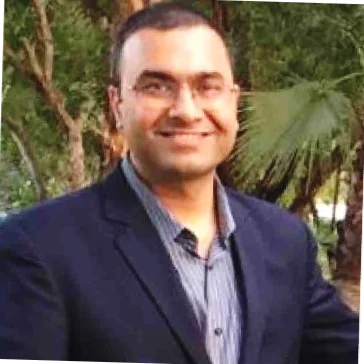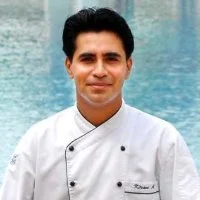
Exclusive Interview | Chef Jeevraj Singh Shekhawat
/“A qualification from a culinary school doesn’t automatically give you what it takes to become a successful chef.”


“The more you practise the more skills you inbuilt in you. It’s a lifelong process which is never-ending.”
How did it all start? Share your culinary journey with us
Well, I don’t have any fancy story to tell. I was an average kid who didn’t know what he wanted to do. I never thought to become a chef. But as it was destined, so god took me that way. After completing my 12 th , I took admission for a hotel management course in JNU (Jaipur National University, Jaipur). During my 1 st year kitchen practical, I came to know my inner interest in kitchen and realized that I can be a chef. In the final year of my graduation, I chose to do specialization in food production. After this, I never looked back. I got selected for Management trainee Westin group of hotels in 2008. After working there I realised that knowledge shall not be kept with you. To grow, you have to pass on to others. So I switched my industry from hotel to Academics. While serving as an academic facilitator, I did my Masters in Tourism Management. And now I am sharing my knowledge with others.
What are your earliest memories of the kitchens you worked in?
The earliest Kitchen memories I have was my grandfather’s kitchen in my village where I used to help others during the feast. After this, during my career tenure, I have in hotel kitchens and now in the college kitchen with students experimenting with food. (with a sarcastic smile) Sometimes, I cook at home too
What according to you does it take to become a successful chef?
A qualification from a culinary school doesn’t automatically give you what it takes to become a successful chef. You need to possess a range of skills if you want to make it to the top of your profession. These skills include culinary skills, management skills and an exceptional ability in the kitchen to learn and demonstrate new things. Food to me has always been this institute where learning never ceases. The more you practise the more skills you inbuilt in you. It’s a lifelong process which is never-ending.
What advice would you give to a young culinary student?
Being down to earth is probably the kindest thing one can do for oneself. Coming to any industry as a fresher and expecting to directly start running restaurants and hotels is not what happens in reality. Staying grounded not just helps one in sustaining but gives a broader experience of how the show is run on the ground level. Management is much more than reports and presentations. Being open to new experiences and trying to absorb from people working at every level is key to success. Persistence and patience can take you a long way.
What instruments/ equipment/devices you cannot imagine working without?
Every professional has their important equipment’s without which they can’t even imagine working without. Like a computer software engineer cannot work without their computers, like that I guess it’s not me but every other chef cannot work without their knife. That is the most essential thing when working in the kitchen. Apart from it, the second most important thing I won’t work in my kitchen is my smartphone. It is a smartphone era. And I too liked to capture my creation and share with others.
Your favourite ingredient is…
I have many ingredients which are on my favourite list. But Egg wins the 1 st position. I believe it is the most versatile ingredient in the kitchen. We can use it in any mode we want and can mould it accordingly making it flexible.
Name chefs, you find amazing or chefs work you admire.
The chef I admire the most is Chef Ranveer Brar. I have never worked with him. But wish to work someday. Why I like him is because he is so passionate about his love for food. He works on restoring the lost food items which we had once in our cuisine. he believes that creating new doesn’t mean that we have to forget the old. We cannot replace the authentic recipes with the fusion or derived one.
What books should every chef read?
There are plenty of books a chef can go through. But the one I cherished more is Vikas Khanna’s UTSAV- a culinary epic of Indian festivals. It involves around the everyday celebration of life, victory and love, that takes you down to the lanes of history and tradition.
What can we do about the Industry-Academia gap?
Academia and Industry are two different worlds which operate on different pedestals. Both have different purposes and different ideologies. However, the rapid pace of change in the outside environment is compelling these two different worlds to come together to address and solve some of the real-world challenges.
What would you like to change about the internship experience/process?
Internships are a great way to network with people in the industry. Students go there for warm up before they enter the real world. This helps them to understand the industry before they get recruited so that they will be familiar with the environment and will help them to adjust themselves. Not now a day’s industry treats the interns as casual workers and not as trainees which results in the drop off from the industry.