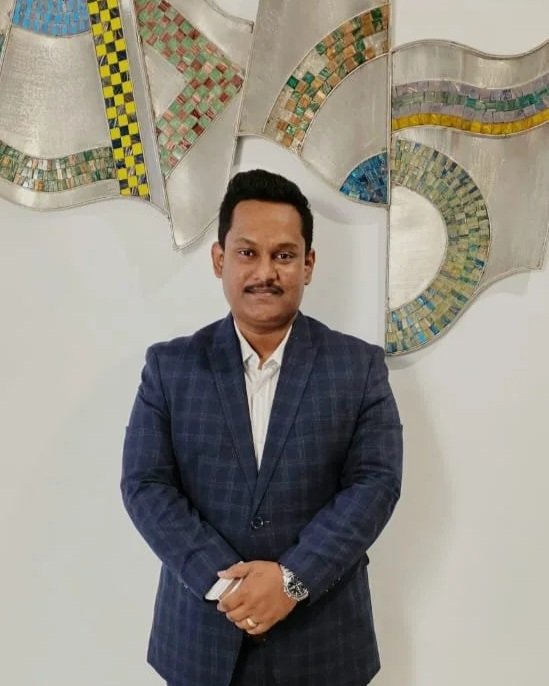
Samira Clarke Appointed Director of Sales At Residence Inn by Marriott Long Island Garden City - NY, USA

Clarke brings her nearly 15 years of experience in the New York hotel industry, including most recently at OTO Development's AC Hotel New York Times Square, to the new Residence Inn as the director of sales.

Prior to her time with OTO Development's properties, Clarke built tremendous experience in the New York hotel industry with stints at the Courtyard Times Square West, Allegria Hotel, Hilton Garden Inn Times Square Central, among others.

She has served in a variety of roles, including front office coordinator, sales manager, and catering sales manager.

samira-clarke.jpg

A Message from Brian Chesky, Co-Founder and CEO of Airbnb, Inc.

Airbnb Co-Founder and CEO Brian Chesky sent the following note to Airbnb employees.This is my seventh time talking to you from my house. Each time we've talked, I've shared good news and bad news, but today I have to share some very sad news.

When you've asked me about layoffs, I've said that nothing is off the table. I must confirm that we are reducing the size of the Airbnb workforce. For a company like us whose mission is centered around belonging, this is incredibly difficult to confront, and it will be even harder for those who have to leave Airbnb. I am going to share as many details as I can on how I arrived at this decision, what we are doing for those leaving, and what will happen next.

 Airbnb's business has been hit hard, with revenue this year forecasted to be less than half of what we earned in 2019. In response, we raised $2 billion in capital and dramatically cut costs that touched nearly every corner of Airbnb.

While these actions were necessary, it became clear that we would have to go further when we faced two hard truths

  • We don't know exactly when travel will return.

  • When travel does return, it will look different.

Out of our 7,500 Airbnb employees, nearly 1,900 teammates will have to leave Airbnb, comprising around 25% of our company. Since we cannot afford to do everything that we used to, these cuts had to be mapped to a more focused business

How we approached reductions

It was important that we had a clear set of principles, guided by our core values, for how we would approach reductions in our workforce. These were our guiding principles:

  • Map all reductions to our future business strategy and the capabilities we will need.

  • Do as much as we can for those who are impacted.

  • Be unwavering in our commitment to diversity.

  • Optimize for 1:1 communication for those impacted.

  • Wait to communicate any decisions until all details are landed — transparency of only partial information can make matters worse.

    Process for making reductions

    Our process started with creating a more focused business strategy built on a sustainable cost model. We assessed how each team mapped to our new strategy, and we determined the size and shape of each team going forward. We then did a comprehensive review of every team member and made decisions based on critical skills, and how well those skills matched our future business needs.

    The result is that we will have to part with teammates that we love and value. We have great people leaving Airbnb, and other companies will be lucky to have them.

    Severance

    Employees in the US will receive 14 weeks of base pay, plus one additional week for every year at Airbnb. Tenure will be rounded to the nearest year. For example, if someone has been at Airbnb for 3 years and 7 months, they will get an additional 4 weeks of salary, or 18 weeks of total pay. Outside the US, all employees will receive at least 14 weeks of pay, plus tenure increases consistent with their country-specific practices.

    Equity

    We are dropping the one-year cliff on equity for everyone we've hired in the past year so that everyone departing, regardless of how long they have been here, is a shareholder. Additionally, everyone leaving is eligible for the May 25 vesting date.

    Healthcare

    In the midst of a global health crisis of unknown duration, we want to limit the burden of healthcare costs. In the US, we will cover 12 months of health insurance through COBRA. In all other countries, we will cover health insurance costs through the end of 2020. This is because we're either legally unable to continue coverage, or our current plans will not allow for an extension. We will also provide four months of mental health support through KonTerra.

    Our goal is to connect our teammates leaving Airbnb with new job opportunities. Here are five ways we can help:

  • Alumni Talent Directory — We will be launching a public-facing website to help teammates leaving find new jobs. Departing employees can opt-in to have profiles, resumes, and work samples accessible to potential employers.

  • Alumni Placement Team — For the remainder of 2020, a significant portion of Airbnb Recruiting will become an Alumni Placement Team. Recruiters that are staying with Airbnb will provide support to departing employees to help them find their next job.

  • RiseSmart — We are offering four months of career services through RiseSmart, a company that specializes in career transition and job placement services.

  • Employee Offered Alumni Support — We are encouraging all remaining employees to opt-in to a program to assist departing teammates find their next role.

  • Laptops — A computer is an important tool to find new work, so we are allowing everyone leaving to keep their Apple laptops.

images (4).jpg

Marriott International Ranks #1 On DiversityInc Top 50 List

Marriott International, Inc. was recognized as the #1 company for diversity across industries on the 2020 DiversityInc Top 50 Companies for Diversity list. The ranking also makes Marriott the highest-ranking hospitality company on the list for more than ten years and the only one to have achieved the top ranking. 

Marriott's success in the diversity and inclusion space is based on a 360-degree cultural approach encompassing results-oriented metrics and initiatives supporting associates, customers, suppliers and owners. This approach had led to signature accomplishments such as collaborating with leading human rights nonprofits on human trafficking prevention training and leveraging TakeCare, its award-winning employee wellbeing program, to advance the practice of diversity and inclusion in the modern workplace.

 The company has been recognized for its talent development programs with a long list of notable and lifetime achievement awards, including - Working Mother 100 Best Companies Quarter Century and Hall of Fame, Black Enterprise Best Companies for Diversity, a repeat LATINA Style Company of the Year, Asia Society Best Companies for Asian Pacific Americans, National Association for Female Executives (NAFE) Top Companies for Executive Women Hall of Fame

download.jpg

Time for the Hotel Industry to “Remove the Box”

The hotel industry is one of the worst-hit industries during this crisis. A lot of studies have been conducted to help us understand the impact on the economy and our organization's bottom-line. Industry experts, through their various associations, have predicted that the average hotel occupancy in Malaysia for the year will stand at around 25% or less.

According to a recent study by Malaysia Association of Hotels (MAH), the industry is looking at a potential loss of RM6.3b in rooms revenue alone. Assuming rooms revenue accounts for 60% of the total hotel revenue, with F&B and other income accounting for the remaining 40%, the industry is facing a RM10.5b in potential losses.

MAH represents about 1,000 hotels out of the 4,880 hotels registered with the Ministry of Tourism Arts & Culture (MOTAC). However, these 1,000 hotels with 164,000 rooms represent 56% of total rooms inventory available throughout Malaysia.

 The number of hotels closing for business is increasing by the day, indicating not only loss of business, but also loss of jobs. The current estimate is that 1 million travel industry personnel (including hotel, airline, cruise and travel agents) will lose their jobs by the end of this year.

While we take stock and moan how the hotel industry's poor prospects, let us focus our attention on what we can, and should, do moving forward.

According to a study by the University of Singapore Technology and Design, China is expected to be the first to get back to normalcy while Malaysia's magic date is predicted to be July 6. Whether we like it or not, we should look at China as one of our main feeder markets, besides the domestic market of course. Consider appointing representatives or affiliates based in key cities in China to work with online platforms and mainstream travel agents there and start re-promoting Malaysia as a destination. Hoteliers need to actively prepare for this, and as soon as China reopens its doors, hotels must already be "Chinese friendly" at all service touch points

A financial reprojection is necessary to understand your hotel's new breakeven point. We often hear that the breakeven point (BEP) in an operating hotel is at 40% occupancy levels

At least for the short to mid-term, hotels will be looking at domestic travellers as a main source of customers. This will indeed be the fastest strategy to regain some occupancy. Malaysians still love the "Cuti-Cuti Malaysia" short getaways

Hotels may in the near future need to be certified "Social Distance Compliant" by authorities after they have practised and passed SOPs set by authorities. This is going to be very similar to the HALAL certification we see displayed on public areas. This could be something we will all be used to in the near future.

xxl_153114490.jpg

STR: Florida, Texas Lead Weekend Hotel Occupancy Gains

Led by Florida and Texas, 13 STR-defined submarkets showed greater than 10-point weekend vs. weekday occupancy gains for the week ending 2 May, according to data from STR.

"The first 'real weekend' with eased COVID-19 restrictions showed an obvious jump in hotel demand, especially in popular, warm-weather leisure spots," said Jan Freitag, STR's senior VP of lodging insights. "Whether or not this becomes a trend remains to be seen, but the fact that there were people instantly willing to head out for leisure activity and stay in hotels is a positive sign for the industry. We have maintained throughout this pandemic that the leisure segment would be the first to return, it is just a matter of when."

"Hotel companies, together with the AHLA, are showing commitment to cleanliness and providing guests with a safe environment within their properties. At the same time, health experts have expressed concerns that increased leisure activity in public spaces could contribute to a potential second wave of COVID-19, which would obviously present added risk for the industry."

xxl_153114410.jpg

Customers shot 2 McDonald's employees after being told to leave due to coronavirus restrictions

Two customers shot two McDonald's employees in Oklahoma City after they were told to leave the store's dining area The suspects got angry and took out a gun when they were asked to leave due to coronavirus restrictions that were in place

Two workers were shot and a third was injured, Henderson said, during "the melee that ensued." Police told CNN affiliate KOCO that one of the victims was shot in the leg while the other was shot in the shoulder. Both injuries are considered non life-threatening, the affiliate reported .Police at the scene also said a female employee sustained lacerations to her head, KOCO reported.

The incident is one of a multitude of protests from residents across the country responding to restrictions in place to combat the virus. In Michigan, a Family Dollar store security guard was shot after telling a customer to wear a face mask -- a mandate in place by the state for all retail stores.

Also in Michigan, a man wiped his nose on a Dollar Tree worker's shirt after the employee told him he needed to wear a mask.In southern California, a customer wore what appeared to be a Ku Klux Klan hood during a trip to the grocery store -- and repeatedly ignored staff requests to remove it.

200506224453-mcdonalds-employees-shot-coronavirus-exlarge-169.jpg

The Amsterdam Restaurant Using Individual Greenhouses For Social Distancing

Mediamatic ETEN, part of a larger arts and entrepreneurship center focusing on sustainability, is a vegan restaurant located on the Dijksgracht in the Oosterdok neighborhood of Amsterdam. From May 21, the restaurant will begin taking in guests, only this time they will be seated inside Serres Séparées ('separated greenhouses'), enclosed glass structures each equipped with a table for two or three diners.

“This was one of the most feasible ideas from a large list of ideas we had when brainstorming,” Mediamatic's founding partner Willem Velthoven said .Initially, no more than three guests will be allowed to dine inside each greenhouse, even though there is the capacity for more.

"We have other, bigger greenhouses, but using them depends on how everything ends up going. Bigger groups could [come] now but then they should be families. For now, bigger groups are being discouraged because, from our experience, they are just louder and then you get the excited behavior causing spittle to fly and so on, and that's the kind of behavior that would make the virus spread faster," Velthoven said.

xxl_153114314.jpg

6 Tactics We Can Learn from Hotels in Sweden Who Remain Open During COVID-19

In today's challenging environment, many hotels in Sweden have turned to their direct booking channel and communication strategy, seeking to increase online conversions with guests, and putting themselves in an advantageous position for recovery. Here are six strategies Swedish hotels are employing now that could help inspire your marketing plan of attack as mobility starts to recover in your markets.

1. Providing peace of mind

The first step to capturing online bookings should be to reassure visitors, and doing so boils down to the two words: communication and flexibility

Making sure your online visitors know that you have implemented a worry-free booking policy can inspire trust and increase the probability of them moving forward with a booking. Ligula Hotels were quick to take action by grabbing the attention of users arriving on their website using a Layer to display such a message, guaranteeing customers a safe booking thanks to their flexible cancellation and rebooking policies.

2. Promoting staycations to attract local travelers today

Creating a package for guests to feel pampered, the hotel offers the perfect staycation for those who need a break from everything going on at home. By using targeting options within The Hotels Network tool, the Layer message on the homepage is only displayed to visitors within Stockholm, enabling the hotel to show a personalized message to appeal to their local market.

3. Encouraging guests to book longer stays

Hotel Kungstradgarden launched a series of Smart Notes within their booking engine targeting visitors booking for 2 nights. The messages highlight the benefits of staying an extra one or two nights exclusively to those visitors, giving them motive to extend their booking. By using targeted messaging, hotels in Sweden are nudging guests that are already likely to convert to increase their booking value.

4. Driving immediate revenue through gift vouchers

Making hotel vouchers available to visitors is a clever way to generate immediate revenue while current demand remains low. Using our Hotel Voucher tool, Hotel Kungstradgarden launched a Layer with an integrated voucher feature, encouraging guests to purchase a gift card today. Aiming to attract potential guests who are thinking about traveling after restrictions have loosened, promoting your hotel vouchers will enable you to capture extra revenue while providing visitors with the incentive to stay with you in the future.

5. Leveraging technology to make smart pricing decisions

One tactic is to leverage AI technology, such as The Hotels Network machine learning product Oraculo, so you can segment your hotel website traffic in real time based on purchase intent, ranging from low-intent users (those who are unlikely to convert) to high-intent users (those who are most likely to convert).

The technology enables you to automatically personalise the website experience for each visitor with the strongest and most relevant messaging and offer. This means that you can decide to only show offers to users who really need an extra incentive to make a booking, generating savings in promotional costs. Conversely, instead of offering discounts to high-intent users who are likely to make a booking anyway, you can communicate upselling messages such as promoting a higher room category or longer stay to boost average booking value.

6. Building a strong community of followers

In Sweden, hotel website booking conversion rates have taken a hit these past weeks, albeit slightly less than in other markets. With increased uncertainty in the minds of visitors, many are not ready to confirm a reservation today, but hotels are finding other ways to generate engagement with their website visitors. The above example shows how Hotel C Stockholm is taking advantage of The Hotel Network's subscription feature to launch an integrated Layer to capture emails and grow their base of newsletter subscribers. Given the current situation, it makes sense to collect opt-in subscribers to be able to keep visitors updated by email about any developments at your hotel or exclusive offers. By continuing to nurture followers in this way, moving forward you can hopefully convert more website visitors into loyal brand advocates.
S1.jpg
S2.jpg
S3.jpg

COVID-19: How is the Foodservice Industry Coping?

The world's latest crisis - COVID-19 - has taken over our lives, irreversibly shifting our economy, society and lifestyle. But how has it affected the foodservice industry - and what big changes are on the horizon? Find out more about how coronavirus has impacted our industry and what foodservice operators should consider when adapting their business to life as our 'new normal'.

How is the industry changing?

Though the pandemic is still in its early stages, we've already seen a considerable shift in how consumers are getting their food, and how local restaurants and foodservice providers are responding.

1. Local farm shops are booming

One of the biggest shifts has been that of consumers turning to local farms for their fruit, vegetables, meat and dairy produce. While grocery stores have experienced severe shortages in supply, farms shops have been able to offer local shoppers a steady stream of fresh goods.

Another big advantage of local produce is that people know where their food is coming from, which not only helps them feel more secure about avoiding shortages from hard-hit countries, but also helps them contribute to the local economy, supporting local businesses that otherwise might not have been able to ride out the storm.

2. Restaurants are shifting to take-away or delivery models

Restaurateurs have been quick to adapt their business model to offer their customers more flexible, pandemic-friendly dining options. This has caused a surge in take-away and delivery service options, not only from quick service or fast-casual restaurants but also from higher-end restaurants.

While the commission fees of delivery service providers can be off-putting for many restaurateurs, there's good news on the horizon. Many delivery services are adapting their business models by reducing or eliminating their fees or opting for a flat-rate, subscription option so restaurants can get a better return on their margins.

But what about food safety concerns? Most restaurants have implemented stringent health & safety regulations to protect both their staff and their patrons - covering everything from sourcing, to preparation and service. In China, foodservice operators like McDonald's have responded with contactless pick-up options where customers don't have to make any contact with the staff.

3. Independent businesses are seizing the day

As many international chains such as McDonald's, Subway, KFC and Burger King have decided to close stores altogether, there's a growing opportunity for small, independent businesses to fill the gap. These businesses are more agile and flexible as they employ fewer staff and are therefore able to react quicker to serve local customers. These customers are likely to spread the word throughout their local communities, further boosting the success of these businesses and building a loyal customer base that's likely to stick around well after the dust has settled.

Food & workforce safety tips

Here are the key factors that any foodservice business should consider.

  • Set up clear protocols for your establishment and communicate these to all of your partners, suppliers, employees and customers.

  • Employees handling food should wash their hands for at least 20 seconds and wear gloves, a mask and/or hairnet as recommended.

  • Employees should stay at least 2 meters away from customers and coworkers, to comply with social distancing recommendations. 

  • While 'open food' areas such as buffets do not pose an increased risk, customers and employees should continue to behave in a hygienic manner. Where possible, food should be pre-packaged

    For restaurants offering a delivery service:

  • Delivery staff should be well-trained and adhere to public health advice regarding the collection and delivery of orders.

  • Drivers should wear clean (and when necessary, protective) clothing, and sanitize their hands before and after every transaction.

  • Delivery vehicles should be kept clean, in good condition and free from sources of contamination. They should be disinfected regularly.

  • Where possible, 'contactless delivery' options should be offered - where food can be left at the front door or on the porch.

  • You may want to consider limiting the range of menu items on offer to simplify the production process and streamline your operation.

  • Food packaging should be controlled, to make sure that it is suitable for different food types (some packaging is not suitable for hot food).

xxl_153114369.jpg

Tribal Casinos Are Turning to Technology to Protect Employees

 The safety of staff on casino grounds was anything but assured. Just as hotels have struggled with the prevalence of staff-related incidents including, but not limited to, injury, harassment, and assault, bustling casinos have endured the development of similar, concerning trends. Casinos, after all, invite an influx of guests from around the world, with studies showing that 26% of the population gambles along with a 4.1% increase in Indian gaming revenues. As patrons are caught up in games of chance and, subsequently, feel their inhibitions lower with the consumption of alcohol, incidents seem to happen at a higher frequency.

Not Leaving Staff Safety to Chance

Pauma Band of Mission Indians, a tribal casino in San Diego County, came under fire for 'unfair labor practices' when they put a stop to union organization. The organization was in affiliation with Unite Here's work to raise awareness for hospitality staff safety

 "The use of ESD technology has had a very positive impact on how our team members view their personal safety and how grateful they are the company made it a priority to outfit them with these devices before they were even mandated by local jurisdictions. Team Members have used these devices not only when they felt threatened or intimidated by someone but also when they were ill and could not get to a phone to call for assistance. 

With the provision of Bluetooth-enabled staff safety devices, employees are empowered to call for help in the case of an emergency, both on and off property, utilizing their smartphone or a small, standalone device. The distress call promptly transmits the precise location of the employee, sending real-time updates as they move throughout the property after sending the alert. As you might imagine, the adoption of this solution represents a pivotal step for tribal casinos hoping to transform their staff safety practices well into the future.

According to industry veteran, Joel Moore, CRDE, CHE, VP of Hotel Operations at Thunder Valley Casino Resort, "The use of ESD technology has had a very positive impact on how our team members view their personal safety and how grateful they are the company made it a priority to outfit them with these devices before they were even mandated by local jurisdictions.

The First Step Towards a Safer Future for Staff

 The River Rock Casino and Resort in Richmond is one of the first hotels in Canada to adopt the new technology, arming their staff with the React Mobile panic button platform.

River Rock Casino employees are provided a React Mobile standalone LTE device that is easy to use and, more importantly, discreet and easily wearable. If an employee feels threatened or in need of assistance anywhere on the property, they can simply press a button on the device, which will signal for help through a smartphone app and share the employee's location to security services.

In addition to the React Mobile safety system, River Rock has a 24-hour highly-trained security team as well as a state-of-the-art surveillance system.

xxl_153114371.jpg

110-room Crowne Plaza announced for Lucknow, India

InterContinental Hotel Group (IHG) has signed a management agreement to bring the Crowne Plaza brand to Lucknow, India. The 110-room property is expected to open its door in late 2024.

The property will host an array of food and beverage options with an all-day dining restaurant, a bar and a club lounge as well as a large meeting and banqueting space of approx. 19,000 sq. ft. It will also have a gymnasium and an outdoor pool to offer guests more opportunities to enjoy their downtime. The hotel will be directly accessible from the Lucknow-Sultanpur road, the newly developing areas next to Shahid Path, as well as the new cricket stadium. It is located approximately 11 kms from the city centre (Hazratganj) and 15 kms from Chaudhary Charan Singh International Airport and is close to the area being promoted by the government as a prospective IT hub.

An Update from Marriott’s CEO on Commitment to Cleanliness

Marriott International has always placed an emphasis on health and safety for our guests and associates. Our founder, J.W. Marriott, used to personally inspect kitchens and guest rooms for cleanliness during his hotel visits. A high standard of cleanliness is in our DNA.

The COVID-19 pandemic has required us to raise our demanding standards to an even higher level with new protocols for the current circumstances.

Marriott has put in place a multi-pronged approach designed to meet the health and safety challenges presented by COVID-19. Below is an overview of the key components of Marriott's Commitment to Cleanliness.

  • Marriott Global Cleanliness Council: Consisting of in-house and outside experts in food and water safety, hygiene and infection prevention, and hotel operations, the council will work to develop a new generation of global hospitality cleanliness standards, norms and behaviors for our more than 7,300 properties around the globe.

  • New Cleaning Technologies: While our council develops its work, we have initiated plans to roll out enhanced technologies at our properties over the next few months, including electrostatic sprayers and the highest classification of disinfectants recommended by the Centers for Disease Control and Prevention and World Health Organization to sanitize surfaces throughout hotels.

  • Cleaning Regimen Changes: When guests check into our hotels over the next few months, they will notice a number of additions to our cleaning regimen designed to set an even higher standard of cleanliness for the hotels as well as modifications to associate-guest protocols developed to be consistent with recommended social distancing guidelines.

    The steps we're taking on cleanliness and new hospitality norms are as much about the health and safety of associates as they are about our guests. 

    By taking care of associates and following these new protocols - we will be collectively taking care of our guests and the global community.

download (6).jpg

Commingle:Engage Offers Hotel Business Recovery Marketing Services

Commingle:Engage, the hospitality industry's premier provider of full-service social media marketing and guest reputation management services ,announced the launch of its hotel business recovery marketing services aimed to assist hotels with their re-opening and recovery stages. Commingle:Engage is providing 'done for you' multifaceted hotel business recovery marketing services for even the smallest of properties with plans starting at just $525 per month.

The hotel business recovery marketing services include comprehensive and multi-faceted approaches to leverage the enormous consumer reach of social media, email marketing, Facebook advertising and proprietary Messenger marketing services developed by the Company.

The hotel business recovery plan starts with team creating a unique Stay.Play.Explore landing page designed to highlight local attributes of the property, destination, kid-friendly attractions, staycation/getaway/spa packages and amenities

From there we create social media and email marketing campaigns that drive consumers back to the property's Stay.Play.Explore page where they can pass through to the booking engine for reservations.

On top of this, we deploy geo-targeted Facebook advertising and our proprietary Facebook Messenger services to capture future wedding sales leads."

xxl_153114330.jpg

Choice Hotels Announces Commitment To Clean Initiative

Building on the existing dedication to cleanliness at its nearly 6,000 franchised hotels in the United States, Choice Hotels International, Inc. announced a new initiative: Commitment to CleanThe initiative is Choice Hotels' holistic approach to supplying franchisees and their employees with the tools they need to help Choice-branded hotels achieve superior levels of cleanliness, and address health and safety concerns associated with the COVID-19 pandemic.

Commitment to Clean leverages Choice's long-standing relationship with Ecolab, the industry expert and global leader in water, hygiene and infection prevention technologies and services; guidance from the Centers for Disease Control and Prevention (CDC), the World Health Organization and the U.S. Travel Association; and Choice's membership in the American Hotel and Lodging Association (AHLA) Safe Stay Advisory Council, to provide hotels with the latest resources and training.

The Commitment to Clean initiative builds on Choice Hotels' long-standing cleanliness protocols, and enhances the existing program with guidance developed in response to the pandemic, including recommendations related to deep cleaning, disinfecting, hygiene, and social distancing best practices and protocols.

Protocols

  • Heightened cleaning protocols for high-traffic areas such as the front desk, fitness centers and pools, as well as other high-touch surfaces throughout the hotel, using hospital-grade disinfectant approved by the U.S. Environmental Protection Agency to combat the spread of COVID-19

  • Housekeeping "on-demand" option that allows guests to request delivery of additional toiletries, towels, linens or coffee without having a housekeeper enter the room.

Products

  • Design enhancements to help facilitate contactless check-in and check-out, such as plexiglass partitions at front desks for added protection and key drops for guests' use upon departure.

  • "Clean seals" on certain high-touch items in guest rooms to provide reassurance of sterilized condition.

Communications

  • On-property signage and decals reiterating CDC social distancing guidelines, personal sanitation guidelines and the importance of surface cleaning.

  • Communications from front desk staff to guests about precautions taken for their safety and comfort, and reminders about additional safeguards available at guests' choosing.

images (2).jpg

Las Vegas Sands Announces Temporary Closure of Las Vegas Properties

Las Vegas Sands announced that, out of an abundance of caution and in line with recent guidance from federal and state governments, it is closing its Venetian and Palazzo resorts in Las Vegas until at least April 1. A decision on whether to extend the closure or re-open will be made at a later date. The process of closing the properties will begin immediately and be completed as soon as possible.

"These are clearly challenging times for our country and our community. We are in the hospitality and entertainment business and our team members work very hard to provide a great experience for the thousands of people who come through our doors daily. However, our most important commitment is the one we have made to the health and safety of our team members and guests.

Right now, the best way to fulfill that commitment is by asking people to not come to work. While we hope this closure is a short-term necessity, we are realistic it may be a prolonged event. Like we have done in the past, we are fully prepared to support our team members over an extended period should it be needed," said Rob Goldstein, president and chief operating officer of Las Vegas Sands.

The company also announced it is donating a total of $250,000 to several important local organizations to serve our community during this time of need. Those organizations include Three Square, Communities In Schools and Share Village Las Vegas. In addition, the company plans to bolster that financial support with donations of meals and needed equipment.

las-vegas-sands-announces-temporary-closure-of-las-vegas-properties.jpg

Hospitality Financial Leadership – What Will the Post Pandemic Hotel World Look Like?

Talk about a big change in the way we travel - not to mention the changes in technology and investment.

I think the other side of this pandemic is going to see some profound changes in the traveling world and the hotel business. In this piece, I am going to get my crystal ball out and make some predictions:

Prove you are healthy. Right now, it seems that testing and determining who has had the virus, who has the antibodies, who has a fever, etc., is the path forward to re-opening our world. Will we need to be tested before we travel? Will we need to prove we have had the vaccine or antibodies before we get on a plane in the future? How will hotels receive guests? Will we all need proof we are healthy before we can interact with one another? I can see that this would be a possibility. What will that mean for hotels, restaurants and bars?

Cleanliness scores. In the past two decades, we have seen the social media phenonium of service scores and customer ranking of our hotel world that has had a major impact on how we are perceived by the public. I think going forward that the same applies to our cleanliness. The brand and hotels that have the highest cleanliness scores will be in higher demand by the public. I see a boom in the way this information is collected and used.

Room certifications. Our guests will be demanding clean rooms. We need to come up with a way to guarantee that our rooms are germ-free.

Touchless everything, like check-ins and guest room doors. Anything we can do to remove the need to touch surfaces like elevators, tv remotes, thermostats, etc. will be welcome enhancements that are going to separate the men from the boys when it comes to clients choosing where to stay.

GOPPAR index. The focus will shift from REVPAR index to GOPPAR index. Owners will demand greater transparency and the only way this can be delivered is by comparing the performance of your hotel to a competitive set. Higher REVPAR must translate into higher profits. 

Financial leadership. Our business has always been about providing great service, having engaged colleagues and generating profit The future belongs to the hotels and brands that drive financial leadership skills into all areas of the operation. Having leaders that know how to manage their payroll and expenses and flex those against business levels will be paramount to success

xxl_153114273.jpg

InterContinental Hotels Group PLC Business Update

InterContinental Hotels Group ("IHG") provides a business update in light of the rapidly evolving situation regarding Covid-19.

Current trading

IHG's Global RevPAR decreased 6% across January and February, with a broadly flat performance in the US offset by declines in Greater China, which saw an almost 90% decline in February.

During March, given the measures adopted by governments around the world to restrict travel and social contact, we are anticipating Global RevPAR declines of around 60%, with steeper declines in those markets most impacted by restrictions. Cancellation activity for April and May, and current booking trends, indicate continued challenging conditions. In Greater China we now have 60 hotels closed compared to 178 at the peak, and in recent days have begun to see improvements in occupancy, albeit at low levels.

Cost actions

We have many cost reduction and cash conservation measures at our disposal. These measures will result in a reduction of up to $150m in our fee business costs. Similar actions, along with a reduction in marketing spend, are being taken across the System Fund in response to expected lower assessment fee receipts. We are also taking action in our owned, leased and managed lease hotels to contain costs.

In addition, to support our owners and manage their cash flows, we have launched a comprehensive package of measures including delaying renovations and relaxing brand standards.

Cash Flow

IHG remains conservatively leveraged. The staggered bond maturity profile, with the first maturity of £400m not due for repayment until 2022, provides long term funding. In addition, the company has access to a $1.4bn Revolving Credit Facility (RCF), which is currently $1.2bn undrawn, which together with free cash flow generation provides significant liquidity

 In addition, the Board is withdrawing its recommendation of a final dividend of 85.9¢ (~$150m) announced on 18 February 2020 and will defer consideration of further dividends until visibility has improved.

We continue to monitor the situation closely and will provide further commentary at our First Quarter trading update on 7 May 2020.

download.png

Trivago Looks to Reorganize With ‘Significant’ Job Cuts

Faced with a drop of more than 95 percent in referral revenue in the last week of the first quarter, Trivago informed investors that it has started to “make changes to our organizational setup,” including “significant” headcount reductions.

Other than chopping jobs, and reducing costs, Trivago didn’t specify what organizational changes it is making.

Trivago notched a small profit, roughly $18.7 million (euro 17.2 million) in 2019, but was already struggling heading into 2020.

In a letter to shareholders last week, Trivago said it reduced its advertising spend “to an absolute minimum” because of the coronavirus-driven drop-off in demand.

As part of its reorganization, Trivago said “we are targeting a substantial reduction in our cost base going forward.”

GIVING PARTNERS A BREAK

Like Tripadvisor, which is giving a break on subscription bills to hotel and restaurant partners, Trivago said: “We have accommodated the requests of many advertisers to extend payment dates and to pay outstanding invoices in installments.”

Trivago was among eight German startups that pleaded with Google to give them relief from a portion of their first quarter advertising bills.

“Our travel partners are facing unprecedented challenges and we’re working with partners to help protect their businesses, including helping them surface their cancellation policies in our travel search products and expanding our ‘pay per stay’ pilot earlier this month to all hotel ads partners globally to shift the cancellation risk from our partners to us,” 

trivago-dusseldorf.jpg