Harish Kumar Takes Charge of Rooms at The Westin Hyderabad Mindspace
/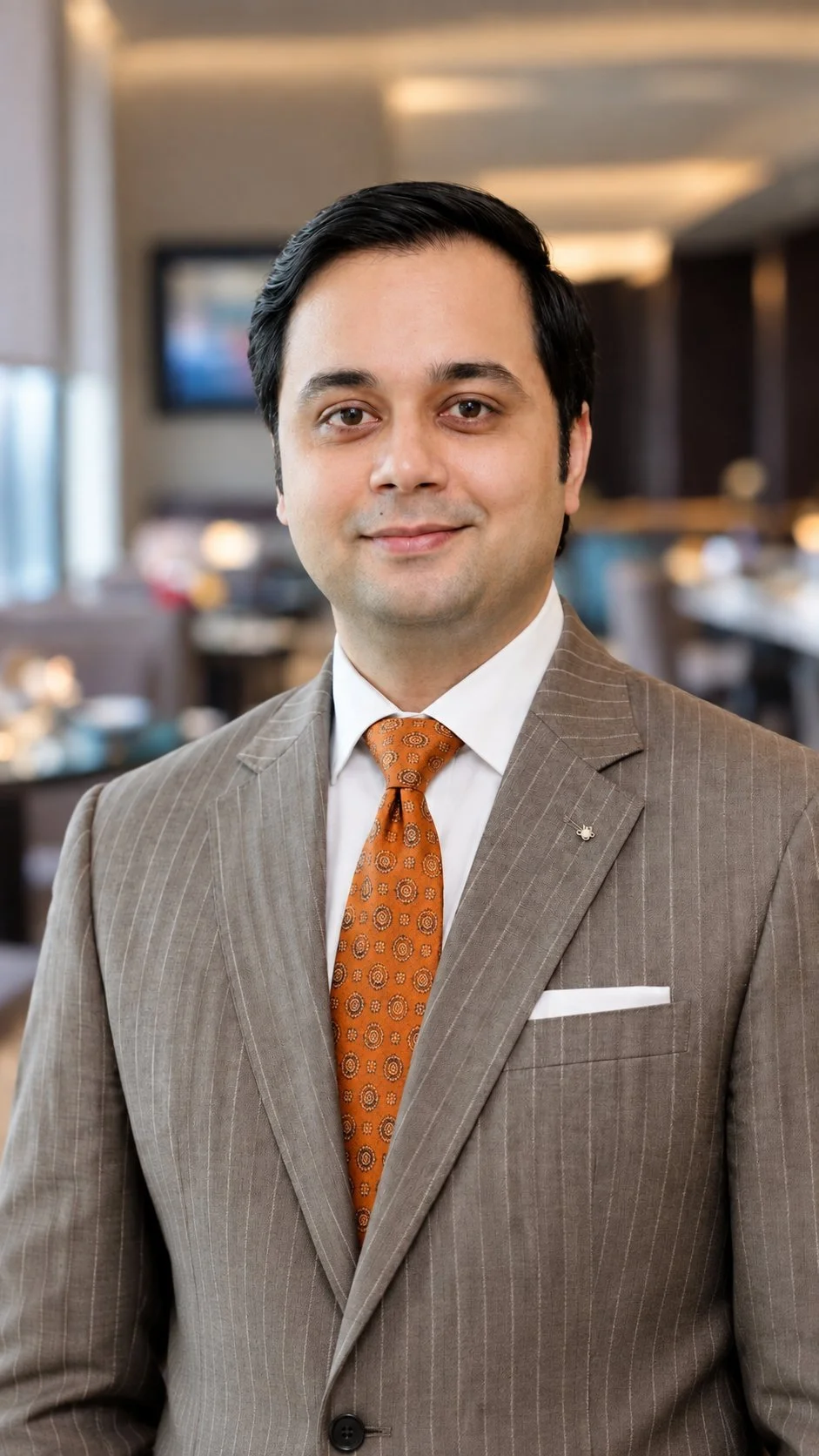
Harish Kumar, formerly Director of Rooms at The Westin Kolkata Rajarhat, joins The Westin Hyderabad Mindspace to lead its Rooms Division.
Read MoreHarish Kumar, formerly Director of Rooms at The Westin Kolkata Rajarhat, joins The Westin Hyderabad Mindspace to lead its Rooms Division.
Read More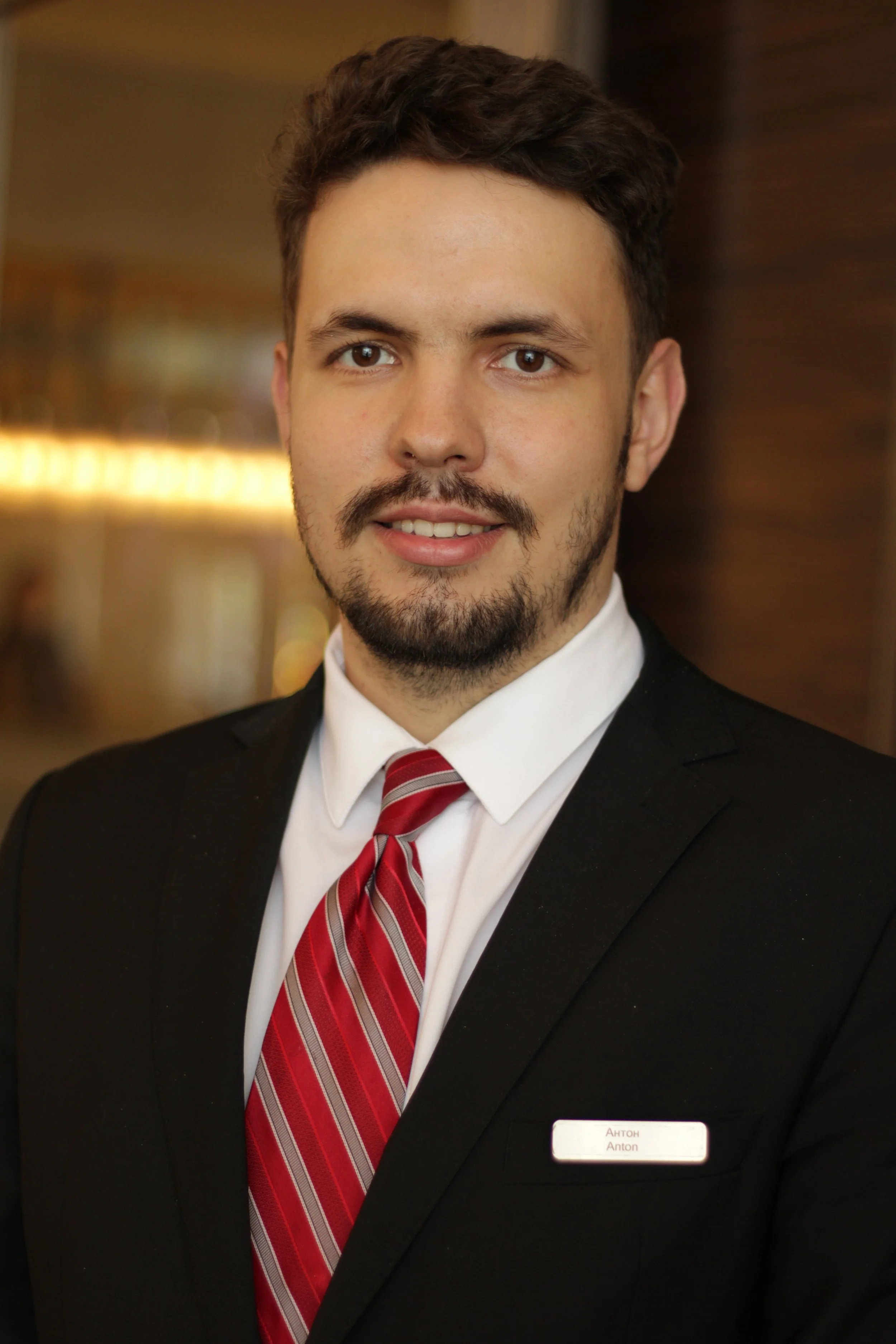
At first glance, luxury hospitality and diplomatic administration may seem like two completely different worlds. One revolves around hotels, guests, service standards and operations; the other around administration, protocol, international relations and discretion. Yet, for Anton Aristov, the transition from one to the other has revealed how closely these environments are connected — and how many of the skills developed in hospitality can remain relevant long after leaving the hotel industry.
Anton’s career began in international hospitality, where he worked with Marriott and Hilton before moving into a Night Manager role at Four Seasons Hotel St. Petersburg. Over more than five years in hospitality, he worked across hotel operations, guest experience, team leadership and service development. His experience included managing teams, developing training programs, improving operational processes and working with guests in high-pressure situations. At Four Seasons, for example, he developed three operational manuals that helped reduce training errors by 25%, redesigned deposit workflows that contributed to a 22% increase in revenue, and introduced daily 15-minute Front Desk training sessions that contributed to a 10% improvement in service quality. But the most important lessons of hospitality were not found in procedures or performance figures. They were found in the moments between them.
Working as a Night Manager was particularly formative. During the night, hotel teams operate with fewer resources and less immediate access to senior management. Unexpected situations still happen, guests still have complex requests, and operational decisions still need to be made — often independently and under pressure. The experience teaches a professional to remain calm, make decisions with incomplete information and understand that the guest experience depends on hundreds of details that may never be visible to the guest.
It also changes the way one understands service. In luxury hospitality, standards are essential. They create consistency and provide employees with a framework for delivering a reliable experience. But standards alone cannot create exceptional hospitality. A guest should not feel that a service interaction is simply the execution of a procedure. They should feel understood.
That distinction became increasingly important to Anton. A guest may appreciate a perfectly prepared room, but what they remember may be something much smaller: a preference an employee remembered, a thoughtful gesture at the right moment, a staff member recognizing that they needed privacy rather than conversation, or a cultural detail that was handled with sensitivity. Luxury hospitality is therefore not necessarily about doing more. It is about understanding what matters to a particular person and knowing when and how to act. This understanding of people became one of the most transferable skills in Anton’s career.
Today, he works in international diplomatic administration, managing administrative processes, budgets, contractors, documentation, banking operations and organizational projects within an international environment. From the outside, this may look like a complete departure from hospitality. But in practice, many of the principles remain remarkably similar.
Discretion is one example. In luxury hotels, employees are regularly trusted with personal information, sensitive requests and private moments in guests’ lives. Professionalism means understanding what should remain private. In an international administrative environment, that principle becomes even more important. Trust is built through accuracy, confidentiality and the ability to understand the boundaries of one’s role.
Protocol is another common thread. In hospitality, protocol can determine how a VIP guest is welcomed, how a special occasion is handled or how an interaction should be adapted to a guest’s position and cultural background. In an international environment, the stakes may be different, but the fundamental principle is the same: context matters.
A gesture that is perfectly appropriate in one culture may be misunderstood in another. The way a person is addressed, the amount of personal space they expect, the way a meeting is structured or even the appropriate level of informality can influence how an interaction is perceived. Hospitality teaches professionals to observe these differences every day, often without explicitly calling it cultural intelligence.
This is perhaps one of the most valuable lessons that hospitality can offer professionals outside the industry: people do not experience service in the same way.
There is no universal definition of excellent service. The same interaction can make one guest feel cared for and another feel uncomfortable. Some guests appreciate conversation and personal attention; others value privacy. Some expect the employee to anticipate every need; others prefer to ask when something is required. Cultural background, personality, previous experiences and the purpose of the journey all influence these expectations.
For Anton, moving into an international environment reinforced this idea. Cultural intelligence is not knowing facts about different nationalities. It is the ability to recognize that your own assumptions may not be universal — and to adapt accordingly.
At the same time, the transition has also provided a perspective on what hospitality itself can learn from international and diplomatic environments. Personalization, for example, is sometimes interpreted in hotels as adding more services or collecting more information about guests. But genuine personalization is often much simpler. It is understanding what a person actually needs and respecting what they do not need. Sometimes the most sophisticated service is not an additional amenity, but knowing when not to intervene.
This is particularly relevant to luxury hospitality, where the industry continues to search for ways to create memorable experiences. Technology, design and personalization can all contribute to the guest journey, but none of them can replace human judgement. A perfectly designed digital experience cannot compensate for an employee who does not understand the person standing in front of them. The same applies to leadership.
During his hotel career, Anton saw that service standards only become meaningful when employees understand the purpose behind them. Training cannot teach people what to say or do. It needs to help them understand why a particular action matters and when a standard should be adapted to the situation.
This was the thinking behind the training programs he developed during his hotel career. At Hilton, he introduced an “Art of Hospitality” training program focused on the human side of service, contributing to a 10% increase in guest satisfaction and a 20% reduction in staff turnover. At Four Seasons, short daily Front Desk training sessions created a continuous learning environment rather than relying solely on formal training sessions. The principle is simple: great service is delivered by people who understand the purpose of the service.
This is also why Anton does not view his move into international administration as leaving hospitality behind. Instead, he sees hospitality as a professional foundation. Marriott provided an understanding of international hotel operations and commercial discipline. Hilton reinforced the importance of people development, consistency and service culture. Four Seasons deepened his understanding of luxury, discretion and personalized service. Working as a Night Manager developed independence, decision-making and the ability to manage unexpected situations under pressure. International administration added another dimension: cultural awareness, protocol and a different understanding of responsibility. Together, these experiences have created a skill set that extends well beyond the hotel industry.
Hospitality professionals often think of career progression as a vertical path: Front Office Agent to Supervisor, Manager, Director and eventually Hotel Manager or General Manager. But the skills developed along the way are much broader than the job titles suggest. Leadership, negotiation, problem-solving, crisis management, cultural intelligence and attention to detail are transferable to almost any international organization.
That is perhaps the most unusual lesson of Anton’s career. Hospitality does not necessarily have to be where a professional ends up. It can be where they learn how to work with people. And those skills can travel much further than the hotel itself.
For Anton, the journey from Marriott and Hilton to Four Seasons, and eventually to international diplomatic administration, has demonstrated that hospitality is not an industry. It is a way of understanding people. And sometimes, the most valuable thing a hospitality career gives a professional is not a destination within the hotel industry, but a set of skills that allows them to build meaningful experiences wherever their career takes them.
everything hospitality
only hospitality
Dr Vivek Pathak on hospitality education, the changing expectations of young people, and why the most important lessons still happen between people.
India now has more MICHELIN Key hotels than any other country in the Middle East, Africa and India selection. For owners and operators, the more useful question is what it took to get there, and what it will take to stay by Prabhjot Bedi, Founder and CEO, Eclat Hospitality