
Why the Wusthof Classic Chef's Knife is my last chef's knife
/I still, remember the moment I cut something for the first time using a really sharp knife. The Wusthof Classic 8-inch chef’s knife was a wedding gift I got almost 15 years ago. I sliced tomato with it while preparing a BLT sandwich and lo and behold: There was no squishing involved and the tomato, though now separated in two, maintained its structural integrity. That’s when I understood why chefs and food writers are always campaigning against dull blades. In the years since, I’ve used a host of different knives while cooking dinners for my family, making cookies for events and testing recipes for two cookbooks I’ve written. And one thing I’ve discovered is that, in a pinch, I could always make do with just one good knife:
Wustohf Classic Chef’s Knife
It’s versatile enough to carve up a pineapple for a summer barbecue and make quick work of a handful of fresh herbs from our garden. It’s the knife I keep reaching for again and again, even as my collection has grown.
For More Details Click Below :
www.nbcnews.com/shopping/kitchen/best-chef-knife-wusthof-n1232421

Taj Jumeirah Lakes Towers ranks first as favourite new hotel in the MENA region
/Taj Jumeirah Lakes Towers, Dubai, the latest addition to the international portfolio of the iconic Taj brand, has been recognized as ‘Favourite New Hotel’ in the Middle East and North Africa region at the prestigious Condé Nast Traveller Middle East Readers’ Choice Awards 2020.
The winners are selected based on unbiased reader votes, resulting in a list that honours those who have gone above and beyond to create the memorable guest experience
For More Information Click Below :

NDMC hikes health fee, traders feel the pinch
/Opening a restaurant or running a hotel or a showroom in Lutyens’ is going to cost more as New Delhi Municipal Council has increased the yearly health trade licensing fee and penalty from 2% to 5%.
The license fees for various trades have been revised by the council’s resolution. Late fees will be charged in cases where the renewal application is received after April 30.
If the application is received within a year from the date of expiry of the license, the fees would be an additional 5% per month, and after a year, the fees would be doubled and would be multiplied with the number of years.
For More Information Click Below:

City’s iconic eateries open their doors with safety measures in place
/Be it the Garma garam New Lucky Restaurant ki chai, piping hot bhajiyas at Ashtodiya Bhajiya House, Gujarati thali at Chandravilas, or mouth-watering non-vegetarian delicacies at Moti Mahal, the eating out experience in Ahmedabad is incomplete without going to these iconic eateries.
After being closed for more than two months, these eateries are back in action again, but with all safety measures in place.
From face masks, hand gloves, and sanitizers to social distancing and thermal scanning, they have seamlessly adapted to the new normal.
For More Information Click below :

Zomato 'Gold' becomes 'Pro' with nearly 50 per cent more restaurants
/Zomato has doubled down on its Gold subscription program amid the COVID-19 crisis as the food tech unicorn renamed the dining membership as Zomato Pro after signing up about 50 percent more restaurant partners.
All Zomato Gold members across 10 countries will automatically get upgraded to Zomato Pro starting 1 August 2020. Pro members will get access to exclusive delivery offers.
For More Information click below:

KFC India to donate 1 million meals amid COVID-19 lockdown
/KFC India announced that it has pledged to donate 1 million meals to help the needy amid the ongoing nationwide COVID-19 lockdown.
These meals support migrant workers and daily wage earners, who are struggling to afford meals during the lockdown
For More Details Click Below :

Dubai is ready to reopen its doors to receive visitors and guests from all over the world
/Dubai prepares to reopen its doors to receive visitors and guests from all over the world, the Dubai Department of Tourism and Commerce Marketing confirmed its complete keenness to provide distinguished experiences for visitors within the framework of a package of preventive measures that put the health and safety of everyone at the top of their priorities.
Emphasizing the importance of adhering to physical distance and putting masks throughout to combat the virus.
For More Details Click Below:
www.gulfnewstoday.net/2020/05/dubai-is-ready-to-reopen-its-doors-to.html?m=1

EIH Hotels Q4 net profit rises 66.46 pc to Rs 33.16 crore
/EIH Hotels, which runs a chain of hotels and resorts under the Oberoi brand said its consolidated net profit was at Rs 165.14 crore in 2019-20 as against Rs 148.96 crore in 2018-19 and Consolidated Revenue from operations for FY20 was at Rs 1,596.25 crore as compared to Rs 1810.82 crore in FY19.
The company further said hotels in most locations have been allowed to resume operations effective June 8 with the balance expecting to open by July 1.
For More Details Click Below :

Carole Ackermann, new President at EHL Holding SA
/Dr. Carole Ackermann will succeed EHL Holding SA from 22 June 2020 as President of the Board of Directors and President-Elect of the Board of Governors. Having 20 years of management experience on the boards of SMEs and large companies.
For More Details Click Below :
hospitality-on.com/en/appointments/appointment-carole-ackermann-new-president-ehl-holding-sa

Hotel Indigo Hotels & Resorts pays tribute to Shakespeare
/Indigo Hotels & Resorts is strongly inspired by William Shakespeare's famous love story and drama "Romeo and Juliet" written in 1597. This hotel has 62 rooms with a design inspired by the city of Verona.
In the public areas, the red marble from Verona (Marmo rosso di Verona) gives the impression of a large Italian residence.
For more Information Click Below:

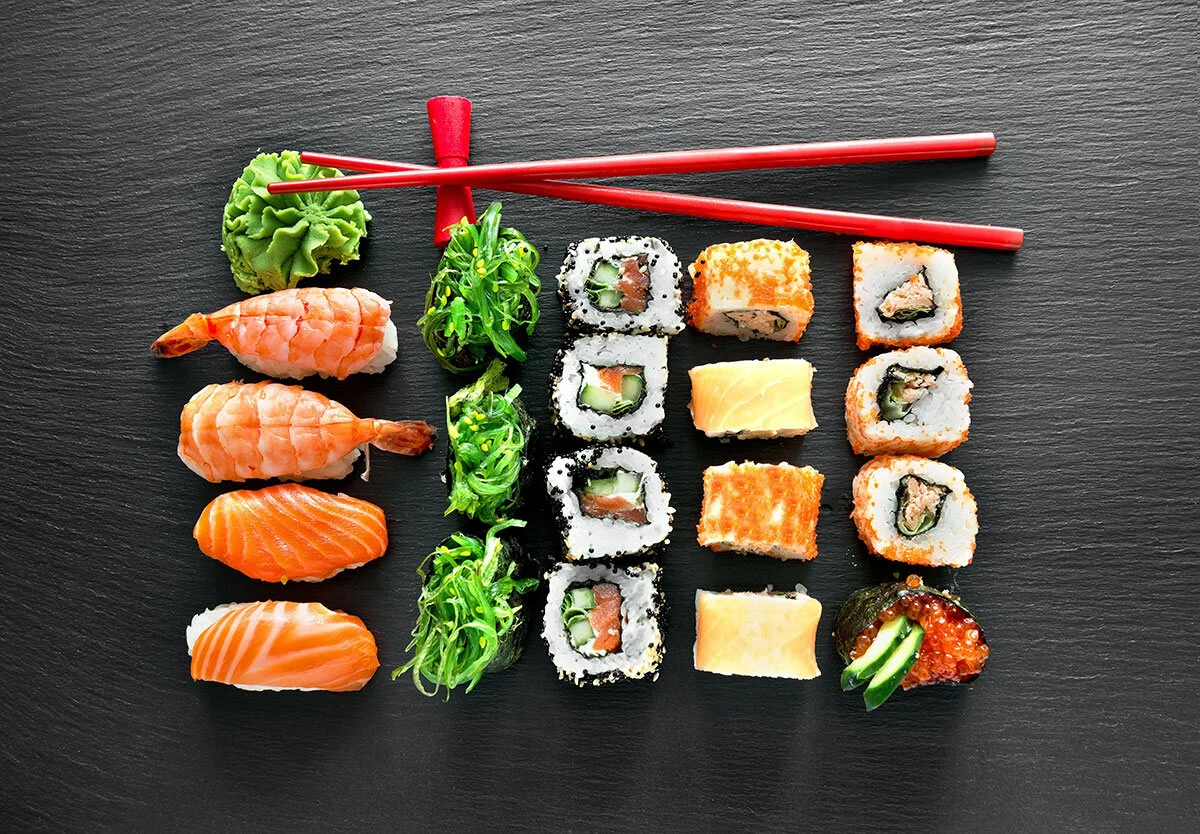
A Short History of Sushi
/On the morning of 5 January 2019, gasps of amazement rippled through Tokyo’s cavernous fish market. In the first auction of the new year, Kiyoshi Kimura – the portly owner of a well-known chain of sushi restaurants – had paid a record ¥333.6 million (£2.5 million) for a 278kg bluefin tuna. Even he thought the price was exorbitant. A bluefin tuna that size would have normally cost him around ¥2.7 million (£18,700). At New Year, that could rise to around ¥40 million (£279,000). Back in 2013, he’d paid no less than ¥155.4 million (£1.09 million) for a 222kg specimen: a lot, to be sure. But still a lot less than what he’d just paid.
Tasty and fresh
It was worth paying over the odds, though. It was, by any standards, a beautiful fish – ‘so tasty and fresh’, as a beaming Mr. Kimura told the world’s press. It was also a rarity. Though not as critically endangered as its southern relatives, the Pacific bluefin tuna is classified as a vulnerable species and, over the past six years, efforts have been made to limit the size of catches. Most of all, it was great advertising. By paying such a colossally high price for a tuna, Kimura was telling the world that, at his restaurants, the sushi is made from only the very best fish.
It was a dazzling – even ostentatious – demonstration of how greatly sushi is prized in Japan. When it comes to those tiny mounds of vinegary rice, topped with delicate slivers of seafood, almost any price is worth paying. Sushi is not simply a meal to be eaten, but a dish to be savoured. As the celebrity chef Nobu Matsuhisa has recently pointed out, it is ‘an art’ in itself. Some would go even further. For many people, it is the acme not just of Japanese cuisine, but of Japanese culture. Reserved for the most special occasions, it is bound up in the popular imagination with ideas of sophistication and good taste.
There is, perhaps, some irony in this. Sushi was, at first, neither sophisticated nor even Japanese.
Though the evidence for its early history is rather sketchy, it seems to have begun life at some point between the fifth and the third centuries BC in the paddy fields alongside the Mekong River, which runs through modern Laos, Thailand, and Vietnam. Then, as now, the shallow waters were the perfect home for aquatic life, especially carp, and farmers often went fishing to supplement their meagre diets. But this posed a problem. Whenever a catch was landed, most of the fish would go off in the heat before they could be eaten. In order to avoid wasting food, some method of slowing, or at least controlling, the decay was needed. Thankfully, the glutinous rice grown in the surrounding fields turned out to be the perfect preservative. First, the fish were gutted, rubbed with salt, and placed in a barrel to dry for a few weeks. Then the salt was scraped off and the bellies of the fish packed with rice before being placed into wooden barrels weighed down with a heavy stone and left to rest. After several months – sometimes up to a year – anaerobic fermentation would begin, converting the sugars in the rice into acids and thus preventing the microorganisms responsible for putrefaction from spoiling the flesh. Whenever there was a need, the barrel could then be opened, the rice scraped off and the remaining fish are eaten. The smell was, of course, revolting; but the taste was delicious, if rather bitter. Best of all, nothing was wasted.
Gradually, this rudimentary form of sushi – known as Nare-Sushi – began to spread. From the Mekong, it made its way south towards Malaysia, Indonesia, and the Philippines and north, along the Yangtze and into the Yunnan, Guanxi, and Guizhou provinces of modern China. The invasion took it further. Following the conquest of the Yeland, Dian, and Nanyue tribes by the Han people in the second century BC, a process of cultural assimilation then brought nare-sushi into the Chinese heartlands. For many years it remained a ‘poor’ food, favored by those who, like its first consumers, worked in or near paddy fields. But, in time, it became so widely eaten that it gained acceptance in more elevated sections of society, as well – so much so that it was even mentioned in the earliest surviving Chinese encyclopedia, the Erya.
Revulsion and innovation
Eventually, Nare-Sushi reached Japan. It is not known exactly when it arrived, but the earliest reference to it appears in the Yōrō Code, a legal code compiled in 718, during the reign of the Empress Genshō. Its reception was, admittedly, rather mixed. A story from the Konjaku Monogatarishū (Anthology of Tales from the Past), written in the early 12th century, left no doubt that, while it tasted good, many Japanese found its smell repellent.
The revulsion was, however, to prove a spur to innovation. During the early Muromachi period (1338-1573), steps were taken to make sushi more palatable. Rather than leave the fish in barrels for months – or even years – at a time, the fermentation process was reduced to a few weeks. This meant that less acid was allowed to form and the stench was kept to a minimum.
Recipes from the Historian’s Cookbook: An Early American Take on Sushi
But this also had the effect of making the contents of the barrel rather less sour. Instead of being mouth-puckeringly bitter, the rice was now pleasantly tart and could be eaten with the fish instead of simply being thrown away. It was just the sort of flavor the Japanese were looking for. During the 12th century, the development of rice vinegar had transformed tastes and created an appetite for acetic foods. All sorts of new dishes had been developed, including namasu (vegetables in vinegar) and tsukemono (pickles). But none was quite as popular as this new combination of semi-fermented fish and rice – known as han-nare. No longer the preserve of the rural poor, it was soon being enjoyed by artisans, merchants, warriors, and, eventually, even nobles.
Fast sushi
Now that the fermentation had been cut down, it was not long before someone started to wonder whether it was necessary at all. Although it had fulfilled a valuable function on the banks of the Mekong and the Yangtze, its utility was less obvious in Japan. Not only were salt-water fish more readily available, but the growth of prosperity, the acceleration of urbanization and improvements in domestic trade had made long-term preservation less of a concern.
By the middle of the 17th century, this had led to the emergence of a third form of sushi. Known as haya-sushi (fast sushi), this did away with fermentation altogether, while preserving the dish’s familiar tart flavor. Instead of waiting for the sugars in the rice to be turned naturally into acids, vinegar was simply added instead. It was then packed into a box, under slices of cooked or cured fish, and pressed with a heavyweight for no more than a couple of days. Over time, different prefectures added their own twists to this, either to reflect regional tastes or to take account of the availability of different ingredients. In Toyama, for example, the sushi was wrapped in bamboo leaves, while in Nara persimmon leaves were used.
If you were going to do away with fermentation, however, why not get rid of pressing, as well? After all, its purpose had only ever been to prevent air from getting to the fish while the sugars in the rice turned to acid. Now, it was just a hang-over from the past: aesthetically pleasing, perhaps, but wholly unnecessary. Besides, it slowed preparation down and, by the early 19th century, time was money in Japan’s growing cities. Busy rushing here and there, people needed something quick and easy to eat – not something which took days to make.
To meet this need, the fourth form of sushi was developed. Consisting of slices of cooked or cured fish laid over vinegar-seasoned rice, this was similar to modern nigrizushi. What distinguished it, however, was its size. Each piece was two or three times bigger than the bite-sized treats we are used to eating today. The fish was treated rather differently, too. Before being served, each slice was carefully steeped in vinegar or soy sauce or else coated in a thick layer of salt, so as to ensure consistency of taste – and to ensure that it kept fresh for at least a while.
Known as Edo-mae, this sushi was named for the city of Edo (Tokyo), where it was developed in the 1820s or 1830s. According to one popular legend, it was invented by a chef named Hanaya Yohei (1799-1858) at his stall in the north-east of the metropolis in around 1824. Whatever the truth of its origins, its huge popularity led to the establishment of the first sushi emporia. Apart from Yohei’s restaurant, the most famous were Kanukizushi and Matsunozushi (which still exists); and within a few decades, they numbered in the hundreds, if not thousands. Indeed, if one mid-century encyclopaedist is to be believed, every hectare of Edo contained at least one sushi stall.
Edo-mae was not to remain the preserve of Edo for long, though. In 1923, the Great Kanto earthquake – which killed more than 100,000 people and left many more homeless – forced several sushi chefs from the city and thereby helped to spread the new sushi throughout Japan.
Fridge magnet
It was, however, a technology that created the sushi we know today. With the development of refrigeration, it became possible to use slices of raw fish for the first time. Other types of fish also came into vogue. Whereas fatty fish like tuna had previously been dismissed, because there had never been a suitable method of curing or cooking them, they could now be served fresh whenever needed. Coupled with the persistent image of refrigerators as ‘luxury’ items, this greater variety transformed sushi into a ‘festive’ food; a refined treat to be enjoyed with family and friends on special occasions.
Yet, even as it was being enshrined as the pinnacle of Japanese culture, it was spreading its wings further. After the Second World War, the US occupation and the growing ease of international travel took it across the Pacific and beyond. In the 1960s, Californians even pioneered their own form of sushi – the inside-out roll. Since then, ever more inventive variations have been introduced the world over.
So, if it’s worth Mr. Kimura paying a king’s ransom for a single bluefin tuna, it’s worth keeping the humble origins of this most ‘regal’ of dishes in mind. Since its emergence more than 2,000 years ago sushi has changed almost beyond recognition. If its transformation from a sticky, stinky leftover to a fragrant delicacy shows anything, it is that it will probably go on changing for years to come.
Patrons are asked to self-quarantine after about 85 people who visited a Michigan bar get Covid-19
/People who visited a bar in East Lansing, Michigan, are being asked to self-quarantine because roughly 85 people contracted COVID-19 after visiting the establishment this month.
The bar followed safety guidelines for employees, capacity guidelines, and table spacing, the statement said. The bar opted to close down temporarily to install air purifiers and to eliminate lines.
For More Details Click Below :
edition.cnn.com/2020/06/27/us/michigan-coronavirus-bar-harpers/

Tsogo Sun takes over 3 hotels as Marriott withdraws due to Lockdown
/Tsogo Sun Hotels announced that they would be taking over three hotels from which hotel group Marriott International decided to withdraw. Marriott International closed three hotels and would be removing them from the Marriott system due to the impact of Covid-19.
The hotels are the Mount Grace in Magaliesburg, the Edward in Durban, and the Protea Hotel Hazyview in Mpumalanga.
For More Details Click Below :

King to lead Marriott in Caribbean and Latin America
/Marriott International has announced that long-time company executive Brian King has been appointed president of the Caribbean and Latin America region.
King will take on his new role in January 2021 and will report to Craig Smith, who will assume the role of group president, international at that time. King succeeds Tim Sheldon, who recently announced his retirement.
For More Information Click Below :
www.breakingtravelnews.com/news/article/king-to-lead-marriott-in-caribbean-and-latin-america/

Expansive Gaylord Hotels Re-Open Today Marking a Positive Return for the Hospitality Industry
/Today marks a significant milestone in the return to business of the U.S. hotel industry, as three sprawling resorts reopen their doors. Ready to welcome back travelers this summer, Gaylord Rockies in Colorado, Gaylord Palms in Florida and Gaylord Opryland in Tennessee join the recently opened Gaylord Texan to offer four hotel and entertainment destinations that provide a multitude of experiences within acres of indoor space as well as outdoor pool play. Diverse summer programming includes family-friendly activities and live entertainment for all ages while socially distanced; the hallmarks of what consumers need from a summer escape in today’s travel environment.
In accordance with Marriott’s “Commitment to Clean” protocols, the resorts will provide enhanced cleaning technology, hospital-grade disinfectants, attendants dedicated to sanitizing frequently throughout the day, new social distancing protocols, and hundreds of new cleaning processes to take care of guests while they enjoy the resorts’ amenities. Additionally, the Gaylord Hotels ownership group, Ryman Hospitality Properties, Inc. selected Vanderbilt University Medical Center, a leader in medical research, as its official wellness advisor. These combined efforts will further support the multi-phased health and sanitation plans, procedures, and employee training.
Providing “everything in one place” for visitors, Gaylord Hotels are delivering re-imagined summer experiences and amenities to meet the demand of drive-market leisure travelers

Gujarat, 3 other States estimated to register double-digit contraction in GSDP: Ind-Ra
/Gujarat, Assam, Goa, and Sikkim are likely to see a double-digit contraction in gross state domestic product (GSDP) during the current fiscal (FY21), India Ratings & Research (Ind-Ra) said.
The agency expects “the Gross State Domestic Product (GSDP) of all states in India to contract in FY21. The contraction will be in the range of 1.4 per cent-14.3 percent.”The Indian economy is estimated to de-growth by 5.3 percent.
For More Information Click Below :

The First-ever Adults-only Casino in Vegas Will Have America’s Largest Pool Amphitheater
/Circa Resort & Casino plans to be the first-ever adult-only, 21+ casino-resort in Las Vegas history. As a special tribute, the resort will be home to Vegas Vickie, one of the most iconic neon signs from the Strip, in their own lobby. Circa Resort & Casino will house a truly unique pool amphitheater.
Circa will also offer some unique dining experiences, such as Saginaw’s Delicatessen (a family-style deli), Victory Burger & Wings Co.
The resort was planned to open in December 2020, but the company has recently announced it will be opening its first five floors and parking garage to guests as soon as Oct. 28, 2020.
For More Information Click Below:
www.travelandleisure.com/attractions/adults-only-casino-circa-resort-las-vegas

Dubai to allow tourists from July 7
/Key Take Away
Dubai to welcome tourists from 7 July 2020; tourists required to present recent COVID-19 negative certificate or undergo testing and adhere to strict protocols at Dubai airports
International tourists must download the COVID-19 DXB app and register their details. They must also have valid health insurance and the airline has the right to refuse to board. Tourists must do a PCR test with a maximum validity of four days (96 hours) ahead of the date of departure.
Those who test positive for COVID-19 should isolate themselves for 14 days at their home or in an institutional facility provided by the government at their own expense.
For More Details Click below :

Seaside Finolhu to reopen on Oct 1 after major upgrade
/Key Take Away
Seaside Finolhu is set to reopen its doors to visitors on October 1 after completing its highly anticipated transformation project. This keenly anticipated transformation covers guest villas, restaurants, public areas, and a state-of-the-art indoor golf studio.
In line with the resort upgrades, Finolhu will also introduce the new names and concepts for its four restaurants and spa. Translated as “sandbank”, Finolhu is one of the finest island resorts located in the UNESCO-protected Baa atoll.
The resort also encourages its valued guests to continue sharing their memorable #SeasideFinolhu stories on social media.
For More Information Click Below :
maldives.net.mv/39631/seaside-finolhu-to-reopen-on-oct-1-after-major-upgrade/