Marriott International Reports Third Quarter 2026 Results

Third quarter 2026 RevPAR[1] increased 6.5 percent worldwide, with 7.4 percent growth in the U.S. & Canada and 4.4 percent growth in international markets

  • Third quarter reported diluted EPS totaled $3.04 and Adjusted diluted EPS totaled $3.02

  • Third quarter reported net income totaled $794 million and Adjusted net income totaled $790 million

  • Third quarter Adjusted EBITDA totaled $1,512 million

  • The company added roughly 20,100 net rooms globally during the quarter and net rooms grew 4.6 percent from the end of the third quarter of 2025

  • At the end of the quarter, Marriott’s worldwide development pipeline reached a new record and totaled over 4,200 properties and more than 634,000 rooms, with 44 percent of pipeline rooms under construction including hotels that are pending conversion

  • The company repurchased 3.5 million shares of common stock for $1.3 billion in the 2026 third quarter. Year-to-date through October 28, the company has returned approximately $4.0 billion to shareholders through dividends and share repurchases

Marriott International, Inc. (Nasdaq: MAR) today reported third quarter 2026 results.

Anthony Capuano, President and Chief Executive Officer, said, “Our excellent third quarter results reflected continued momentum across our business, the benefits of our global scale, and the power of our brands and revenue engines. Global RevPAR increased 6.5 percent in the third quarter, on higher ADR and occupancy. In the U.S. & Canada, RevPAR rose over 7 percent, with broad-based growth across customer segments and chain scales.

“International RevPAR increased over 4 percent in the quarter, led by APEC, which delivered over 9 percent RevPAR growth, supported by robust international inbound demand. EMEA RevPAR rose over 4 percent, thanks to solid growth in Europe. While the ongoing conflict in the Middle East continued to impact results in that region, trends improved meaningfully from the second quarter. For full year 2026, given our strong third quarter performance and expectations for continued healthy demand, we are raising our global RevPAR outlook and now expect growth of 4.5 to 5 percent.

“Our development activity remained strong, and we had record global organic signings year to date through September. Conversions continued to be an important driver of growth, representing over a third of signings and over 40 percent of openings during the first nine months of the year.

“Marriott Bonvoy continued to expand its reach and deliver value to our owners and properties and across the enterprise. Our broad portfolio of brands and experiences and powerful collaborations with Uber, Starbucks and others helped drive membership to approximately 309 million members around the world at quarter-end.

“Our global scale, compelling portfolio of brands, industry-leading Marriott Bonvoy loyalty program and dedicated associates, together with our robust development pipeline and disciplined execution, give us confidence in our ability to deliver sustainable, long-term growth.”

Third Quarter 2026 Results

Franchise and base management fees totaled $1,341 million in the 2026 third quarter, a 13 percent increase compared to franchise and base management fees of $1,190 million in the year-ago quarter. The increase was primarily driven by higher co-branded credit card fees, higher RevPAR and rooms growth.

Incentive management fees totaled $181 million in the 2026 third quarter, a 22 percent increase over $148 million in the 2025 third quarter. All regions posted positive growth year over year, with incentive fees in the U.S. & Canada up meaningfully.

Owned, leased, and other revenue, net of owned, leased, and other expense[2], totaled $41 million in the 2026 third quarter, compared to $70 million in the 2025 third quarter. The decline reflected lower owned and leased hotel results, including the impact of renovations and our 2026 second quarter sale of a U.S. & Canada hotel, and higher costs associated with a third-party agreement, partially offset by a $12 million expected insurance recovery associated with the 2026 second quarter property-related litigation matter ($9 million after-tax impact and $0.03 per share after-tax).

General and administrative expenses[2] for the 2026 third quarter totaled $214 million, compared to $210 million in the year-ago quarter.

Interest expense, net, totaled $219 million in the 2026 third quarter, compared to $194 million in the year-ago quarter. The increase was primarily due to higher interest expense associated with higher debt balances.

In the 2026 third quarter, the provision for income taxes totaled $266 million, flat compared to the year-ago quarter.

Marriott’s reported operating income totaled $1,274 million in the 2026 third quarter, compared to 2025 third quarter reported operating income of $1,180 million. Reported net income totaled $794 million in the 2026 third quarter, a 9 percent increase compared to 2025 third quarter reported net income of $728 million. Reported diluted earnings per share (EPS) totaled $3.04 in the quarter, compared to reported diluted EPS of $2.67 in the year-ago quarter.

Adjusted operating income in the 2026 third quarter totaled $1,267 million, compared to 2025 third quarter Adjusted operating income of $1,119 million. Third quarter 2026 Adjusted net income totaled $790 million, compared to 2025 third quarter Adjusted net income of $674 million. Adjusted diluted EPS in the 2026 third quarter totaled $3.02, compared to Adjusted diluted EPS of $2.47 in the year-ago quarter.

Third quarter 2026 Adjusted results excluded cost reimbursement revenue, reimbursed expenses, and certain impairment charges. See the press release schedules for the calculation of Adjusted results and the manner in which the Adjusted measures are determined in this press release.

Adjusted earnings before interest, taxes, depreciation, and amortization (EBITDA) totaled $1,512 million in the 2026 third quarter, a 12 percent increase compared to third quarter 2025 Adjusted EBITDA of $1,349 million. See the press release schedules for the Adjusted EBITDA calculation.

Income Statement Reclassification

In the 2025 fourth quarter, to enhance understanding of the company’s general and administrative costs, we reclassified amounts attributable to other expenses previously reported under the “General, administrative, and other” caption to the “Owned, leased, and other expense” caption of our Income Statements. The expenses that were reclassified from “General, administrative, and other” are certain costs associated with our property-related fee revenues, such as guarantee expense, provision for credit losses, and certain brand-related or property-related expenses, as well as costs associated with certain third-party agreements. Please refer to the Expense Captions - As Reclassified section in the press release schedules for information about the affected expense captions, as reclassified, for each quarter and the full fiscal year of 2025.

Selected Performance Information

The company added roughly 20,100 net rooms during the quarter, including over 13,400 net rooms in international markets. At the end of the quarter, Marriott’s global system totaled over 10,200 properties, with nearly 1,834,000 rooms.

At the end of the quarter, the company’s worldwide development pipeline totaled 4,209 properties with more than 634,000 rooms, including 266 properties with over 37,000 rooms approved for development but not yet subject to signed contracts. The quarter-end pipeline included 1,750 properties with over 278,000 rooms under construction, including hotels that are in the process of converting to our system. Over half of the rooms in the quarter-end pipeline were located in international markets.

In the 2026 third quarter, worldwide RevPAR increased 6.5 percent (a 6.4 percent increase using actual dollars) compared to the 2025 third quarter. RevPAR in the U.S. & Canada increased 7.4 percent (a 7.3 percent increase using actual dollars), and RevPAR in international markets increased 4.4 percent (a 4.4 percent increase using actual dollars) compared to the 2025 third quarter.

Balance Sheet & Common Stock

At the end of the quarter, Marriott’s total debt was $16.8 billion and cash and equivalents totaled $0.5 billion, compared to $16.2 billion in debt and $0.4 billion of cash and equivalents at year-end 2025.

The company repurchased 3.5 million shares of common stock in the 2026 third quarter for $1.3 billion. Year-to-date through October 28, the company has repurchased 9.6 million shares for $3.4 billion.

During the 2026 third quarter, the company issued $250 million of Series NN Senior Notes due in 2029 with a 4.875 percent interest rate coupon and $1.0 billion of Series YY Senior Notes due in 2036 with a 5.650 percent interest rate coupon. The company also completed the refinancing of its credit facility, extending the maturity to September 2031 and increasing the facility size from $4.5 billion to $5.0 billion.

Company Outlook

The company's updated outlook generally assumes the continuation of the current macroeconomic environment.

1See the press release schedules for the Adjusted EBITDA calculations.
2Adjusted EBITDA, Adjusted EPS – diluted, and Adjusted effective tax rate for fourth quarter and full year 2026 do not include cost reimbursement revenue, reimbursed expenses, and restructuring and merger-related recoveries/charges, and other expenses, each of which the company cannot forecast with sufficient accuracy and without unreasonable efforts, and which may be significant. Our outlook includes the impact of our sale of a U.S. & Canada hotel and our investment in Lefay, each of which occurred in the 2026 second quarter, and our planned sale of a U.S. & Canada hotel, which we assume will occur in the 2026 fourth quarter. Our outlook excludes any other potential asset sales or property or brand acquisitions that may occur during the year, each of which the company cannot forecast with sufficient accuracy and without unreasonable efforts, and which may be significant. In addition, our full year 2026 outlook excludes the adjustments from the 2026 first three quarters related to the Sonder termination of $2 million, an adjustment to a gain on an asset disposition of $(8) million, and asset impairment charges of $(74) million.
3Assumes the level of capital return to shareholders noted above.
4Investment spending includes contract acquisition costs, capital and technology expenditures (including renovations at owned and leased hotels), loan advances, and other investing activities (including our investment in Lefay, which occurred in the 2026 second quarter), but excluding any potential property or brand acquisitions, which we cannot forecast with sufficient accuracy and which may be significant.
5Assumes the level of investment spending noted above and that no other asset sales, property acquisitions or brand acquisitions occur during the year.

Marriott International, Inc. (Nasdaq: MAR) will conduct its quarterly earnings review for the investment community and news media on Monday, November 2, 2026, at 8:00 a.m. Eastern Time (ET). The conference call will be webcast simultaneously via Marriott’s investor relations website at www.marriott.com/investor (click on “Events & Presentations” and click on the quarterly conference call link). A replay will be available at that same website until November 2, 2027.

The telephone dial-in number for the conference call is US Toll Free: 833-309-3473, or Global: +1 785-838-9251. The conference ID is MAR3Q26.

View the third quarter 2026 Press Release Schedules, including non-GAAP reconciliations and explanations.


[1]All occupancy, Average Daily Rate (ADR) and Revenue per Available Room (RevPAR) statistics and estimates are systemwide constant dollar. Unless otherwise stated, all changes refer to year-over-year changes for the comparable period. Occupancy, ADR and RevPAR comparisons between 2026 and 2025 reflect properties that are comparable in both years.

[2]In the 2025 fourth quarter, to enhance understanding of the company’s general and administrative costs, we reclassified amounts attributable to other expenses previously reported under the “General, administrative, and other” caption to the “Owned, leased, and other expense” caption of our Income Statements. Please see the Income Statement Reclassification section of this press release for additional information.

NOTE ON FORWARD-LOOKING STATEMENTS

All statements in this press release and the accompanying schedules are made as of November 2, 2026. We undertake no obligation to publicly update or revise these statements, whether as a result of new information, future events or otherwise. This press release and the accompanying schedules contain "forward-looking statements" within the meaning of federal securities laws, including statements related to our RevPAR, rooms growth and other financial metric estimates, outlook and assumptions; shareholder returns; our growth prospects; our development pipeline; our Marriott Bonvoy loyalty program; property performance; our expectations about the current macroeconomic environment; our planned hotel sale; and similar statements concerning anticipated future events and expectations that are not historical facts. We caution you that these statements are not guarantees of future performance and are subject to numerous evolving risks and uncertainties that we may not be able to accurately predict or assess, including the risk factors that we describe in our U.S. Securities and Exchange Commission filings, including our most recent Annual Report on Form 10-K or Quarterly Report on Form 10-Q. Any of these factors could cause actual results to differ materially from the expectations we express or imply in this press release.
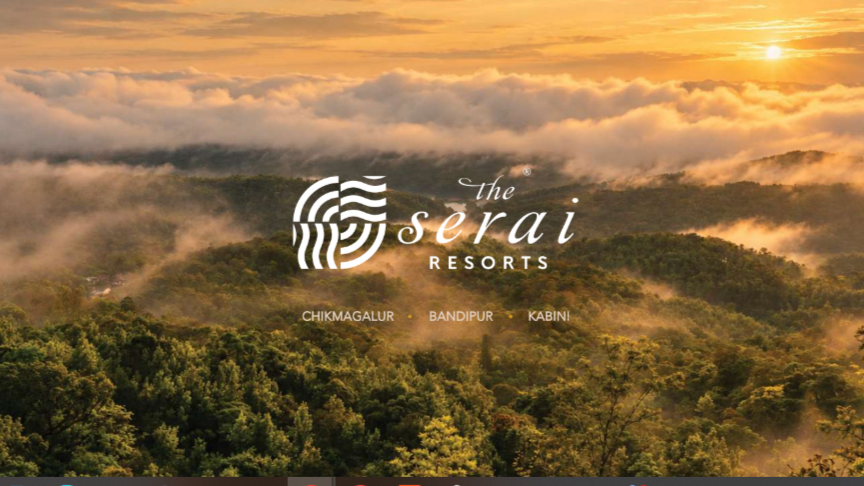

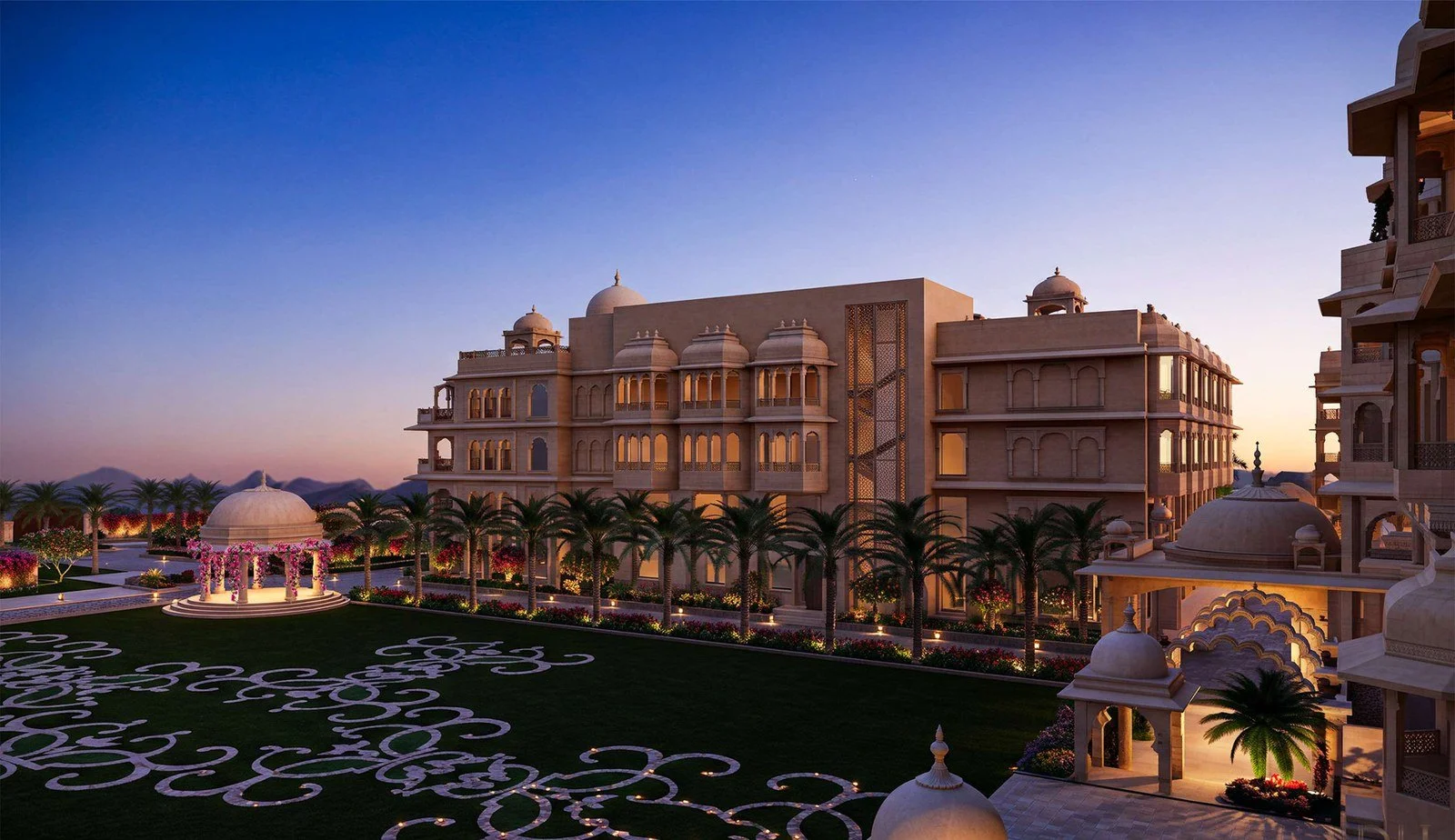
THE SERAI RESORTS – Introducing ‘Living Sanctuaries’

‘Where nature sets the pace and graceful hospitality creates space to simply be’

There are places we travel to, and there are places that become a part of us. A place can stay with you in the quiet of a morning, in the memory of a meal, in the sound of the forest after dusk, or in the feeling of having nowhere else to be. It is these unhurried moments, often unplanned and understated, that makes a journey truly memorable.

At The Serai Resorts, this belief has always been at the heart of the experience. Set across some of South India’s most evocative landscapes, The Serai invites guests to slow down, look closer, and discover a deeper connection with the places they visit.

Living Sanctuaries is a latest expression of this philosophy- one that brings together the distinctive landscapes, experiences, and spirit of nature at The Serai Resorts across Chikmagalur, Bandipur, and Kabini, with each destination holding its own character, rhythm, and way of inviting you to pause.

In Chikmagalur, the landscape is shaped by the mist-covered hills and coffee estates of the Western Ghats. Mornings unfold slowly, surrounded by forests, rain, and the scent of coffee wafting in the cool breeze. It is a place for long walks, sounds of nature, quiet contemplation, and discovering the pleasures of the hills at an unhurried pace.

In Bandipur, the experience is defined by the wilderness. The forest has its own rhythm, which cannot be hurried. The call of birds, movement of wildlife, and changing light through the trees create a sense of being immersed in nature rather than simply observing it. Here, stillness becomes an experience.

In Kabini, the river forms the heart of the landscape. Its waters, open skies, and surrounding wilderness create a sense of anticipation and discovery. From quiet moments by the water to encounters with the wildlife that inhabits the region, Kabini reminds us that some of the most remarkable experiences of the expanses of land, water and skies and the beauty of its changing rhythms, one that we cannot plan.

While each sanctuary is deeply rooted in its surroundings, a shared philosophy connects them: nature sets the pace.

The landscape is not merely a backdrop to the experience. It influences how guests spend their time, what they see, what they taste, and how they connect with the destination. From the architecture and design to the culinary experiences and ways of exploring the surroundings, every element is considered to allow the character of the place to come through.

Then there is graceful hospitality.

For The Serai Resorts, hospitality is not about doing more; it is about knowing what matters and doing it well. It is the warmth of being welcomed, the attentiveness of a team that remembers the little things, and the instinct to know when to be present and when to simply give a guest space.

Hospitality is natural to its surroundings, thoughtful without being intrusive, personal without being performative.

Today, perhaps, the idea of luxury is changing.

It is less about abundance and more about space. Space to breathe. Space to disconnect from the pace of everyday life. Space to have a meaningful conversation, to savour a meal, to spend time with the people who matter, or simply to be alone with one's thoughts.

At The Serai Resorts, these moments do not interrupt the experience. These are experiences.

A misty morning in the coffee plantation.

A slow breakfast overlooking the landscape.

The anticipation of a wildlife sighting.

A meal inspired by the region.

The sound of rain against the forest.

A conversation that carried late into the evening.

Or the quiet pleasure of doing absolutely nothing.

These moments become part of how we remember a place. How it becomes etched and core to our memories.

Living Sanctuaries is an invitation to experience travel at a different pace-to move beyond simply visiting a destination and instead allow the destination to become part of you.

Across Chikmagalur, Bandipur and Kabini, The Serai Resorts creates spaces where nature, place and graceful hospitality come together, offering guests the freedom to experience each landscape in their own way.

Because a sanctuary is not simply a place where we retreat to.

It is a place that gives something back.

Sometimes, the greatest luxury is simply having the time and space to notice it.

India's 47 MICHELIN Keys: What the List Tells Us About Indian Hospitality

India's 47 MICHELIN Keys: What the List Tells Us About Indian Hospitality

India now has more MICHELIN Key hotels than any other country in the Middle East, Africa and India selection. For owners and operators, the more useful question is what it took to get there, and what it will take to stay by Prabhjot Bedi, Founder and CEO, Eclat Hospitality

Read More

The Aamras Mango Cheesecake at Vanilla Beans →

Some stories start with a visit. This one started with a message.

When Vanilla Beans reached out to share their new mango collection, it came with a simple promise: Alphonso mangoes, treated with care, and desserts built around them. We asked if we could try it. They said yes. And somewhere between the first slice and the last bite, this turned into something we knew we had to share.

There’s something deeply nostalgic about a mango dessert done right, and this one gets it. Visually, it arrives like summer on a plate—bright mango layered generously over soft, cloud-like cream, the kind of thing you pause for a second before cutting into.

Then comes the first bite.

The texture is what lands first—soft, light, and fresh without trying too hard. It doesn’t lean on heaviness or overload you with sweetness. Instead, it steps back just enough to let the mango do what it does best. And here, it’s all about the aamras—rich, fragrant, and unmistakably Alphonso. It runs through the cheesecake in thick, generous layers, so every bite carries that sweet, sun-ripened depth.

The base brings in a quiet contrast—buttery, slightly crumbly, grounding all that silkiness above it. And the cream cheese layer sits right in the middle of it all, adding just enough tang to keep things from tipping into excess.

The cream, as always, plays it smart. Light, smooth, and balanced, it complements rather than competes. Nothing feels heavy. Nothing feels overdone. It’s indulgent, yes—but in a way that still feels clean and easy to go back to.

For something built around nostalgia, this feels considered. Not overworked. Not overthought. Just well made.

From the brand’s side, that intent is clear.

“The Aamras Mango Cheesecake is everything we believe a mango dessert should be — honest, unhurried, and completely uncompromising. We start with a buttery, biscuity base that gives way to a silky cheesecake layered with thick, aromatic aamras made from handpicked Alphonso mangoes — slow-cooked the way it’s done at home, no essence, no shortcuts. And then the finish: fresh mango cut into a flowering design on top, because something this beautiful deserves to be seen before it’s savoured. It’s our way of saying that when the ingredient is this good, it deserves reverence, not reinvention.”
— Rohit Desai, Co-Founder

Founded by Deepa and Rohit Desai, Vanilla Beans has built a quiet following in Bandra for cakes that lean into balance and texture rather than excess. This seasonal mango collection feels like a natural extension of that approach—letting Alphonso take centre stage, without overcomplicating what people already love about it.

This one’s available for a limited time, and honestly, it’s the kind of thing you don’t overthink.

If you’re ordering, start here.

Location: Bandra West, Mumbai
Availability: Seasonal

Order here: https://orders.vanillabeanscakes.com

P.S. While we had The Aamras Mango Cheesecake, here are some other goodies they tell us to keep an eye on:

Mango Fresh Cream Cake

Mango Cheesecake

Aamrasmalai Cake

Mango fresh cream cake X vanila bear

Tried & Tasted is our series on things we’ve actually experienced and would go back for. Got something you think we should try? Send it our way—we’re always up for the next great bite.

Elemental Alchemy: Clay, Fire, and a Communal Table at Kaner Retreat

Elemental Alchemy: Clay, Fire, and a Communal Table at Kaner Retreat

At Kaner Retreat in Rajasthan’s Thar Desert, a new experience pairs the Thar Desert Pottery Project with a seven-course, five-elements meal by Chef Pankaj Sharma. Rooted in Panchmahabhuta and the desert’s Jajmani traditions, the journey moves from clay vessels to communal dining, celebrating locally sourced ingredients, sun-dried produce, and the elemental beauty of earth, air, fire, water, and space.

Read More

Will AI Kill the Night Audit? How Automation is Redefining the Midnight Shift in 2026

Will AI Kill the Night Audit? How Automation is Redefining the Midnight Shift in 2026

For decades, the lobby at 2:00 AM has been the domain of the night auditor: the lone sentinel balancing ledgers while the world sleeps. But as we step into 2026, the mountain of paper receipts is gone. The frantic search for a missing ₹500 transaction is now handled by an algorithm in milliseconds. At hospemag, the big question is: Is AI going to kill the night audit?

Read More

The Digital Deadbolt: Is Your Hotel’s Wi-Fi More Vulnerable Than Your Front Door?

The Digital Deadbolt: Is Your Hotel’s Wi-Fi More Vulnerable Than Your Front Door?

Forget the crowbar; the modern hotel burglar only needs a laptop and a seat in your lobby. As cyber threats evolve, your Wi-Fi network has become the new frontline of loss prevention. From RFID lock vulnerabilities to man-in-the-middle attacks, learn why the "Digital Deadbolt" is your most critical security investment in 2026. This is why a laptop in the lobby is the new open window.

Read More

Radisson Hotel Group launches first two Verified Net Zero hotels

Radisson Hotel Group launches first two Verified Net Zero hotels

Radisson Hotel Group is proud to announce its first two hotels to achieve Verified Net Zero status, achieving 2040 requirements of the Net Zero Methodology for Hotels today. The properties in Oslo and Manchester are taking steps to eliminate Scope 1 & 2 emissions, significantly reduce Scope 3 emissions, aligned with the GHG protocol, and remove the remaining footprint with Nature Based Solutions. The achievement is unique, as the alignment with the Net Zero Methodology for Hotels is verified by a third party, TÜV Rheinland.

With the launch of two Verified Net Zero Hotels, Radisson Hotel Group is setting the gold standard for sustainable hospitality. The existing Park Inn by Radisson Manchester City Centre is renovated to Radisson Hotel Manchester City Centre, A Verified Net Zero Hotel, completing its transition on 19 th May 2025. The current Park Inn by Radisson Oslo City Centre will be renovated to Radisson RED Oslo City Centre, A Verified Net Zero Hotel, and will be in operation as of the beginning of July 2025.

All remaining emissions are compensated using Nature Based carbon credits from carbon removal in partnership with Agreena, the largest soil carbon program in Europe, supporting over 2,300 farmers to regenerate more than 4.5 million hectares of European farmland.

“Radisson Hotel Group aims to become Net Zero by 2050. While the move is easier in new build properties, the reality is that 80% of the buildings that need to become Net Zero by 2050 are already built. We believe it is critical to move as fast as possible with these existing buildings. Today, we are demonstrating that Net Zero conversion hotels are possible. In a conversion approach, the Manchester and Oslo hotels prove that non-sustainable hotels can become high performing asset classes with a positive impact on the planet. This approach needs to be serious and verified. And we are doing so with TÜV Rheinland. These Verified Net Zero hotels bring the future forward and offer guests the pinnacle of sustainable stays.” commented Federico J. González, Executive Vice Chairman at Radisson Hotel Group.

 The Radisson Hotel Manchester City Centre, A Verified Net Zero Hotel, has installed heat pumps to generate hot water. Together with a fully electrified kitchen using induction cooking, the hotel is entirely eliminating gas use. Because the hotel buys 100% renewable electricity, none of the electricity used at the hotel comes from fossil fuels.

 The Radisson RED Oslo City Centre, A Verified Net Zero Hotel, is powered by a combination of renewable electricity and heating provided by the city. Oslo is one of the few cities in Europe to use fully renewable energy for its district heating by using renewable heat generated from multiple sources such as city waste treatment, or data centers.

Radisson Hotel Group partnered with Klimato – a specialized partner from Sweden – to develop low-carbon menus by analyzing the entire food offering for in-room dining menus, M&E menus and the breakfast buffet, curating recipes to lower their overall carbon footprint. Guests are informed by clear labels, ranking recipes’ carbon footprints from A (best) to E (worst). Menus focus on fresh, seasonal ingredients while reducing recipe carbon footprints up to 40%, without compromising on taste.

New measures are in place to minimize waste based on the Reduce, Reuse, Recycle principles. Guests can rest assured a maximum of the waste will be avoided or recycled, and none of the waste goes to landfill. To enhance recycling and minimize waste, Verified Net Zero hotels:

 Use kitchen food waste management software – eSmiley – which tracks the weight of food leftovers on plates when they return to the kitchen, updating menu portions and ingredients to minimize waste

 Offer unused ingredients on the social innovation platform Too Good to Go – providing the community with tasty affordable meals avoiding readymade meals going to waste

 Recycle coffee pods in partnership with Nespresso

 Provide glass water bottles in guest and conference rooms, as opposed to PET plastic

 Offer recycling bins in all guestrooms and main public areas including the lobby and conference rooms

 Conduct waste audits to ensure high accuracy of recycling throughout the hotel

 Reduce paper use with the Stay E-concierge app which displays hotel bookable services, and provide online check-in, check-out, and e-invoicing

 Use 100% bulk bathroom amenities and recycle the packaging with Clean the World

 Adopt plastic free dry amenities and implement a program to minimize wastage of accessory amenities

Regarding the announcement, Inge Huijbrechts, Chief Sustainability & Security Officer at Radisson Hotel Group, said, “With the opening of our first two Verified Net Zero hotels, Radisson Hotel Group demonstrates its commitment to Net Zero 2050, and to showcasing truly sustainable hospitality. For the first time, we focus on reducing emissions from energy, operations and the supply chain. As we face the evolving challenge of climate change, Radisson Hotel Group is taking an essential step in reshaping the future of hospitality, one Verified Net Zero hotel at a time.”

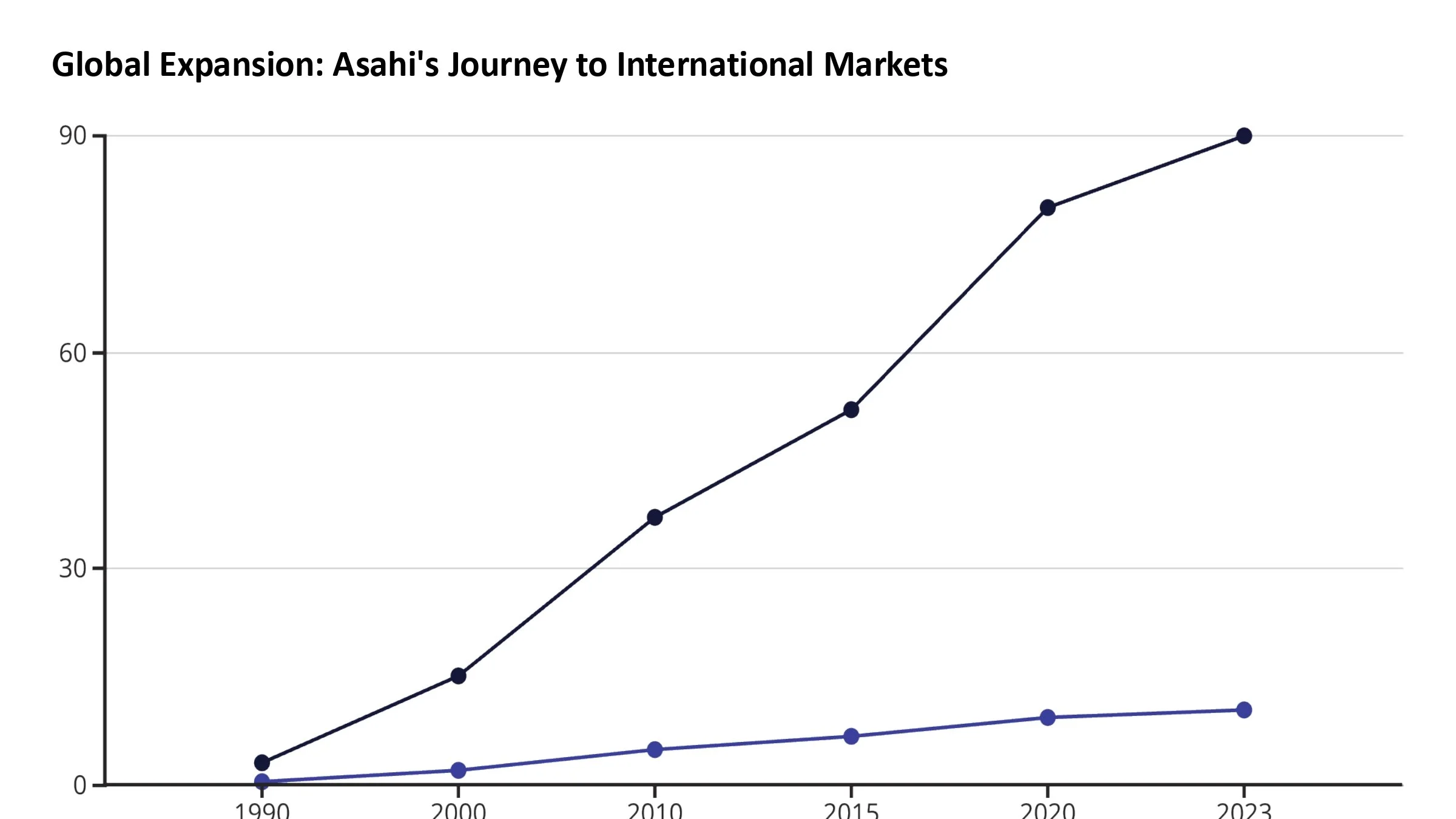
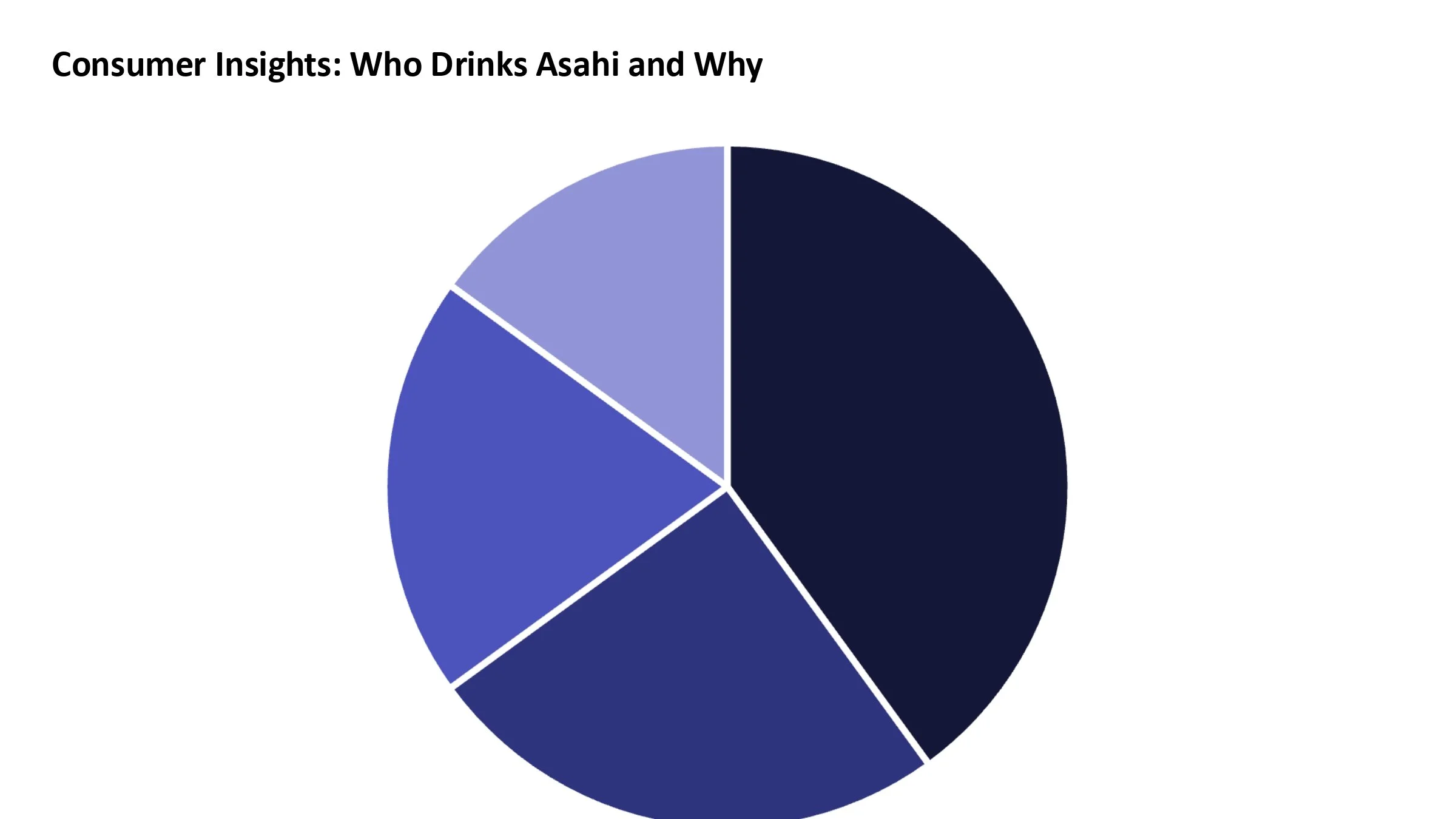
Some brands make beer. Asahi? It made history. 🍺🌅 by Arvind Bartwal

In this captivating presentation, Arvind Bartwal, passionate about people and processes, and known for crafting training experiences that elevate both, takes us on a whirlwind tour through the frothy rise of Asahi. From its roots in Meiji-era Osaka to its reign as a global icon of crisp refreshment and innovation, this isn’t just a corporate timeline. It’s a cultural chronicle, a masterclass in marketing, and a toast to tradition that dared to evolve.

What makes this deck sparkle (besides the Super Dry, of course) is the attention to detail: the poetic origin of the name "Asahi," the dry beer revolution that rewired Japanese drinking habits, and the way a brewery became a lifestyle symbol. There’s something here for business buffs, brand nerds, foodies, and fans of fermentation alike.

So raise a glass, scroll on, and soak up the sunshine behind the rising sun. 🌞🍻

Self Development Is The Master Key To Success by Yusuf Shaikh, Student Council President, Rizvi College of Hotel Management

Yusuf Shaikh

In the bustling world of hospitality, where every interaction is an opportunity to create unforgettable experiences, the pursuit of excellence is not just a goal, but a way of life. At the heart of this ethos lies self-development, a transformative journey that not only enriches individuals but also elevates the entire industry to new heights of success and distinction.

In an industry where the guest experience reigns supreme, investing in self-development is paramount. Hospitality professionals are the face of their establishments, embodying the values and standards that define their brand. By continuously honing their skills and expanding their knowledge base, individuals in the hospitality sector not only enhance their own capabilities but also enhance the quality of service they provide to guests.

One of the most compelling reasons why self-development is crucial in the hospitality industry is its direct impact on guest satisfaction. From front-line staff to managerial roles, every member of the hospitality team plays a pivotal role in shaping the guest experience. By cultivating skills such as communication, problem-solving, and emotional intelligence, individuals can anticipate and exceed guest expectations, fostering loyalty and positive word-of-mouth.

Moreover, in a rapidly evolving industry landscape, staying relevant is essential for long-term success. The hospitality industry is subject to constant change, driven by shifting consumer preferences, technological advancements, and global trends. Those who embrace self-development are better equipped to adapt to these changes, remaining agile and resilient in the face of challenges.

Self-development also empowers individuals to unlock their full potential and pursue career advancement opportunities within the hospitality industry. Whether it's mastering new techniques, acquiring certifications, or pursuing higher education, continuous learning opens doors to new possibilities and positions individuals for success in leadership roles.

Furthermore, in an industry centered around human connection, personal growth not only enhances professional performance but also fosters a culture of teamwork and collaboration. By investing in self-development, organizations cultivate a workforce that is motivated, engaged, and committed to collective success, ultimately driving operational excellence and profitability.

Beyond its tangible benefits, self-development in the hospitality industry fosters a culture of innovation and creativity. By encouraging individuals to explore new ideas and perspectives, organizations can spark innovation that sets them apart in a competitive market. Whether it's designing unique guest experiences or implementing cutting-edge technologies, self-development fuels a culture of innovation that drives industry progress.

In conclusion, self-development is not just a luxury in the hospitality industry; it is an absolute necessity. By prioritizing personal growth and continuous learning, individuals and organizations alike can unlock their full potential, enhance guest satisfaction, and drive innovation. In a world where excellence is the standard, self-development is the key to unlocking limitless possibilities in the dynamic realm of hospitality

What’s Wrong with Metasearch Today? By Oz Har Adir, Founder & CEO of Vio.com

When they were first introduced, metasearch channels quickly became an important part of travelers’ online shopping habits, as they were a way of getting an ordered overview of the endless shopping options available online. Growing rapidly in popularity during the 2010s, an industry report in 2017 showed that “nearly half of U.S. travelers used metasearch platforms for flight and hotel bookings;” that same year, another showed that “metasearch engines had become a dominant marketing channel, surpassing investments in traditional ads.”

That initial success did not last. An industry report showed that “metasearch's share of travel traffic decreased from 22% in 2017 to 17% by 2020”, as it was no longer the most reliable or efficient way for travelers to find the best price on travel bookings – a trend that continues today. 

But is the value proposition of metasearch dead or is it simply the original business model that failed? 

To get to the bottom of this question, let’s look at the key commercial and consumer issues at play. 

Ad-Based Revenue Model
The advertising-based, cost-per-click (CPC) revenue model is fundamental for traditional metasearch sites. The sites earn revenue whenever a traveler clicks off the metasearch engine to visit an OTA or hotel site, regardless of whether the traveler books the stay. Because advertisers & hotels are ranked in the search results primarily based on their CPC bids (rather than on price), travelers are often not shown the best rates; rather, they are shown the rates that will earn the metasearch site more revenue. 
This leads to higher prices being offered through the metasearch channels, helping sponsor higher bids, while customers click off the site quickly in search of better prices.

Another key problem that dilutes metasearch’s value proposition is the fact that Booking and Expedia are better able to navigate the CPC revenue model than smaller OTAs or direct booking sites. The result is that more than 3/4 of the revenue for many top metasearch channels comes from Booking and Expedia. 

The value of metasearch engines is diminished because the OTAs’ public rates offered via metasearch are often higher than if the traveler searched directly, as a member of either OTAs loyalty program or on their apps, where cheaper rates are more likely to be offered.

Better prices from other sources are even harder to come by. An auction forcing high CPCs leads all hotels to raise the room rates offered through the metasearch channels – again, undercutting the value offered by the channels as they are not giving travelers access to the best rates.

As such, the business model of running multiple ads using ‘price comparison’ alone does not align well with the goal of the traveler – finding a great hotel with good value – nor the advertiser – to secure bookings with as low a cost of acquisition as possible – making traditional metasearch channels a lose/lose for both. 

Simple Price Comparison Marketplaces

Booking a hotel is a subjective choice that requires research to get right. For travelers, price is one of the top criteria in their hotel selections, but it is not the only factor. Metasearch’s core functionality enables travelers to do a quick price comparison on the search results page and they must click through to the OTA or hotel site to get additional information about the room options, including:

Room Images - Is it recently renovated? Does it look comfortable and clean? Is it well laid out for my needs?
Payment Questions - Do I need to pay upfront, or can I pay later? Does the hotel support Apple Pay? 
Customer Support Questions - Does the hotel offer support in my language or currency?
Detailed Reviews - How are the amenities? What have other travelers like me said about their stay? 

In addition, the large metasearch channels do not find the cheapest prices and/or do not highlight them for travelers because they are largely offering ‘public’ rates, which are often limited by price parity agreements. Even when an OTA or hotel site offers a cheaper price than the rest, it must first meet the metasearch auction CPC price to be featured high enough in the search results where a customer would actually find and click on it. 

In short, traditional metasearch offers travelers a ‘click and go’ experience that is not comprehensive enough to enable customers to complete their search or finalize a booking on the sites. 

Lack of Customer Retention

Travelers’ online habits have evolved in the past years. This has led OTAs to invest in the growth of their apps and loyalty programs to convince users to begin their search on the OTA (rather than on metasearch). By offering better rates to members and customers using their apps, the OTAs have been able to retain users much more effectively. 

Conversely, the traditional metasearch channels offer users no incentive to install their app or sign up to become members of their sites for two reasons: 

Their CPC revenue model financially disincentivizes them to do so because, instead of clicking on a paid ad, the sign-in process adds friction, leading to fewer revenue-generating ad clicks.

If users do sign in, the auction dynamics changes, and they may see better prices. Again, this is counterproductive to traditional metasearch channels’ revenue model as higher bids would be less likely to win the click, leading to fewer clicks and lower revenue per click. 

As such, the metasearch channels’ cost of acquisition must be repaid within the session (hence the CPC revenue model), while an OTA can repay its cost of acquisition across the lifetime of the user. 

Now, we get to the most important part… with all these innate problems, how can metasearch sites still provide value for both travelers and hotels?

Here’s the truth: traditional metasearch channels are dying, but that doesn’t mean that the utility of an effective price comparison tool is no longer valuable, both to travelers and hotels. 

That being said, to be successful today, metasearch channels must expand beyond simple price comparison to offer sophisticated OTA functionality, which addresses the diverse needs of today’s travelers and enhances the overall booking experience.

A Customer-Centric Approach

Finding the best hotel at the best value is the end goal of travelers using metasearch sites; as such, to be successful these hybrid booking channels must adopt the same as their product goal to create a win-win business model.

The best way to do that is to change from an ad-based CPC model – which doesn’t benefit travelers or hotels – and adopt a robust customer-centric strategy using a cost-per-action revenue model based on booking conversions. Given that lower prices convert more often, they are more likely to show higher in the search results, incentivizing hotels to offer better deals. 

Integrated OTA Functionality

Like a traditional OTA, this hybrid metasearch model must include comprehensive information about the various accommodation options to empower users in their decision-making process. A traveler can take their time, browsing through room images, understanding each offer’s cancellation terms, filtering reviews, etc. They can stay on-site to book through the internal OTA or go elsewhere. 

At the same time, innovative OTA functionality – such as price freezes enabling travelers to take their time deciding on the best hotel, price alerts, membership incentives, incentives to download the app, etc. – are valuable tools to maximize customer retention and the customer value.

Screenshot from AtHotel which is an OTA that uses price comparison across its product

Transparency & Personalization

When the transparency that is fundamental to the metasearch model is combined with OTA functionality, conversion and retention rates increase because travelers know they are getting a good deal and appreciate that they don’t need to visit multiple sites to compare prices. We now see OTAs adopting the same strategies, turning their search results or hotel pages into transparent offerings. When they can offer the best price, they rank on top; when they can’t, they tell the customer where they should go to get a better deal, rather than accepting a low conversion outcome and unsatisfied customers. 

To become successful, metasearch sites must evolve to a traveler-focused, CPA-based revenue model, which includes both price comparison and OTA functionality to maximize price and product transparency, increasing their value proposition for all audiences. By making these changes, metasearch sites can once again become a trusted booking channel for travelers and firmly re-establish themselves as a sustainable and profitable marketplace for hotels.

So, the bottom line is clear: metasearch isn’t dead; it just needs to be reimagined.

About Vio.com

Vio.com is a hotel booking site trusted by 100 million users each year to find better value on every stay, with savings of up to 45%. The company discovers exclusive accommodation deals and compares prices across top travel sites, so travelers can book the best room with confidence. The company's exceptional customer support team is available 24/7, which is reflected in their rating on Trustpilot and rapid growth.